
In the 2025–26 count, a total of 1,477 Sarus cranes were recorded. This significant rise underscores the success of sustained conservation efforts and highlights the importance of continued habitat protection and community engagement.
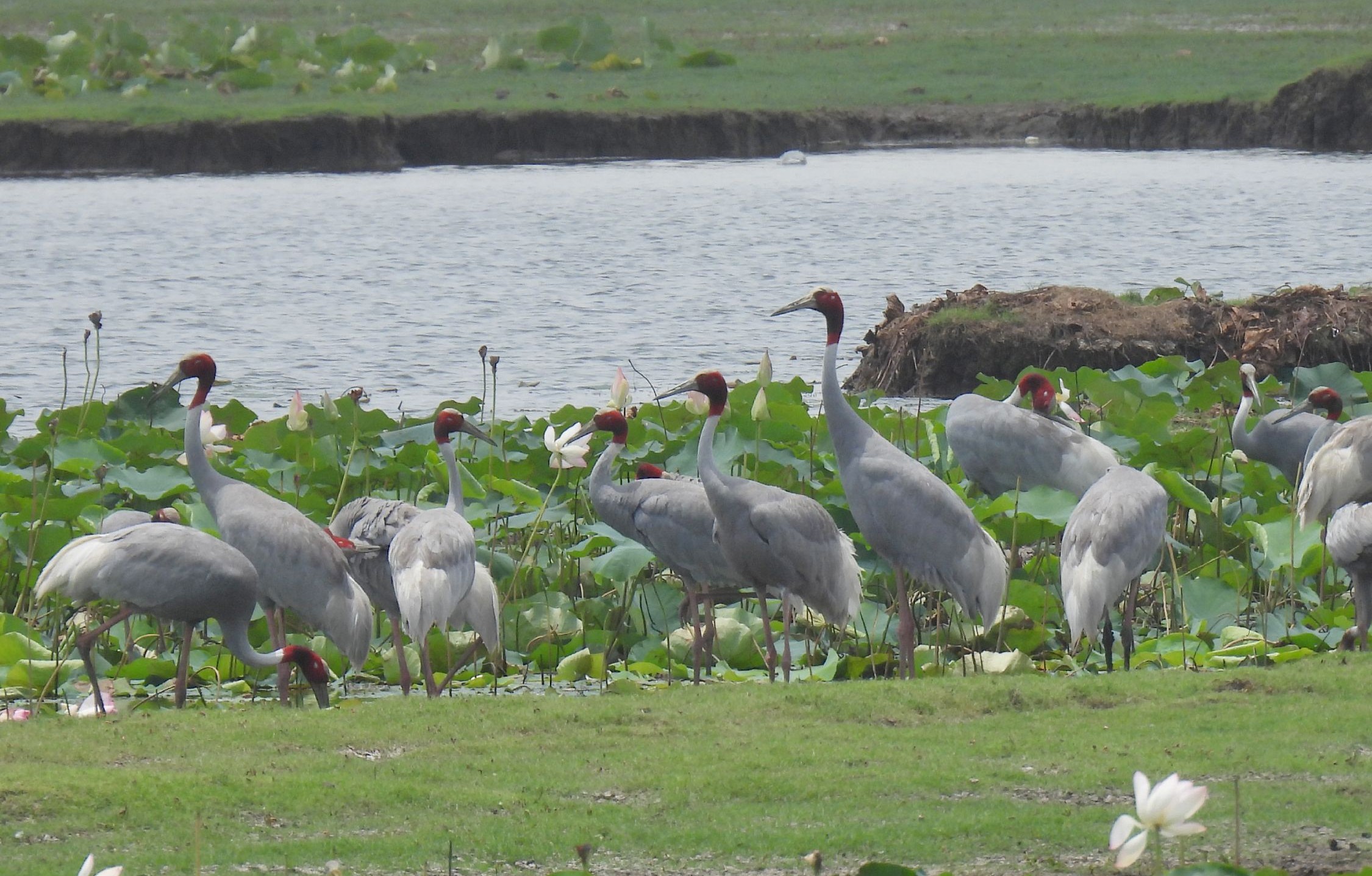
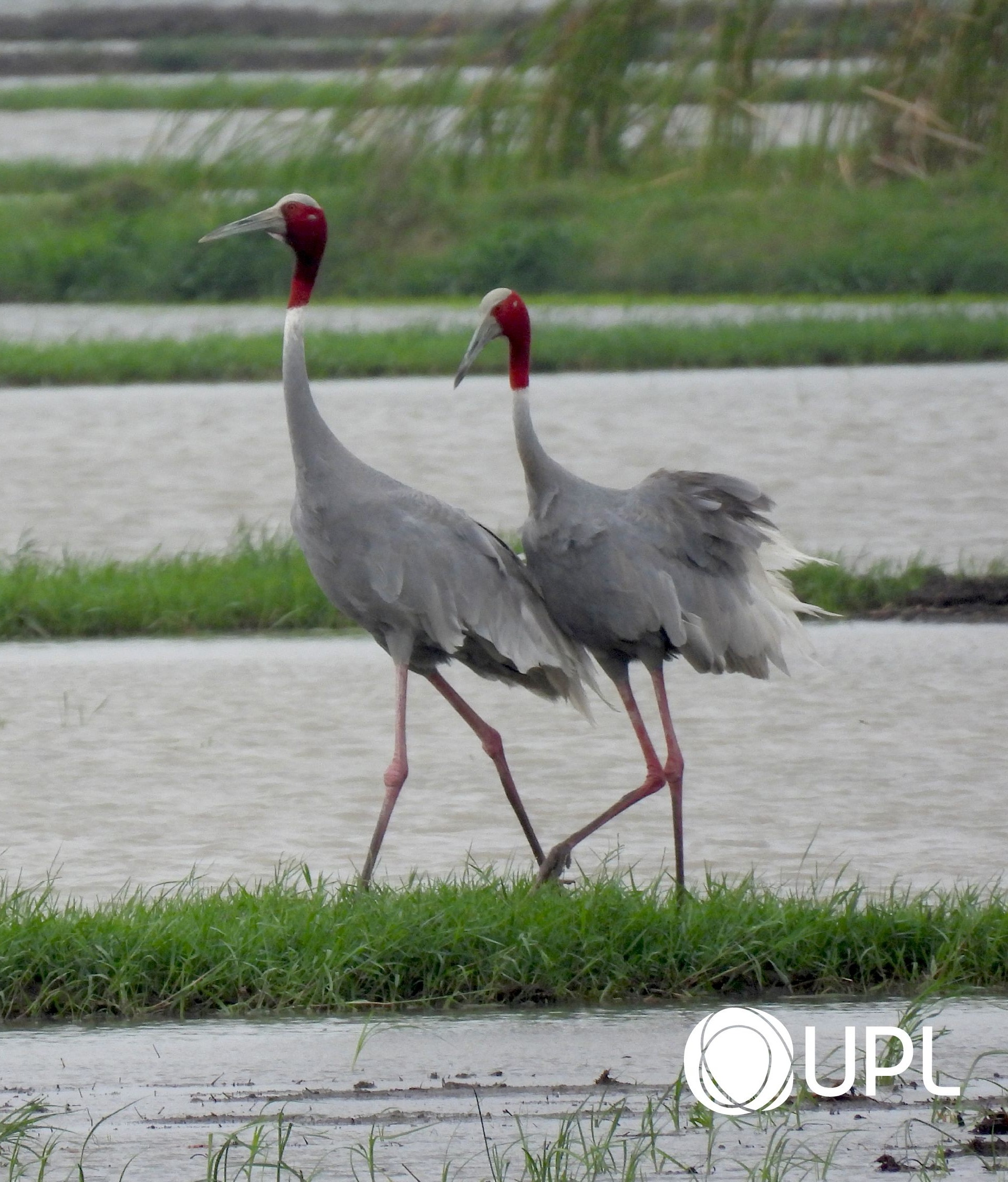
The Indian Sarus Crane, the tallest flying bird in the world, is classified as vulnerable under the International Union for Conservation of Nature (IUCN) Red List. Traditionally found in wetlands, the Sarus crane has adapted to co-exist with humans, increasingly relying on agricultural fields for feeding and breeding. However, the loss and degradation of wetland habitats remain key drivers of its population decline.
UPL launched the Sarus Conservation Program in 2015 by focusing on grassroots engagement. The team worked closely with farmers to correct misconceptions and behavioural attitudes through education and voluntary participation. This collaborative model has been instrumental in fostering co-existence and protecting habitats for the Sarus crane.
Rishi Pathania, Vice President – CSR, UPL, said UPL’s Sarus Crane Conservation Program reflects our enduring commitment to biodiversity conservation. Over the past decade, our collaborative approach – rooted in community engagement and scientific monitoring – has significantly enhanced habitat conservation for Sarus cranes while nurturing local stewardship.
Kheda and Anand districts have shown a remarkable rise in Sarus crane numbers, reflecting the success of sustained conservation efforts. Today, Gujarat hosts the second-largest wild Sarus crane population in India.
A total of 1,477 Sarus cranes, including 147 sub-adults, were documented across 199 villages in 18 talukas. The largest congregation was recorded in agricultural fields at Limbasi and Vastana, with 153 cranes. Major wetland congregations included Ozralla (86 cranes), Pariej (69 cranes), and Traj (65 cranes).
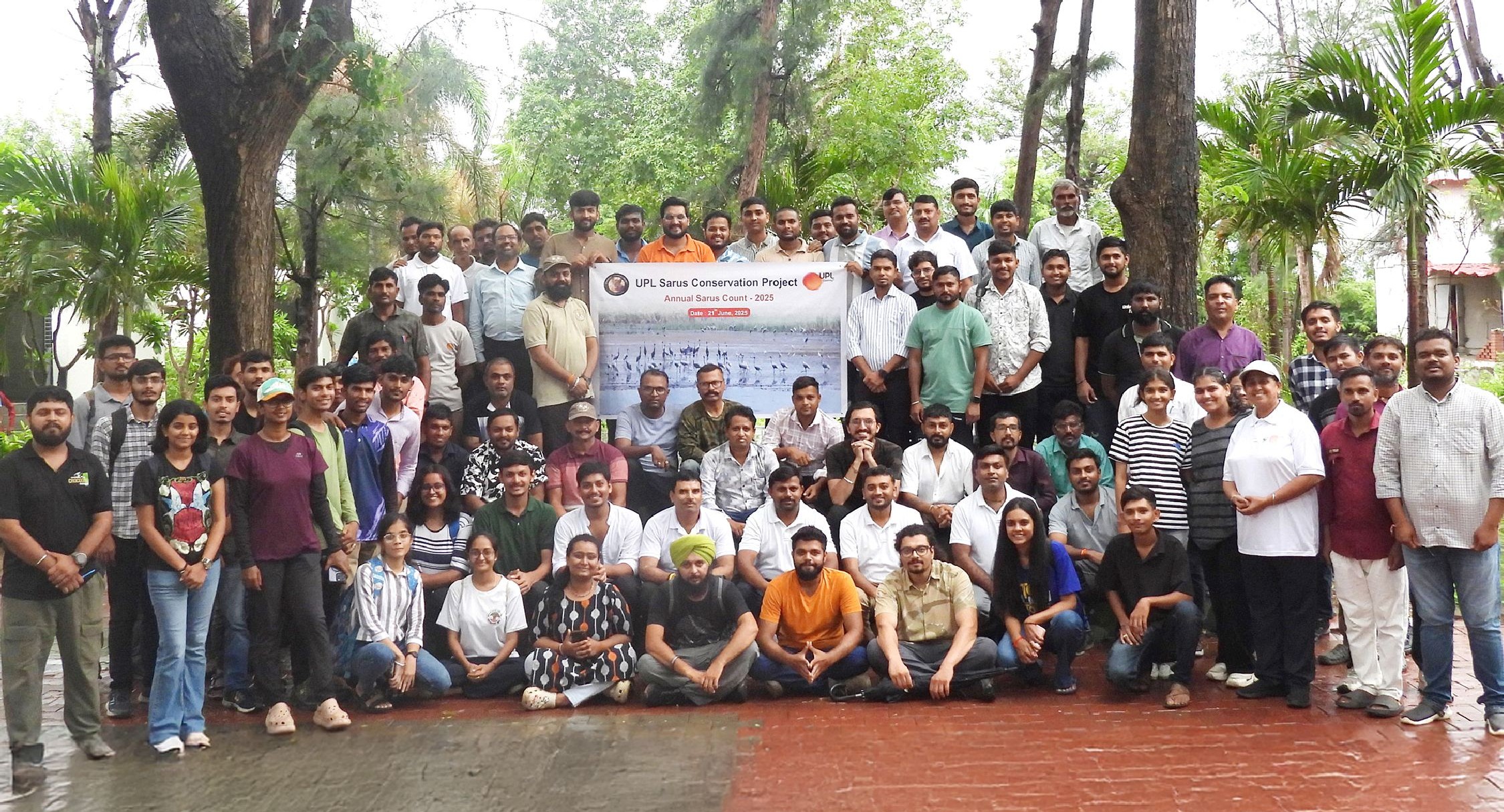
The large-scale count was a collaborative effort involving 120 active participations – 24 Rural Sarus Protection Group volunteers, 31 UPL employee volunteers, 8 staff of Social Forestry Division, Nadiad, 22 volunteers from Voluntary Nature Conservancy and 18 students from four colleges (Gujarat University, Ahmedabad; VP Science College, Vidhya Nagar; Shri R K Parikh Arts and Science College, Petlad; M S University, Vadodara, 8 teachers of Government School, Taluka Matar and 6 volunteers from Nature Health Foundation, Anand.