
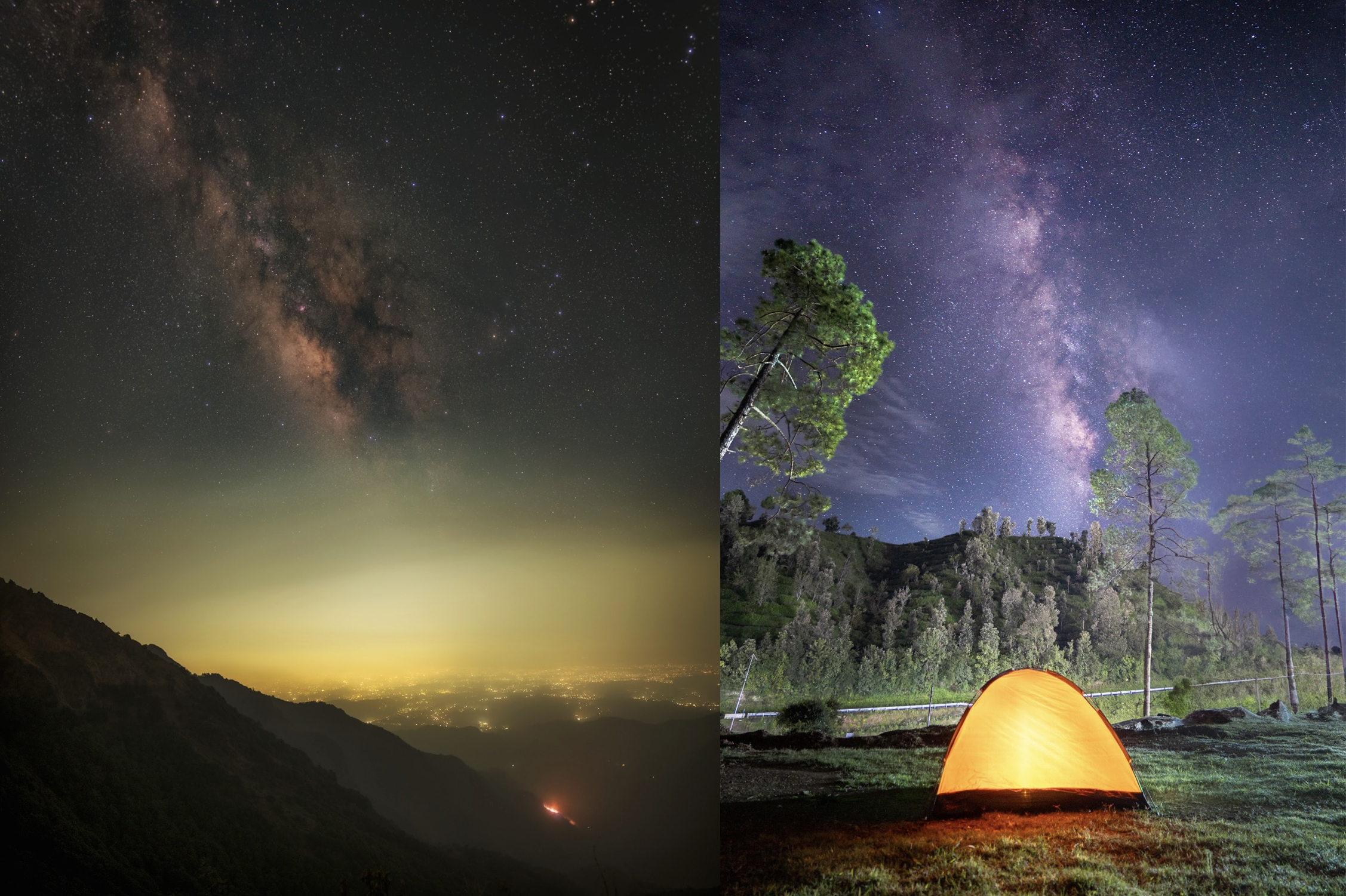
For most of human history, looking up at the night sky meant seeing countless stars, the Milky Way, and even the faint glow of distant galaxies. But today, for many of us, that experience is lost.
In cities, bright lights from buildings, billboards, and roads create a glow that hides the stars. Even in rural or hilly areas that used to offer clear, dark skies, tourism and development have brought new buildings, roads, and commercial lighting. The result? The night sky is fading even where it was once pristine.
Stargazing is more than a hobby. It connects us with nature, offers peace in a noisy world, and teaches us about our place in the universe. Losing that view means losing a part of our shared heritage.
But light itself isn’t the enemy. It’s essential
For rural communities, lighting can mean safety, longer working hours, better education, and more economic opportunity. Development projects to bring light to villages are vital.
In a country with energy challenges, though, lighting choices matter. Producing electricity, especially from fossil fuels, has environmental costs. So using light efficiently is about both preserving the night sky and reducing energy demand.
We don’t need to choose between darkness and development. We can use smarter lighting: low-lumen bulbs, shielded fixtures that direct light downward, and timers that turn off unnecessary lighting. This way, we can light homes, roads, and shops while keeping the skies dark enough for people and wildlife alike.
The Bortle Scale: Measuring night sky brightness
Astronomers use the Bortle Scale to rate night-sky darkness, from 1 (truly dark skies) to 9 (inner-city brightness).
In a city like Bangalore, the night sky is often Bortle 8 or 9, so bright you see only the Moon and a handful of stars. In contrast, rural regions like Coorg can be Bortle 3 or 4 on a clear night, revealing thousands of stars and the bright band of the Milky Way.
This difference is dramatic. It’s also a reminder that even modest changes in lighting can make a big difference.
What causes light pollution?
Light pollution happens when artificial light is used carelessly. It’s not just city lights. It comes from unshielded street lamps, commercial signage, resort and hotel lights, and decorative lighting that spills upward or sideways instead of focusing on the ground.
As tourism grows in remote areas, so does lighting. New resorts, shops, and roads often come with bright, all-night lights that spread well beyond their boundaries.
Light pollution in dark sky areas
This is where Dark Sky Reserves come in. These are areas committed to preserving a naturally dark night by controlling light use. They aren’t anti-development, they simply aim to balance human needs with protecting the environment.
But even these areas face pressure. Tourism brings economic opportunity but also risks, more buildings and roads can mean more lighting that threatens what visitors come to see in the first place.
This is why communities, scientists, and planners are gathering in forums and conclaves to discuss how to guide tourism in ways that protect darkness: setting lighting guidelines, sharing best practices, and educating visitors.
The impact on wildlife
Artificial light doesn’t just affect people who want to see stars. It changes entire ecosystems.
Many species rely on natural darkness. Nocturnal animals are active at night to avoid predators and hunt effectively. When nights are bright, their behaviour changes.
Moths and other insects are drawn to lights, often dying before they can reproduce. This has ripple effects, since these insects are food for bats and birds.
Migratory birds use the moon and stars to navigate. Bright city lights and lit-up structures can confuse them, causing collisions or exhausting detours.
Sea turtles, in coastal regions, rely on dark beaches. Hatchlings use natural light on the horizon to find the sea. Artificial lights can lead them inland, where they die.
Even plants can be affected. Trees near streetlights can have altered blooming cycles.
These impacts aren’t always obvious, but over time, they disrupt the delicate balance of ecosystems.
Why it matters for us too
Light pollution also affects human health. Exposure to bright artificial light at night can interfere with our natural sleep patterns. It disrupts circadian rhythms, leading to sleep problems and other health issues.
And of course, there’s the cultural loss. For thousands of years, people have used the night sky for navigation, storytelling, and scientific discovery. Losing that view means losing a part of what connects us all.
What can we do?
There’s no single solution. But there are proven steps communities can take:
- Declare more Dark Sky Parks and Reserves: Examples include the NamibRand Nature Reserve in Namibia and Aoraki Mackenzie in New Zealand.
- Regulate lighting in tourist areas: Use shielded, low-lumen lights that point downward. Install timers to turn off lights when not needed.
- Promote eco-friendly tourism: Smaller homestays with minimal lighting can be better than sprawling resorts.
- Build local awareness: Train local ambassadors and educate visitors about the importance of darkness for wildlife and human well-being.

Preserving the night sky isn’t about turning off all lights. It’s about using them wisely—so communities can thrive, wildlife can survive, and future generations can still look up and see the universe in all its glory.
Ramashish Ray, Founder, Starscapes