
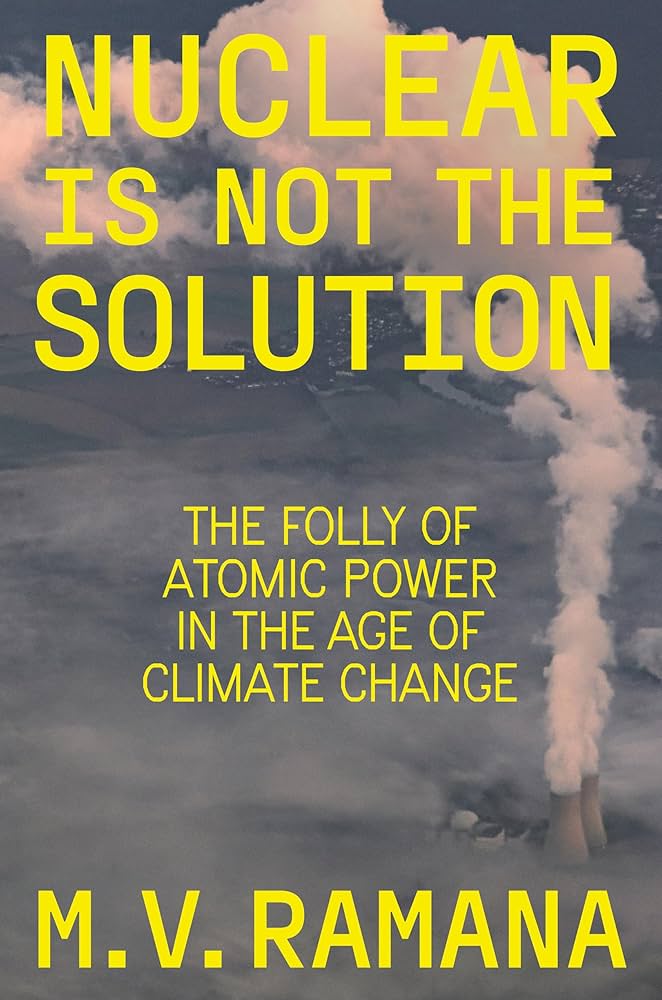
As the climate crisis deepens, nuclear energy has returned to the centre of global and national energy debates. In India, this resurgence is no longer rhetorical. The Government of India’s Sustainable Harnessing and Advancement of Nuclear Energy for Transforming India (SHANTI) Bill, 2025 positions nuclear power as a cornerstone of the country’s clean energy transition, with an ambition to scale capacity to 100 GW by 2047. It is against this policy backdrop that Nuclear Is Not the Solution: The Folly of Atomic Power in the Age of Climate Change by M. V. Ramana becomes especially timely.
Ramana’s book offers a direct and uncompromising challenge to the claim that nuclear energy is a necessary or effective response to climate change. Rather than treating nuclear power as a neutral technological option, he examines it as a political, economic, and institutional project that persists despite repeated failures on safety, cost, speed, and public accountability. Read alongside India’s renewed legislative and financial commitment to nuclear power, the book functions not just as critique, but as a warning.
Ramana begins by dismantling the idea that nuclear power is inherently safe. Drawing on historical evidence from Chernobyl, Fukushima, and other incidents, he argues that severe accidents are not rare anomalies caused by weak regulation or outdated designs, but structural risks embedded in complex nuclear systems. Safety assurances, he shows, rely heavily on probabilistic models that underestimate real-world failures. This critique gains relevance in the Indian context, where the SHANTI Bill strengthens regulatory oversight by granting statutory recognition to the Atomic Energy Regulatory Board and expanding licensing and safety authorisation regimes. While such reforms aim to reassure the public, Ramana raises a deeper question: whether improved regulation can neutralise risks that are intrinsic rather than incidental.
The book then turns to the environmental and social costs of nuclear power beyond accidents. Ramana highlights the long-lived nature of radioactive waste, unresolved disposal challenges, and the ecological and human impacts of uranium mining, which disproportionately affect marginalised communities. These issues sit uneasily alongside policy narratives that frame nuclear energy as “clean” simply because it is low-carbon at the point of generation. India’s nuclear expansion plans, including new reactor deployments and non-power applications under the SHANTI Bill, risk reproducing these externalities at scale unless confronted explicitly.
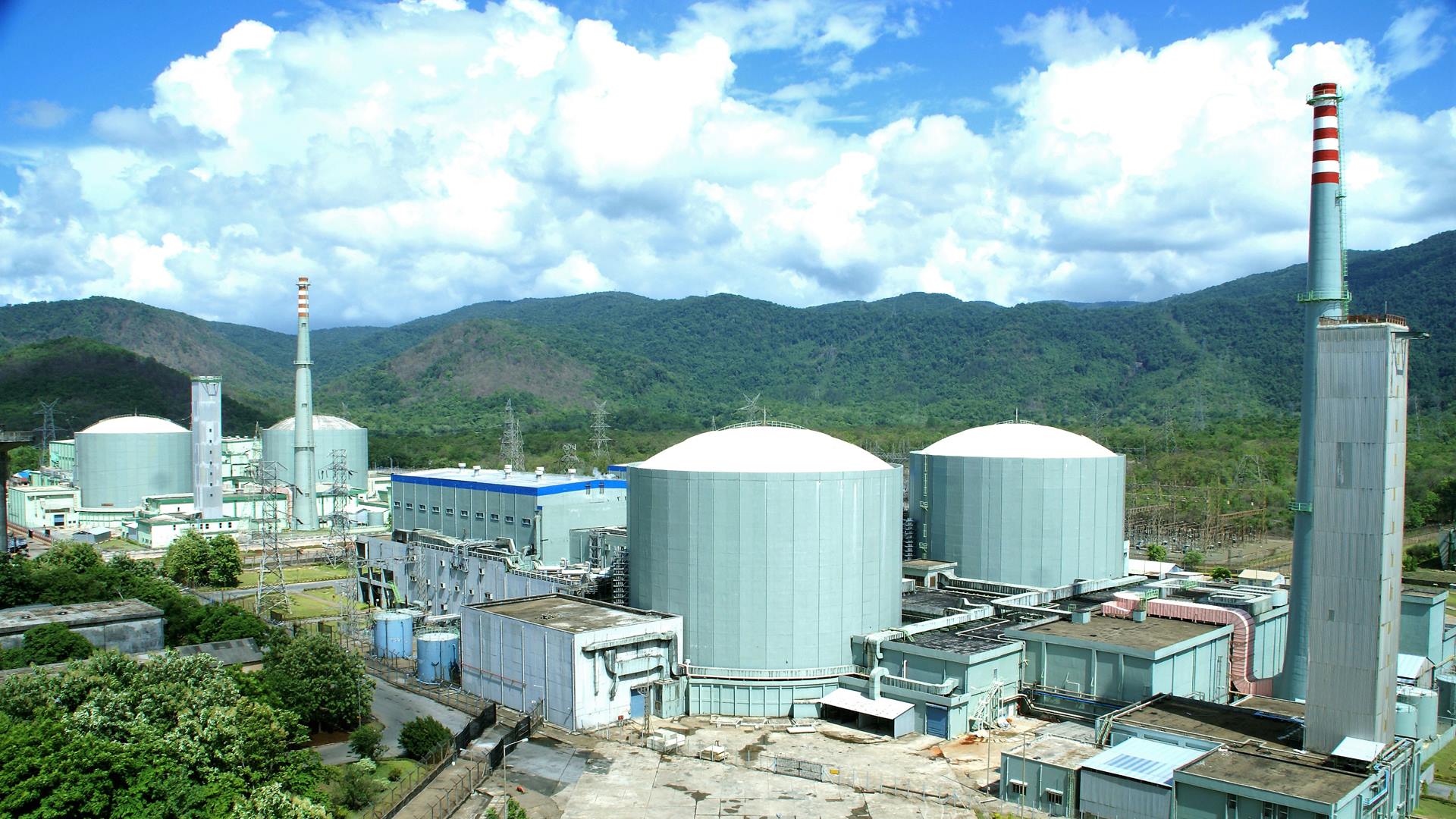
A central pillar of Ramana’s argument concerns feasibility, particularly cost and time. Nuclear power, he argues, is among the most expensive forms of electricity generation and is characterised by chronic cost overruns and long construction timelines. In a climate emergency where emissions reductions must occur within the next decade, nuclear energy’s slow pace renders it largely irrelevant. This critique directly challenges India’s long-term nuclear roadmap. While the SHANTI Bill outlines phased expansion to 22.38 GW by 2031–32 and a longer-term vision to 2047, Ramana’s analysis suggests that such timelines align more with institutional planning horizons than with climate science.
Where the book becomes most powerful is in its political economy analysis. Ramana asks why nuclear power continues to receive strong state support despite poor performance on safety, speed, and cost. His answer lies in the alignment of nuclear energy with elite and institutional interests. Large capital requirements create profit opportunities when risks are socialised through public financing, liability caps, and government guarantees. The SHANTI Bill’s introduction of a graded liability framework and clearer civil liability mechanisms can be read through this lens. While presented as pragmatic reform, such measures may also reduce financial exposure for operators and investors, reinforcing Ramana’s argument that nuclear power survives by redistributing risk rather than eliminating it.
Ramana further situates nuclear energy within a broader architecture of state power and strategic autonomy. He challenges the separation between civilian nuclear energy and military infrastructure, showing how shared technologies and institutions blur this distinction. This perspective resonates strongly in the Indian case, where the SHANTI Bill reserves sensitive fuel-cycle activities and waste management under exclusive central government control. Rather than contradicting Ramana’s thesis, this reinforces his claim that nuclear power is as much about sovereignty and control as it is about electricity generation.
The book also addresses optimism around new reactor designs, particularly small modular reactors. Ramana remains sceptical, arguing that these technologies are unproven, face similar economic constraints, and are unlikely to scale within climate-relevant timelines. This scepticism is especially pertinent given India’s Nuclear Energy Mission, announced alongside the SHANTI Bill, which allocates substantial public funding for indigenous SMR development. Ramana frames such initiatives as technological optimism that promises future solutions while deferring immediate action.
In terms of style, Nuclear Is Not the Solution is clear, forceful, and accessible. Ramana translates complex technical and institutional issues into arguments that resonate beyond specialist audiences. His uncompromising tone may limit appeal among readers seeking hybrid energy strategies, but it also gives the book urgency. Nuclear power is presented not as a flawed option among many, but as a false solution that diverts time, capital, and political attention from faster climate responses.
Ultimately, this is less a book about energy technology and more a critique of how societies respond to crisis. Read alongside the SHANTI Bill, it exposes a tension between long-term state-led nuclear planning and the immediacy demanded by climate science. Whether one agrees fully with Ramana or not, the book succeeds in unsettling complacency around nuclear energy’s role in the climate transition and demands deeper scrutiny of what truly counts as a climate solution.