

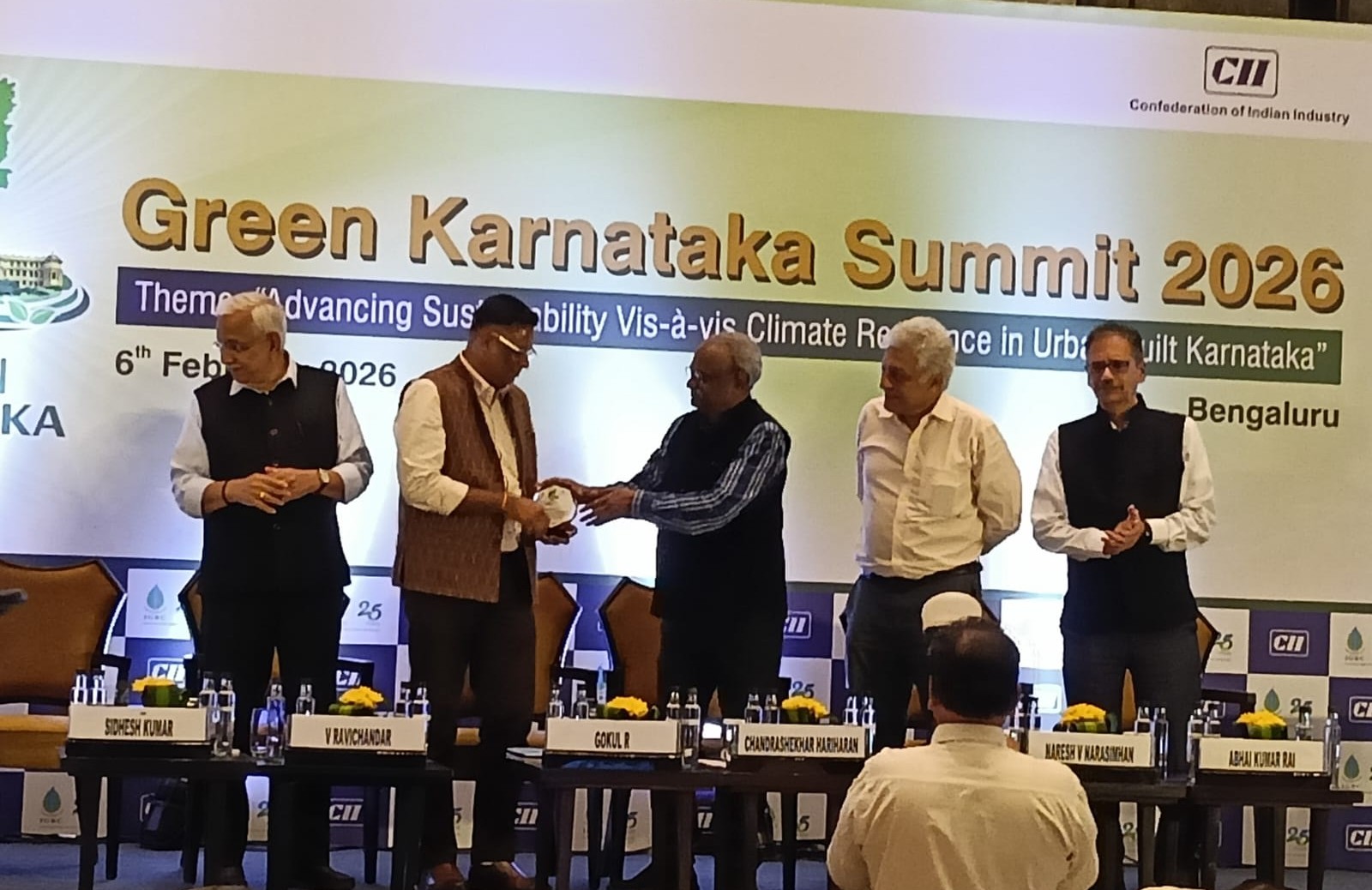
The dialogue at the Green Karnataka Summit recently echoed this strong sentiment while the leaders proposed ways of managing the city better.
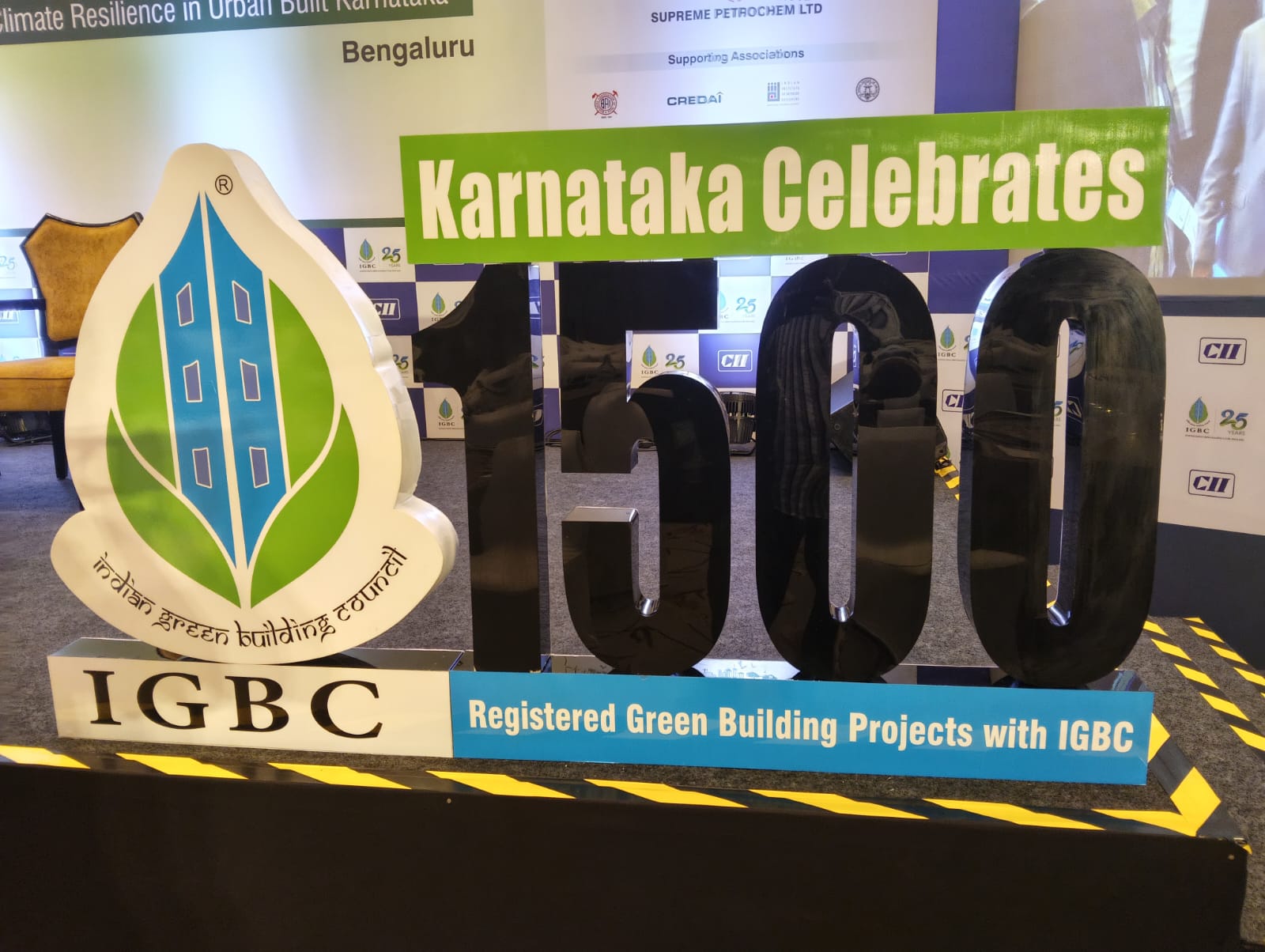
The summit celebrated Karnataka crossing the 1500 green buildings mark late last year. Karnataka is only next to Maharashtra in adopting the green building concept voluntarily. The 1500 plus projects cover a total footprint of over 1.13 billion square feet. A significant aspect of this achievement, IGBC officials said, is that many projects were registered without government incentives, which meant the developers and stakeholders were driven by their commitment to sustainability.
Summit Highlights
Ecology Should be at the Centre, Not as an Afterthought
Harini Nagendra, award-winning ecologist, Director of School of Climate Change and Sustainability, Azim Premji University and a prolific author, emphasised that any infrastructure planning should first take a good look at the impact on ecology first. Several large projects in Bengaluru have been doing the other way and the city has been paying a big price for it. “We need a landscape perspective and not just the building perspective while designing green buildings,” she said.
Green Buildings are NOT Expensive
There’s a popular belief that adopting green building standards will mean higher capital cost. This assumption was valid a decade ago but advances in materials and better planning has brought the cost down considerably. Guruprakash Sastry, Climate Action Head at Infosys believes that the notion that green buildings cost more is wrong. If planned well from the beginning, it is affordable. Even if it costs more initially, it can be recovered in no time.
A decade ago, green buildings could cost 15% more, but today, according to Syed Mohammad Beary, Founder and Chairman of the Bearys Group, there is no difference now. He said when planned well, time and cost overruns can be managed better. He strongly believes that customers should demand and insist on builders adopting green buildings standards. There’s a need for educating customers on various aspects of green buildings.
Portable STPs
It is unfortunate that the sewage treatment plants in the city mix brown and black water. They cannot be treated and hence the potential for recycling waste water is limited. Experts are demanding more STPs to be set up in the city. Dr. Chandrashekar Hariharan, Senior Fellow IGBC, suggested that apartments should keep the sludge inside the apartment complex and not let it into the drain. He advocated portable STPs. Bengaluru’s 369 Wards would need about 103 STPs.
What’s Below is More Important than Above
Naresh Narasimhan, renowned architect, is dismayed that the city planners focus mainly on what comes up above the land and care less for how the city is planned under it. He said high tension wires run just a few inches below the roads in the city.
He is certain that the city does not have a water supply problem, the problem is in how it is managed. He believes that 90% of the city’s water can be recycled. He asked startups to focus on solving the city’s water problems. STP water can be available as a service.
Metro Needs to Plan for Demand
Abhai Kumar Rai, Advisor to Bengaluru Metro Rail Corporation (BMRCL) believes cities in India should plan metros anticipating demand instead of the other way around. “We are only catching up all the time,” he said.
BMRCL is beginning to save nearly 35% on energy use by using the ‘Regenerative Braking Technology. This technology feeds braking energy back into the power grid, reduces mechanical brake wear by up to 95% and helps decrease tunnel heat loads. It also helps reduce the cost of operation.
Environment in Concurrent List
One of the reasons environment is taken less seriously in India is because the subject does not find mention either in the Central, Concurrent or the State list in the Constitution. If environment is added, then budgets can be allocated. Dr. Hariharan advocates that there should be an environment department in every taluk in India. It is better that it is added to the Concurrent list where both the Centre and the States can work together.
One of the reasons why cities such as Bengaluru continue to face fundamental issues is because of inadequate civil society engagement. While it is getting better, it needs to become a strong stakeholder. Currently, civil society is in a reactive mode because the governments don’t engage with them actively in the development stage.
Not just ROI, We Need ROE
It is high time the concept of Return on Environment is incorporated while planning all infrastructure projects. Only then planners and policy makers will take the environmental impact seriously.
ROE will be a paradigm shift and can bring in a holistic approach to city planning. It will ensure long-term sustainability, resilience and ecological health of the city. It will involve tracking carbon footprint, water usage, waste management and diversity impact.