

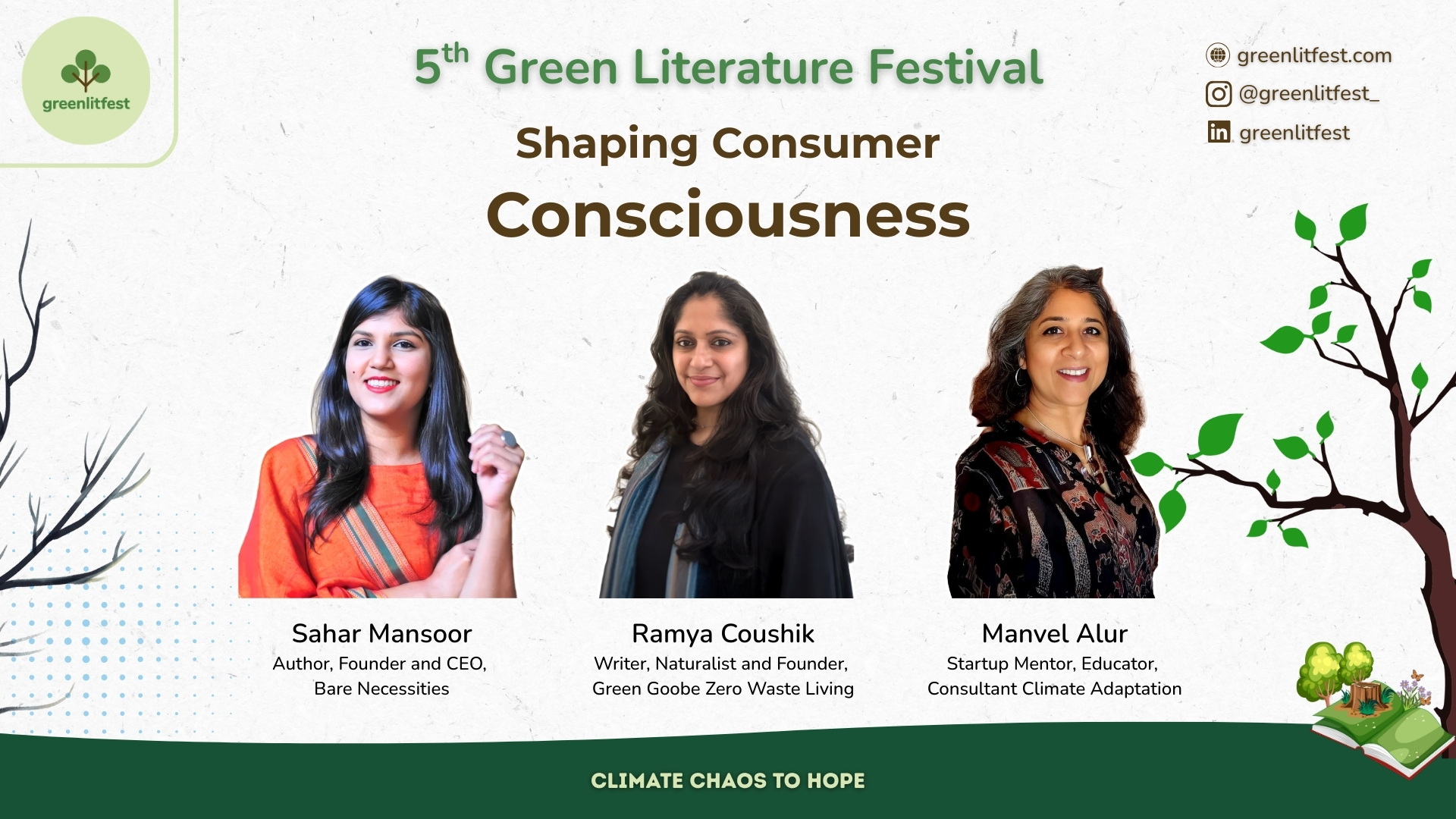
What did our grandparents do before shampoo came in a bottle? This deceptively simple question, posed by Sahar Mansoor, Founder of Bare Necessities at the Green Literature Festival’s green business segment, cuts to the heart of modern consumer culture. At GLF 5th edition in Bangalore, three changemakers gathered to explore why conscious consumerism remains an aspiration rather than reality for most people.
Panel host Manvel Alur, Startup Mentor and Educator, opened the discussion by asking the audience what prevents them from being conscious consumers. The answers came quickly: awareness, convenience, and cost. Yet as the conversation unfolded, a more complex picture emerged – one where businesses and consumers are locked in a cycle that serves neither the planet nor genuine human needs.
Ramya Coushik, Founder of Green Goobe Zero Waste Living, seems to have identified the core challenge: Consumers have been brainwashed into believing they need products delivered in ten minutes. This manufactured urgency has spoiled us, transforming instant gratification from luxury to expectation. It’s a mindset issue requiring significant unlearning to return to more sustainable ways of living.
So where do we begin? Ramya advocates starting with children, pointing out that sustainability education is conspicuously absent from school curriculums turning it into a missed opportunity with generational consequences. But education alone isn’t enough. Businesses must make conscious choices easier by creating need-based products that fit into a circular economy rather than a linear one. The message is clear: plan your purchases ahead.
Sahar emphasised making sustainability participatory and enjoyable rather than punitive. Local communities can reimagine consumption together, facilitating intergenerational conversations that connect us to practices our grandparents knew instinctively. Her question about shampoo in a bottle isn’t nostalgic, it’s an invitation to remember that sustainable solutions already existed before being buried under layers of plastic packaging and marketing.
The challenge of amplifying these conversations beyond small circles of enthusiasts remains daunting. Ramya argues that consumers are left with little choice in the current system. The onus falls primarily on businesses to provide viable alternatives and take responsibility for product lifecycles from creation to disposal.
The discussion revealed an uncomfortable truth: we cannot shop our way to sustainability, nor can we rely solely on individual consumer choices to reverse systemic problems. The path forward isn’t about deprivation but rediscovery. By remembering what we knew before shampoo came in bottles, before we believed we needed everything immediately, before consumption became identity. It’s about creating a future where conscious consumerism isn’t a niche movement but simply how we live.
Click here to view the panel discussion