
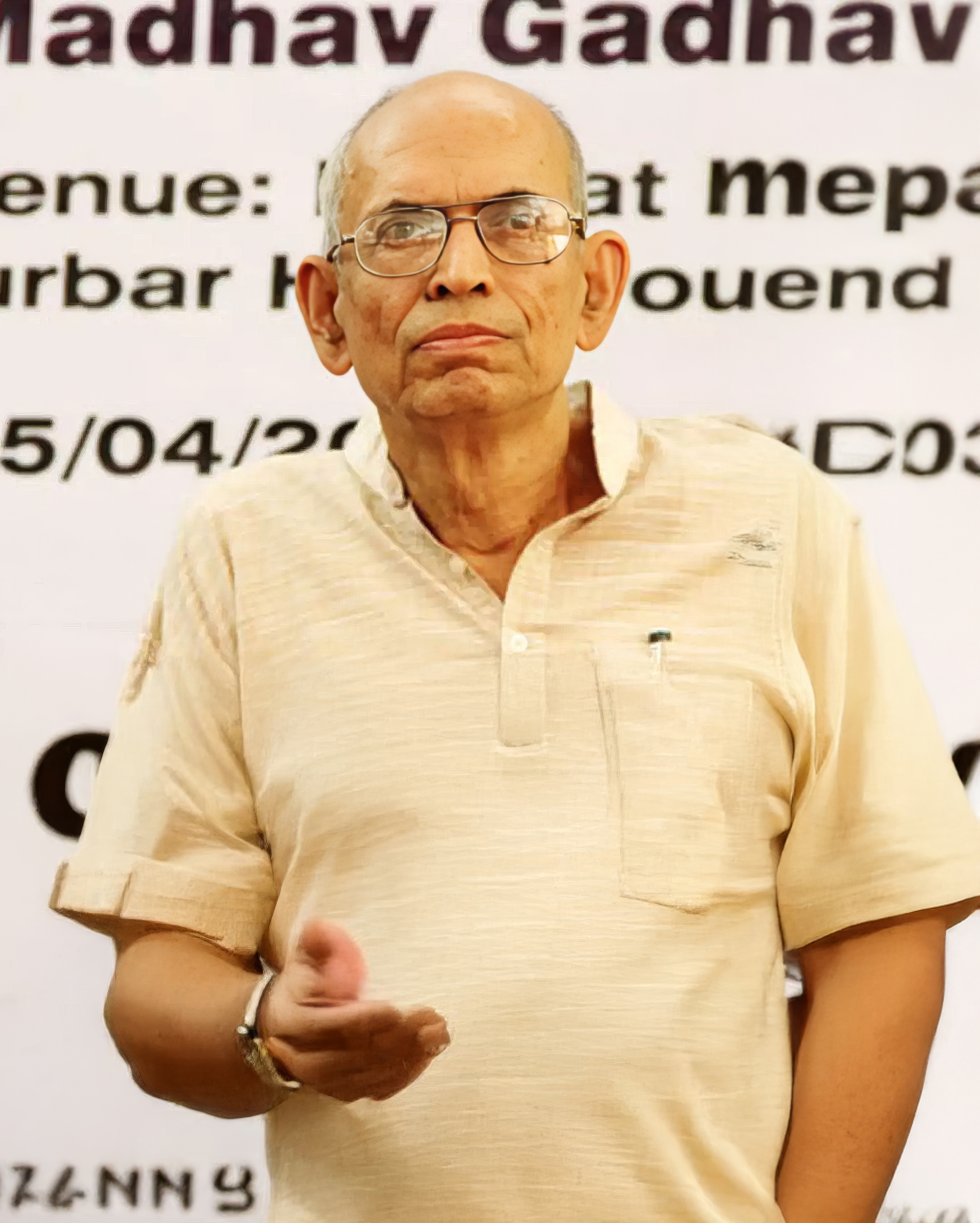
He is one of the key founders of ecological research in post-independence India. Played a major role in shaping systems ecology, biodiversity studies, and human–nature interactions in the Indian context. He emphasised studying ecosystems as lived landscapes, not just pristine wilderness.
Prof. Gadgil was also an institution builder. He established the Centre for Environmental Studies (CES) at the Indian Institute of Science, Bengaluru, which became India’s leading ecology research centre. He helped build generations of Indian ecologists, conservation scientists, and environmental thinkers. CES became a model for interdisciplinary environmental science in India.
“I have the satisfaction that as a scientist, empathetic to the people, I have been able to do various things which have helped in changing the direction of what is happening.
I’m a durable optimist – and hopeful that this progress will continue to gather pace.”
Madhav Gadgil, one of the six ‘Champions of the Earth’ by UNEP.
Champion of Western Ghats
Prof. Gadgil worked very hard to preserve the Western Ghats as an ecologically sensitive living system. He was not an activist who wanted to ban all activities in the Western Ghats. He proposed graded protection, not blanket bans. His report was popularly known as ‘The Gadgil Report’ made politicians along the long Western Ghats coastline detest him.
Prof. Gadgil strongly advocated local self-governance in environmental decision-making. He was deeply in favour of conservation that included people living around affected regions. As an extension of this approach, he promoted community-led conservation. He pioneered the idea that environmental sustainability is impossible without social justice and democratic participation.
Major Contributions
- Key architect of the Biological Diversity Act, 2002.
- First Chairperson of the National Biodiversity Authority (NBA).
- Instrumental in setting up:
- Biodiversity Management Committees (BMCs)
- People’s Biodiversity Registers (PBRs) — a globally admired model for documenting local ecological knowledge.
Prolific Author
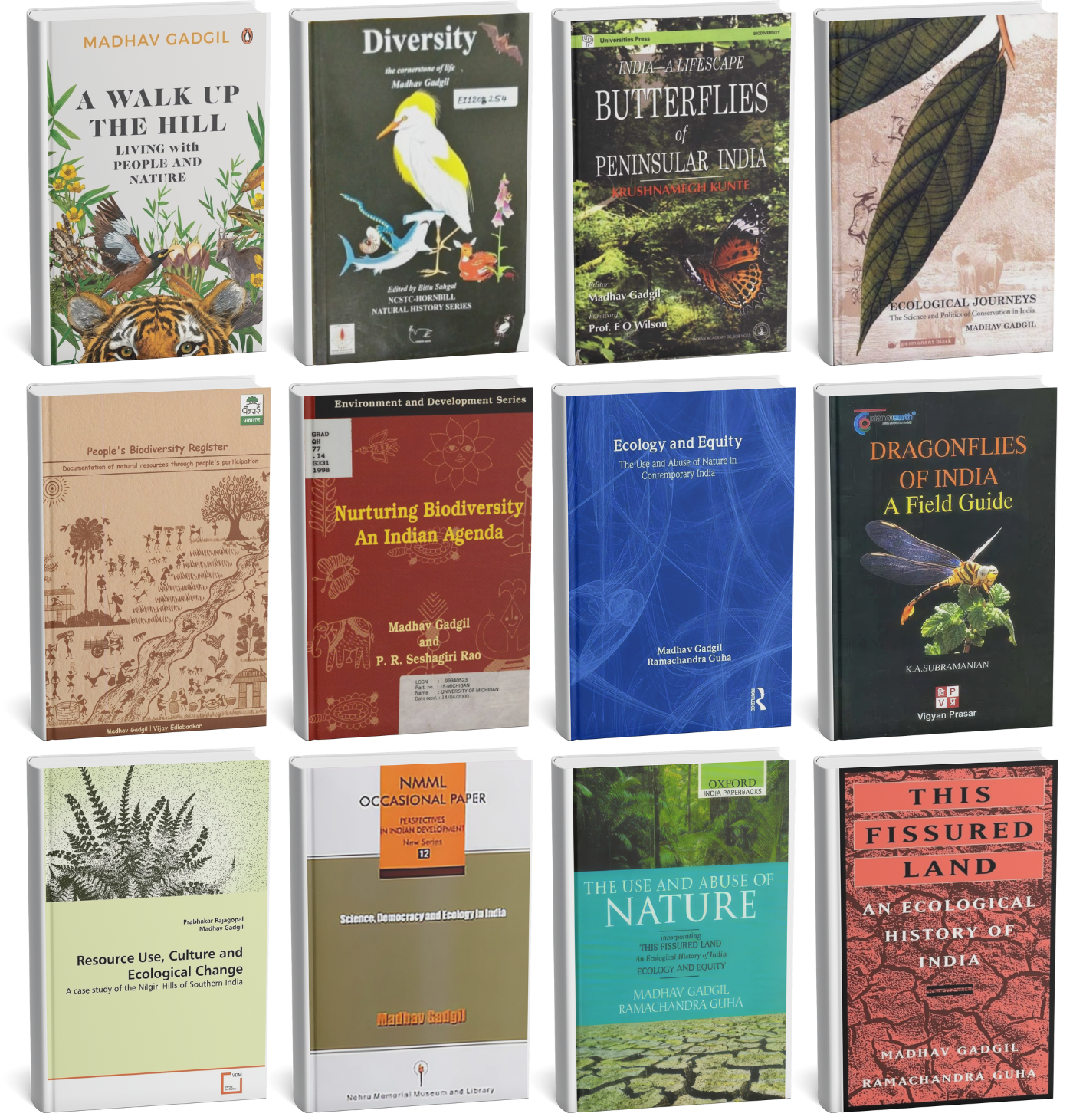
Prof. Gadgil wrote with clarity for both experts and citizens. His writing linked ecology, history, economics and ethics. They immensely shaped India’s environmental discourse in India. His major books include the following:
- A Walk Up The Hill: Living with People and Nature. …
- Ecology and Equity: The Use and Abuse of Nature in Contemporary India. …
- This Fissured Land – An Ecological History of India
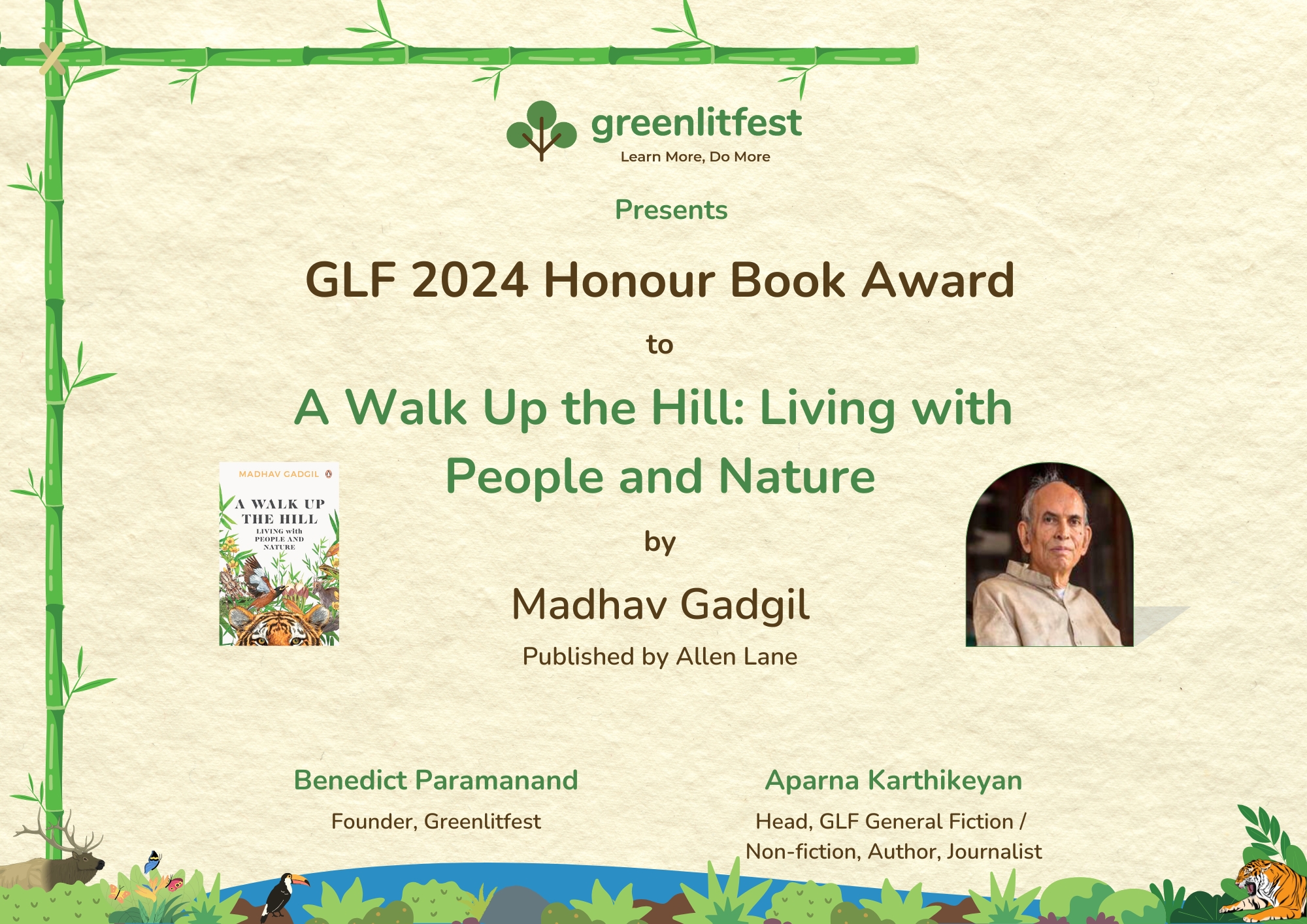
The Green Literature Festival had the honour of awarding his book “A Walk Up The Hill: Living with People and Nature“ the GLF Honour Book of the Year 2024.