
Dairy farming is the lifeblood of rural India. Contributing over 5% to India’s GDP. Dairy farming supports more than 10 crore smallholder farmers and accounts for nearly 30% of rural household income. It is at the core of the country’s agrarian economy, fueling livelihoods, nutrition, and economic stability. Yet, despite the sheer scale of India’s dairy sector, productivity per animal remains half the global average. This is not just an agricultural challenge – it’s an environmental one, too.
India is the world’s largest producer of milk, but that title masks a systemic issue that has plagued the sector for decades: India’s dairy farmers struggle with low productivity, driven by factors like poor livestock nutrition, shrinking grazing lands, and climate unpredictability. A large part of this challenge stems from the lack of quality, affordable fodder. As the demand for milk continues to rise, traditional dairy farming faces increasing pressure on resources, further exacerbating the environmental footprint of the sector.
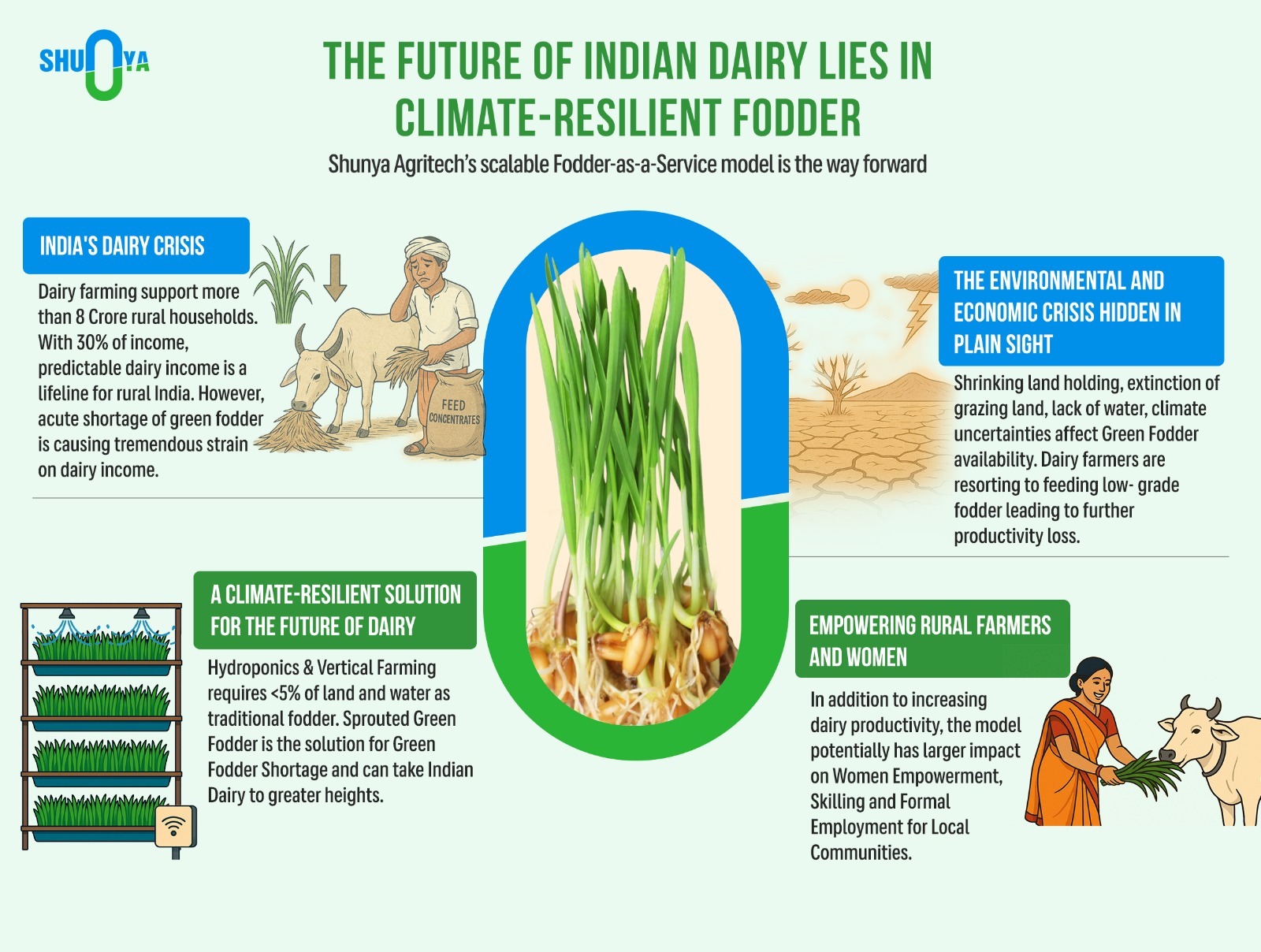
The Environmental and Economic Crisis Hidden in Plain Sight
Dairy farming in India is heavily reliant on grazing land and fodder production. However, the shrinking of grazing lands, combined with climate change and increasing urbanization, has created a fodder crisis. Smallholder farmers, often working with just one or two acres of land, are forced to rely on low-grade concentrate feed and unsustainable practices, contributing to rising land degradation and water scarcity.
This systemic inefficiency has resulted in a situation where India’s dairy productivity is stagnating, and the environment is bearing the brunt. Farmers are pushed to adopt intensive farming practices, exacerbating the depletion of natural resources – leading to unsustainable water use, soil erosion, and greenhouse gas emissions.
A Climate-Resilient Solution for the Future of Dairy
Addressing the challenges facing dairy farming requires a different kind of innovation – one that is sustainable, scalable, and climate-resilient. The solution lies in transforming how we grow and distribute fodder, the backbone of dairy productivity.
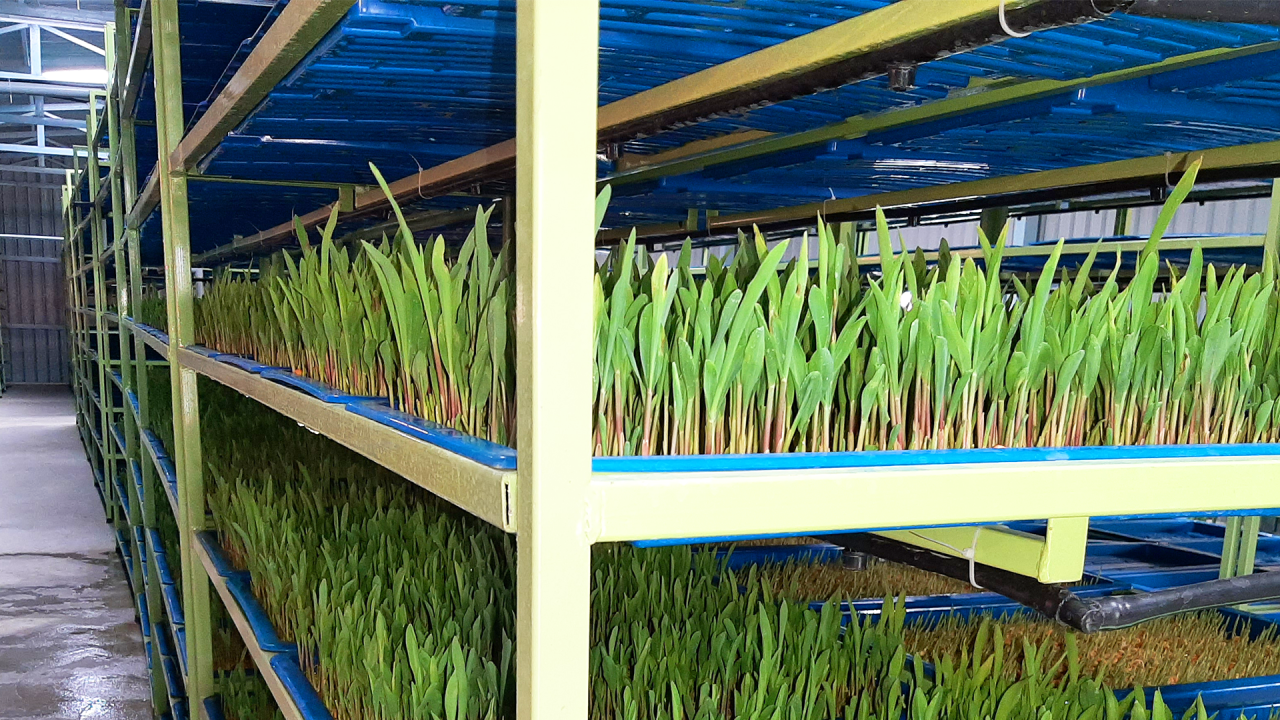
By adopting hydroponics – a method that grows high-nutrition fodder using 90% less water than traditional farming, without the need for soil or arable land – dairy farming can evolve into a more climate-resilient system. This method can be used to grow nutritious feed for cattle, especially in water-scarce regions where traditional farming is increasingly unviable.
Hydroponics allows farmers to grow fodder indoors, in controlled environments, making it possible to supply fresh, nutritious feed year-round – without depending on seasonal fluctuations or climate uncertainties. This is a game-changer for India’s dairy farmers, who rely on stable feed supplies for better productivity and higher incomes.
Empowering Rural Farmers and Women
In addition to the environmental benefits, this solution offers a path forward for empowering farmers, especially rural women, who have long carried the burden of manual labor in dairy farming. The daily tasks of cutting, hauling, and transporting fodder often fall on women in rural households, and these labour-intensive duties leave them with little time for anything else. There are services available now to get Hydroponic fodder delivered directly to the farmer’s doorstep. This removes the burden and allows women to redirect their time to more productive, dignified activities.
A recent study conducted by Shunya with dairy farmers in the market near Kanpur—tracking actual milk collection receipts—helps quantify the benefits of a high-nutrition fodder solution. Farmers who adopted this improved feed and made a strategic replacement of their higher-costing feed supplements saw a 5% increase in Fat in Milk and an 8% increase in net income. This improvement was significant, even despite the intense heat of May during which the study was conducted, with farmers maintaining steady milk volume. This boost in productivity and quality directly translates into better earnings for farmers, making their livelihoods more stable and sustainable.
The Opportunity for India’s Future
In a country where nearly half of the rural population is involved in agriculture, solving the dairy crisis is about much more than just improving milk production. It’s an opportunity to tackle some of India’s biggest challenges – including climate resilience, rural economic empowerment, and nutrition security. By transforming dairy farming into a climate-smart industry that embraces technology, innovation, and sustainability, India can lead the way in creating livelihoods that thrive even in the face of environmental challenges.
As we look ahead, it’s clear that solving the dairy crisis can be one of India’s biggest opportunities for impact. By addressing the fundamental problems of fodder scarcity, water usage, and land degradation, we have a chance to create a more sustainable dairy ecosystem that improves farmer incomes, reduces environmental harm, and empowers rural communities.

The dairy crisis is not just an agricultural problem; it’s a rural and environmental crisis that requires urgent attention and action. It’s time we invest in solutions that empower our farmers, protect our resources, and help our nation move towards a more sustainable, resilient future.
Vijay Singh, MD & CEO, Shunya Agritech