

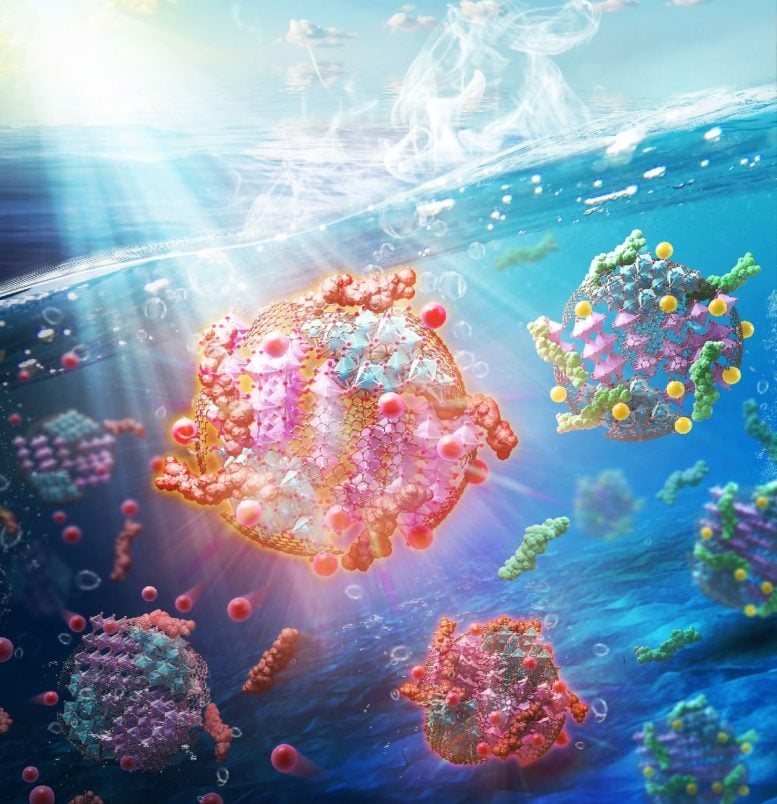
Scientists are increasingly turning to sunlight as a powerful ally in cleaning up polluted water. Photocatalysts can harness solar energy to break down harmful contaminants, while photothermal evaporation uses that same energy to rapidly heat and vaporize dirty water, which then condenses into clean, drinkable liquid. Despite their promise, both methods often rely on expensive or difficult-to-manufacture materials that limit their large-scale use. This has sparked a global effort to create a single, affordable, and efficient material capable of performing multiple purification tasks—ideally one made from resources that would otherwise go to waste.
Mechanochemical Synthesis Using a Planetary Ball Mill
To create this innovative material, the researchers used a planetary ball mill and carefully optimized the milling process. They began with a simple mixture of molybdenum trioxide (MoO3) and polypropylene, a common plastic found in packaging and household goods.

Through precise mechanical processing, they converted this waste-derived mixture into composite particles containing hydrogen molybdenum bronze (HxMoO3–y), molybdenum dioxide (MoO2), and activated carbon—materials that work together to capture sunlight and drive multiple purification reactions.
“The proposed mechanochemical process surpasses other current approaches in terms of both energy efficiency and cost-effectiveness,” highlights Dr. Shirai.
Through extensive experimentation, the research team demonstrated the many remarkable capabilities of their composites. First, these particles exhibited broad light absorption over the entire near-infrared–visible–ultraviolet range, allowing the photocatalytic degradation of a model organic pollutant. Interestingly, the composites also functioned as Brønsted acid catalysts and removed water pollutants even in the absence of light.
Harnessing Plasmonic and Photothermal Effects
Additionally, the proposed catalyst exhibited plasmonic properties leading to a marked photothermal effect that enabled rapid heating using sunlight. This could be leveraged to drive the fast evaporation of water with exceptional photothermal conversion efficiency. Finally, oxygen-containing carbons that remained as milling byproducts could adsorb and remove heavy metal ions from wastewater.
The research team plans to refine their ball milling process to produce similar all-in-one catalysts for water remediation and other applications. “Our developed technology has the potential to be applied to a wide range of oxides and plastics, and we anticipate that it will have varied applications, including enhancing the functionality of existing materials and upcycling waste plastics, to secure the availability of drinking water,” concludes Dr. Shirai.
This article was published in – From Plastic to Pure Water: Scientists Turn Trash Into a Super Catalyst