
India today stands poised at the cusp of a major transformation. And this transformation is being led by a shift towards renewable energy. Time is of the essence, as India now sprints towards the ambitious targets of 500 GW of energy generation from non-fossil sources and even taller claims to achieve net-zero by 2070.
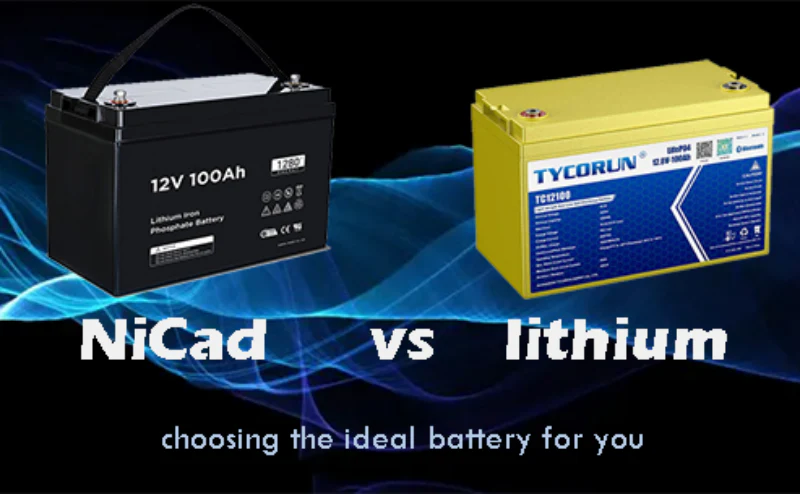
However, generating energy from renewable sources alone won’t be sufficient for India to meet these aspirational targets. What’s needed is a reliable way to store and distribute this energy. Pivotal to this shift in battery technology are the two titans: Nickel-Cadmium and Lithium-Ion.
With massive adoption nationwide, each of these battery technologies extends commendable support and benefits for storing, distributing, and optimising energy usage. However, in the pursuit of clean energy, do they offer greater advantages over the other? Let’s delve deeper and break down the pragmatic advantages of each of these battery technologies, especially given the context, the opportunities, and, of course, India’s unique terrain and requirements.
Given the current wave towards sustainability and clean energy, Li-ion seems to be leading the wave of adoption, especially in the urban corridors. Understandably so, owing to their light weight and high energy density (roughly 250-300 Wh/kg), Li-Ion offers pragmatic benefits. Their primary use case is in the fleet of the latest electric vehicles, residential rooftops and urban microgrids. This battery technology offers significant advancements in quick-response backup power. Further boosting its adoption is India’s government’s PLI scheme for Advanced Chemistry Cell (ACC).
As per NITI Aayog, the projections for Li-ion cell manufacturing capacity are rounded off to 120 GWh in the pipeline, thus showing greater potential. However, on the downside, Li-ion batteries are prone to thermal sensitivity, thus increasing the vulnerabilities of fire risks, especially given India’s climatic conditions. In areas with extreme temperatures and certain geographies, this battery technology has limited applications.
Nickel-Cadmium: The Silent Workhorse in India’s Extremities
Often sidelined in the glamour of the new tech and EV wave spreading in the urban corridors, Ni-Cd batteries offer rather resilient solutions, engineered for the long haul. To begin with, this battery technology offers an incredible lifespan of nearly 20 years, thus naturally being a strong contender for India’s sustainability goals. And that’s only the beginning. With seamless operability in extreme climates, ranging from -40°C to +70°C, Ni-Cd batteries thrive in environments where their counterparts would easily perish.
Given its robust thermal tolerance, Ni-Cd batteries are ideal for remote off-grid installations in India’s rugged terrains, be it the vast deserts, hilly terrains, or the expansive coastal regions. Furthermore, Ni-Cd offers another significant advantage of being deep-cycle batteries without any significant capacity loss, critical to support daily load cycling in energy storage. With low internal resistance, this battery technology offers high discharge rates, making them an integral and mission-critical part of crucial infrastructure like defence outposts and oil pipelines, amongst others.
In cases where Li-ion requires frequent intervention, Ni-Cd offers better results with minimal maintenance and consistent uptime; for instance, in projects across Indian Railways, Defence R&D Organisations and off-grid solar arrays.
Ni-Cd Vs Li-Ion: The Breakdown in a Nutshell
| Features | Ni-Cd | Li-Ion |
|---|---|---|
| Ideal Lifespan | 15-20 years | 7-10 years |
| Optimal Temperature | -20°C to +45°C (No air conditioning required.) | 0°C to +45°C |
| Maintenance | Low | Low, but requires BMS |
| Depth of Discharge | 80% | 90-95% |
| Safety | Non-Flammable | Risk of Thermal Runaway |
| Cost Per Cycle | Lower | Higher |
| Recyclability | Matured Ecosystem | Nascent Stages but growing in India |
| Use Cases | Off-grid, extreme climate, backup for mission-critical systems | Electric vehicles, consumer goods, and urban solar |
The Future Perspective – A Hybrid Approach?

The writing on the wall is clear! For India to truly accelerate on its renewable energy and net-zero goals, it’s no longer a debate of “either/ or”. As per the projections shared by the Ministry of New and Renewable Energy (MNRE), India would need a whopping energy storage capacity of 250 GWh by 2030. Neither of the battery technologies can single-handedly withstand this requirement. Instead, India’s renewable energy revolution requires a carefully crafted hybrid approach that plays on the strengths of each of these cutting-edge battery technologies.
Smart energy Companies are cognisant of this demand and hence, are deploying strategic and hybrid battery systems. Thus, while Li-ion fast discharge rates are ideal for peak shaving, the resilience offered by Ni-Cd finds its ideal use case in base load reliability. This unique and mixed storage approach ensures cost efficiency, system stability, and long life cycles, mission-critical for growing India’s infrastructure.
Piyush Goyal, Co-Founder & CEO, Volks Energie