
Since the turn of the previous century, the world population grew 5-fold from 1.6 billion in 1900 to around 8 billion today. During the same period, land under cultivation grew by around 1.8 times from around 900 million hectares to 1.6 billion hectares.
Similarly, the cattle population worldwide grew 3-fold to around 1.5 billion today. What all this data tells us is that the number of mouths to feed far outpaced the resources at our command over the last century and another couple of decades or so. Despite the regional disparities in the global hunger index (around 10% of the global population remains hungry even today), we have somewhat managed to meet the stupendous growth in demand for food, largely by what we now know as a less-than-the-ideal way of doing it, that is, by indiscriminate use of chemical fertilizers and pesticides and other unsustainable agricultural practices.
To put things in perspective, according to the United Nations, the number of people facing ‘extreme food security’ today is roughly equal to the world population two centuries ago. The recent years have also seen a significant jump in the number of people lacking access to food caused by the Covid shock, followed by global conflicts in Europe and the Middle East and by far the biggest challenge – climate change.
The impact of climate change on our everyday life is more common knowledge today since we started tracking it with sophisticated statistical models some six decades ago. From unusually hot summers to life-crippling floods to severe droughts and rising sea levels capable of submerging coastal living spaces, climate change has today emerged as the biggest threat to humanity. One area that climate change will affect us all indiscriminately will be agriculture, making food security a universal challenge that we will have to address collectively.
The thread that connects climate change to our kitchen is a direct and a very serious one too. From drop in crop yields to soil erosion and heat stress to severe water shortages, the scourge of climate change will leave its fingerprints on every stage of our food ecosystem.
In a country like India where agriculture impacts more lives and livelihoods than any other sector, the effect of climate change can be quite devastating. Addressing this question in Parliament last year, India’s then minister for agriculture said that in the absence of adoption of adaptation measures, the yields of rain-fed staple crops like rice, wheat, maize, etc., will drop considerably. Not just crop yields, climate change will also lower the nutrition quality of what we produce.
Organic Farming to the Rescue
Fortunately, organic farming offers a solution to this problem that is both effective and more importantly sustainable too. At a very broad level, organic farming not only keeps harmful chemicals out of our food ecosystem but also helps us in protecting the natural resources like carbon and other nutrition-rich soil and water.
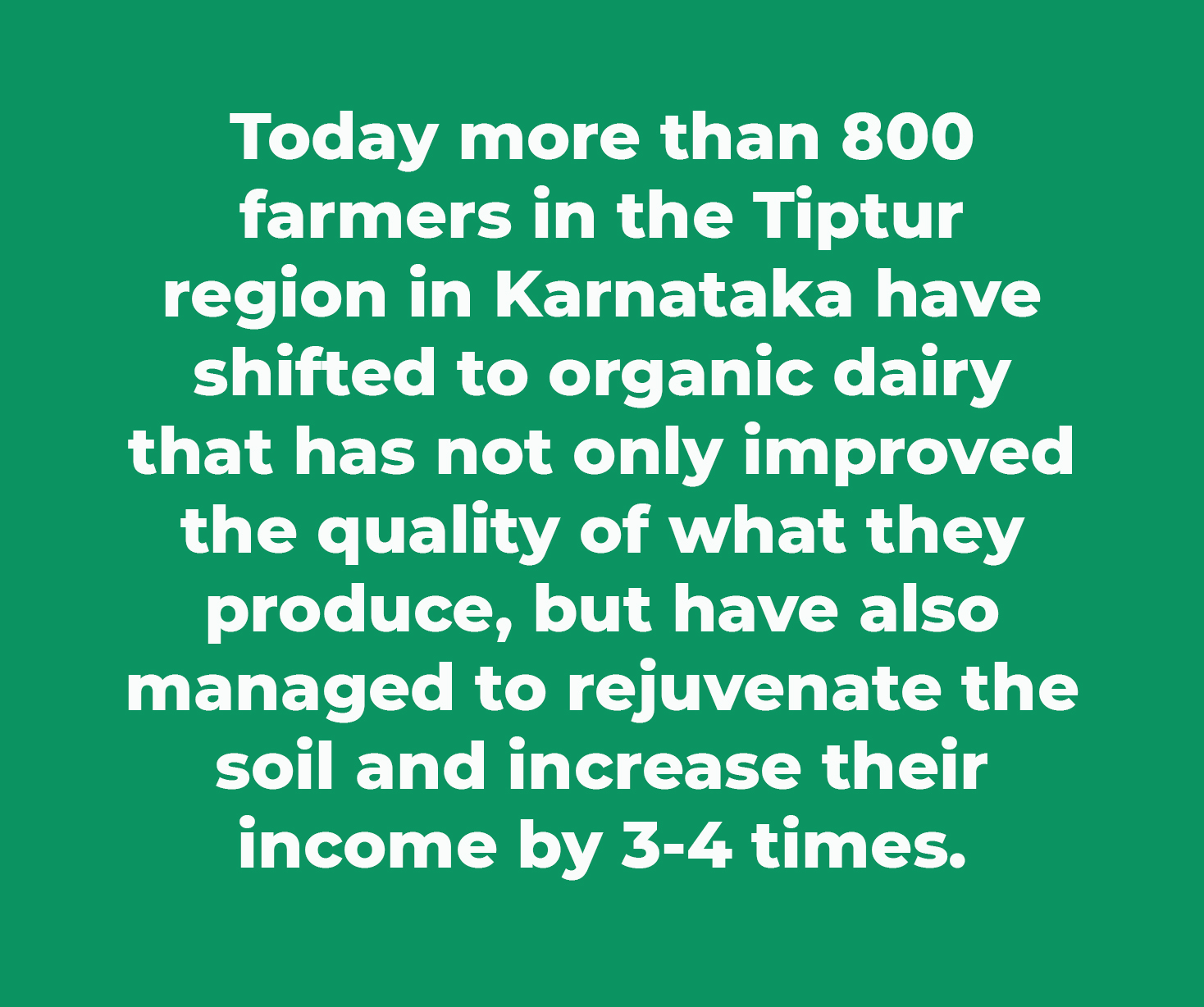
In our efforts to combat climate change and making agriculture more sustainable, we are also addressing other serious socio-economic challenges like massive population migration from rural to urban areas.
Every stakeholder in the food chain has a role to play in this. The government, for its part, is encouraging more sustainable and profitable agricultural practices like organic and natural farming (officially called zero-budget farming now) and is also mandating globally accepted standards in processes and produce.
However, access to scientific knowledge and best practices remains a challenge for farmers. They often lack the means to navigate research-heavy information on their own. This is where brands, especially in the food and FMCG sector, can play a crucial role by acting as a bridge between agricultural experts and farmers, ensuring that the latest advancements and sustainable practices reach those who need them the most. Farmers, of course, as the principal stakeholders, have to make the shift too, with the support of experts like agriculture, soil, and climate scientists.
However, the key to the success of the shift towards organic farming is still held by common consumers. Today, due to the low level of adoption of organic farming in India, organic food is not affordable to a vast majority of people. Early adopters, that is those who can afford to buy organic food, can help in mainstreaming agriculture that is climate change-proofed and sustainable in the long run. We understand the challenge and we also have the solution, but to realise the benefit, consumer behaviour has to change. As consumers, we only have to ask where our food is coming from, who is producing it and most importantly how. All said and done, saving our kitchen from climate change is almost entirely in our hands.

Shashi Kumar, Co-Founder & CEO, Akshayakalpa Organic