

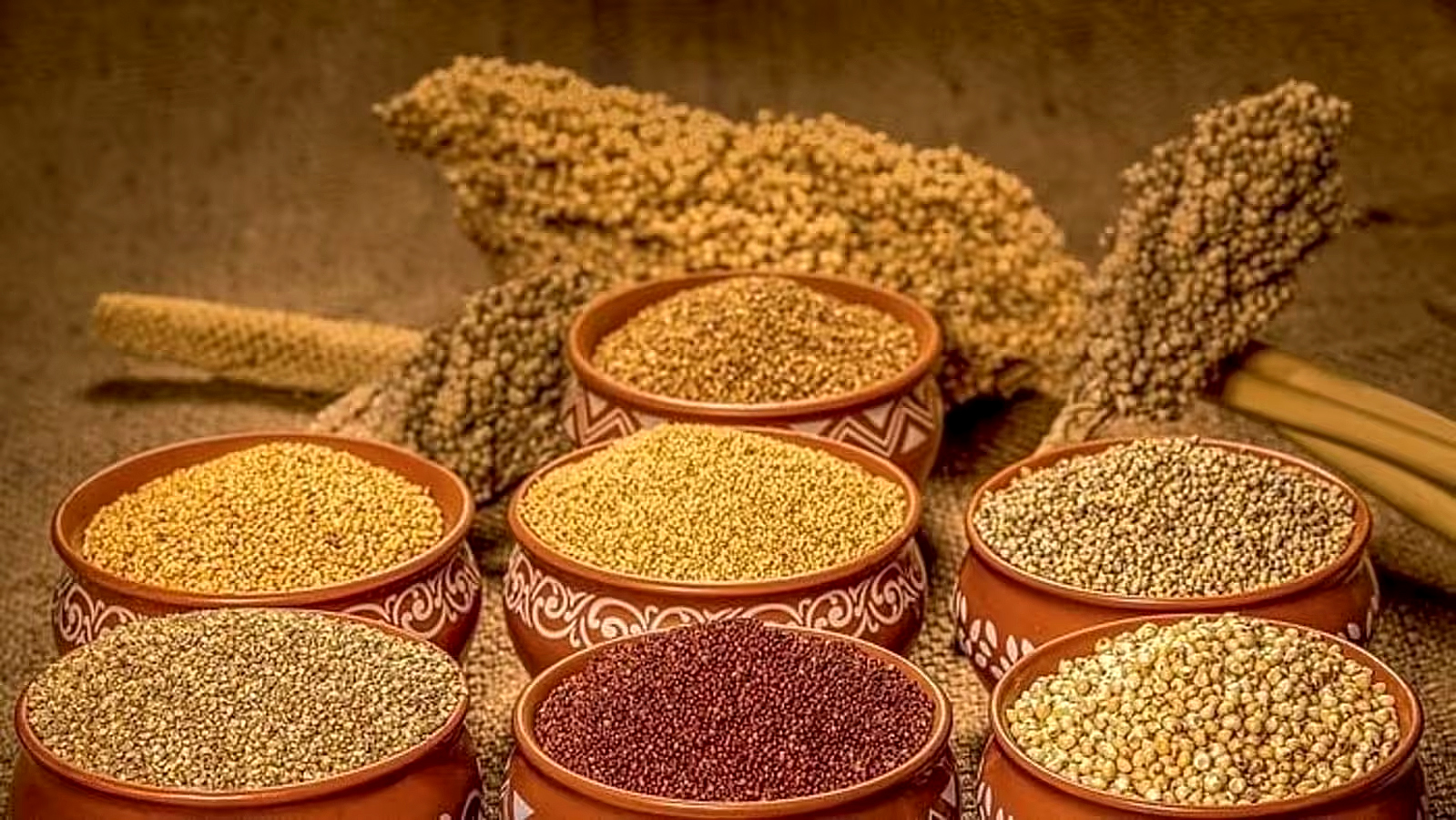
India’s food future may rest on an ancient grain—millets. Once the backbone of Indian diets, these hardy “medicine grains” nourished generations, demanded little from the soil, and thrived in dry conditions. But over time, polished rice and refined wheat displaced them, narrowing diets, draining water resources, and contributing to declining soil health. Today, India faces the consequences—an epidemic of diabetes and obesity, persistent malnutrition, and farms locked into unsustainable cropping patterns.
Millets offer an alternative grounded in both tradition and modern science. According to ICRISAT, millets require only about 79 litres of irrigated water per kilogram of grain, compared to nearly 600 litres for rice and 730 litres for wheat. In a country where agriculture consumes over 80 percent of freshwater withdrawals, the implications are enormous.
Beyond water efficiency, millets are also resilient. They withstand heat and drought, grow in diverse climates, and restore soil fertility by demanding fewer chemical inputs. Nutritionally, they are equally powerful. Their low glycemic index makes them ideal for diabetes prevention, while their high fiber content aids digestion and satiety. Dr. Khader Vali, one of India’s leading nutrition voices, calls them “medicine grains” and warns that “rice is killing us.”
Yet millets remain niche—more expensive than rice or wheat, with limited supply chains. Without decisive intervention, they cannot scale fast enough to meet India’s food and climate needs.
Mid-Day Meals: India’s Best Entry Point
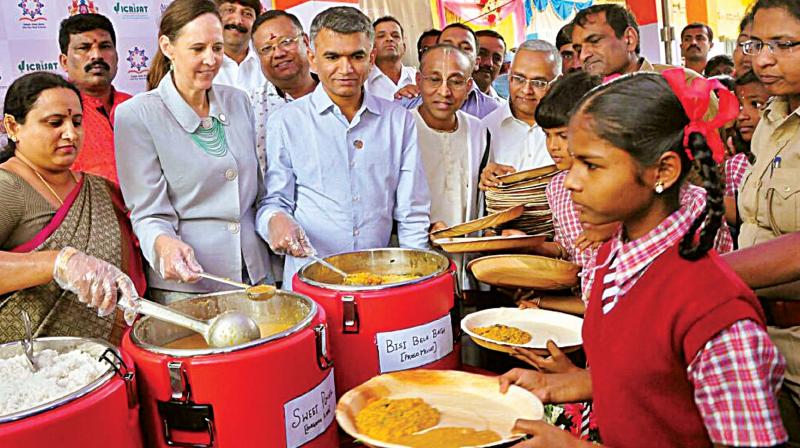
The Mid-Day Meal (PM-POSHAN) program feeds over 12 crore children daily and is one of India’s great policy success stories. Its scale makes it a powerful lever for shaping eating habits across generations.
A phased rollout of millets can transform the program and beyond:
Phase 1: Introduce blended meals (e.g., wheat-millet rotis, rice-millet khichdi) to ease acceptance among children, parents, and cooks.
Phase 2: Gradually increase millet share as supply stabilizes and familiarity grows.
Phase 3: Expand millet-based meals to two or three times a week, with central funding mandating inclusion.
This approach:
- Improves child nutrition with high-fiber, low-GI foods.
- Builds cultural familiarity with millets from an early age.
- Creates large-scale, guaranteed demand that encourages farmers and startups to invest.
No advertising campaign could match the credibility of millions of children eating millets daily in school.
Extending to Colleges and Hostels
Once schools normalize millet consumption, the next frontier is colleges, universities, and hostels that serve young adults in bulk every day.
Key steps to expand millet adoption among students:
- Include millet-based staples in canteens (blends, porridges, snack bars, noodles).
- Position millets as aspirational foods—eco-friendly, performance-enhancing, and modern.
- Enable startups to supply institutions through bulk contracts, ensuring stable markets.
- Brand millets as the “next oats or quinoa,” combining heritage with health appeal.
This ensures continuity: children who eat millets in school will find them again in college, embedding them in everyday diets.
Tackling the Supply Challenge
Demand creation must be matched with farmer incentives and supply stability. Key measures include:
- Productive use of degraded land: About 30% of India’s land is degraded; millets grow well here, restoring soils while producing food.
- Reformed procurement: Extend MSP, procurement, and PDS inclusion to millets, giving farmers the same security as rice and wheat.
- GST reforms: Keep GST at 0% for millets; gradually raise GST on rice and wheat as millet supply expands.
- Risk mitigation: Launch insurance schemes to guarantee farmers will not earn less than from rice or wheat.
- Shared infrastructure: Cluster farming, FPOs, and storage hubs to cut costs and preserve native varieties.
- Forward contracts: Encourage startups to sign pre-agreed purchase deals with farmers for predictable incomes.
The Role of Startups
Startups can bridge policy and the plate by making millets accessible, affordable, and aspirational. They can:
- Supply ready-to-cook mixes to schools and colleges.
- Create child-friendly millet snacks and porridges.
- Partner with food delivery platforms to mainstream millet-based meals.
Several startups—Slurrp Farm, Millet Amma, Troo Good, Wholsum Foods, and farmer-led collectives—have already introduced millet-based flours, porridges, noodles, and snacks to urban consumers. Their success proves the barriers are not taste but awareness, affordability, and convenience.
Policy + Startups = Scale
To succeed, millet promotion must combine:
- Policy: Stable demand, procurement reform, farmer incentives, infrastructure, and risk coverage.
- Entrepreneurship: Creative products, wide distribution, and modern branding.
This synergy can be anchored under a Millet Innovation Mission within Startup India—aligning central funding, farmer incentives, startup incubation, and research support. Tracking outcomes—from child health to water savings—will sustain political momentum.
Conclusion
Even two millet-based meals a week across 12 crore children could generate demand for about 1.5 million tonnes annually (100 g per child per meal) while saving nearly 775 billion litres of water. But these numbers, as important as they are, tell only part of the story.
Millets are not just crops—they are India’s heritage grains. They can revive degraded soils, restore vanishing waters, and protect the health of our future generations. Their cultivation also means new jobs in farming, processing, and rural enterprises, empowering India’s villages while strengthening its food security. At a time when the world looks to India after the UN declared 2023 the International Year of Millets, we have the chance to show leadership once again—by making millets a cornerstone of our children’s diets.
The deeper truth is this: when we place millets on a child’s plate, we are sowing seeds for a healthier body, a sharper mind, and a resilient future. We are also restoring the soils and waters that will nourish generations yet to come. The future of India rests in the well-being of her children, and the foods we choose for them today will shape the strength of our nation tomorrow.
As Dr. Khader Vali reminds us:
“When your food is right, there’s no need for medicine. When your food is wrong, no medicine works.”
Let us begin with the food we give our children—nurturing their health while also healing our soils and saving our waters.
Action Box: Five Key Steps for a Millet Revolution
- Mandate millet inclusion in Mid-Day Meals with phased targets across states.
- Extend millet-based meals to colleges and hostels to influence young adult consumption.
- Provide farmer security through MSP parity, insurance schemes, and procurement reforms.
- Shift consumer pricing by keeping GST at 0% on millets and gradually raising it on rice and wheat.
- Launch a Millet Innovation Mission under Startup India to fund startups, research, and supply chain development.

Ram Ramprasad is a sustainability advocate and author who writes extensively on water, food systems, and clean technologies. A graduate in international and development economics from Yale University, he has published widely in Indian and international platforms on the intersection of policy, innovation, and sustainability.
Ram’s previous articles published in SustainabilityNext
Common Sense Strategies to Reduce Methane Emissions from Cattle
Integrated Offshore Water and Wind Solution for India’s Coastal Cities
Gut and Soil Microbial SustainAbility Bridges Science and Ancient Indian Wisdom
From Waste to Wealth: Rebranding Sewage Treatment Plants (STPs) to Resource Recovery Plants (RRPs)
The Hidden Crisis with Our Beds
Startup ideas for Sustainable Cremation and Burial Solutions in India
How India’s Agriculture Can Save 200 Billion Cubic Meters of Water
Ten Powerful Reasons for Declaring Moon A Living Entity
Sustainable Wind Turbines: Balancing Bird Protection and Agriculture
A Holistic Water Strategy for India
How India Can Leverage its GST Model for Building a Sustainable Future
A Toolkit for India’s Green Transition
Green Building Strategy – Integrating Innovations from East and West
Eat Less Fish, Save the Planet
Startups are Working Hard for a Plastic-free World
Hydrogen More Harmful Than Fossil Fuels
Tech Startups Can Make India Water Rich
Measure How Basic Elements are Doing, Not Just GDP
A Radical Strategy for A Greener India – The Story of Kusha







[…] Why India Needs a Millet Revolution […]
[…] Why India Needs a Millet Revolution […]