
A Planet-Centric Beginning
India’s energy decisions today will define its climate future, economic resilience, and global standing tomorrow. The challenge is no longer just about generating enough energy—it’s about doing so without degrading the soil beneath our feet, the water we drink, the air we breathe, the space we share, or the biodiversity we are part of. A planet-centric energy strategy is not just ideal—it is imperative.
Reclaiming Ancient Wisdom and Scientific Sanity
Whether drawn from ancient Indian philosophy, the Gaia hypothesis, or modern planetary science, one truth endures: the human body and the planet are composed of the same five foundational elements—Soil, Water, Air, Energy, and Space. Disregarding their sanctity in pursuit of economic or energy gains is not only unwise—it’s unsustainable.
We invoke the principle of “do no harm” in medicine. Yet our planetary systems are often violated by policies that prioritize profit over balance. As Johan Rockström, recipient of the 2024 Tyler Prize, warns, six of the nine planetary boundaries critical for sustaining life have already been breached—most within just a few decades.
Energy Built on Extraction Is Energy Built to Fail
Today’s dominant energy infrastructure is centralized, extractive, and ecologically disruptive. Fossil fuels, once drivers of progress, have polluted our air with greenhouse gases, contaminated our soils and waters with plastic byproducts, and even left debris in space. Large hydroelectric projects, while seen as renewable, have displaced communities and fractured river ecosystems.
Even newer technologies like hydrogen are not without complications. Research from Princeton University and NOAA (National Oceanic and Atmospheric Administration, USA) shows that hydrogen leakage can extend the life of methane—a potent greenhouse gas—by depleting hydroxyl radicals in the atmosphere.
Mining the ocean floor for polymetallic nodules—crucial for powering electric vehicles—has now been proven to disrupt the natural production of “dark oxygen,” a vital element sustaining marine ecosystems. Similarly, my article “Ten Powerful Reasons for Declaring the Moon a Living Entity” (published in Sustainability Next) highlights the environmental dangers of mining the moon. Advancing biodegradable, metal-free battery research like Texas A&M’s polypeptide battery offers a sustainable alternative to the environmentally destructive practices of mining the moon or ocean floors for rare metals.
These complexities remind us that every solution must be judged by its full ecological impact, not just its headline benefits.
Six Red Flags of Unsustainable Energy
Any energy strategy that exhibits the following traits is likely to be ecologically harmful:
- High capital intensity
- Extraction through mining or brute force
- Destruction of biodiversity
- Neglect of soil, water, air, or space
- Centralized, monopolistic control
- Linear design that ignores nature’s circular patterns
Avoiding these pitfalls isn’t a rejection of technology—it’s a redefinition of progress through the lens of planetary health.
Introducing the Environmental (or Earth) Health Index
In my article for Earth.org, I proposed the Environmental Health Index (EHI)—a composite metric to evaluate economic activity based on planetary impact – the five foundational elements. EHI, or Earth Health Index, offers an ecological counterweight to GDP.
If India is to lead with conscience and credibility, NITI Aayog should consider adopting the EHI alongside GDP. While GDP promotes unchecked growth, EHI introduces the missing moral compass for managing our natural wealth.
A Sector-Wise Energy Strategy for India
1. Homes and Factories: Decentralized, Low-Footprint Solutions
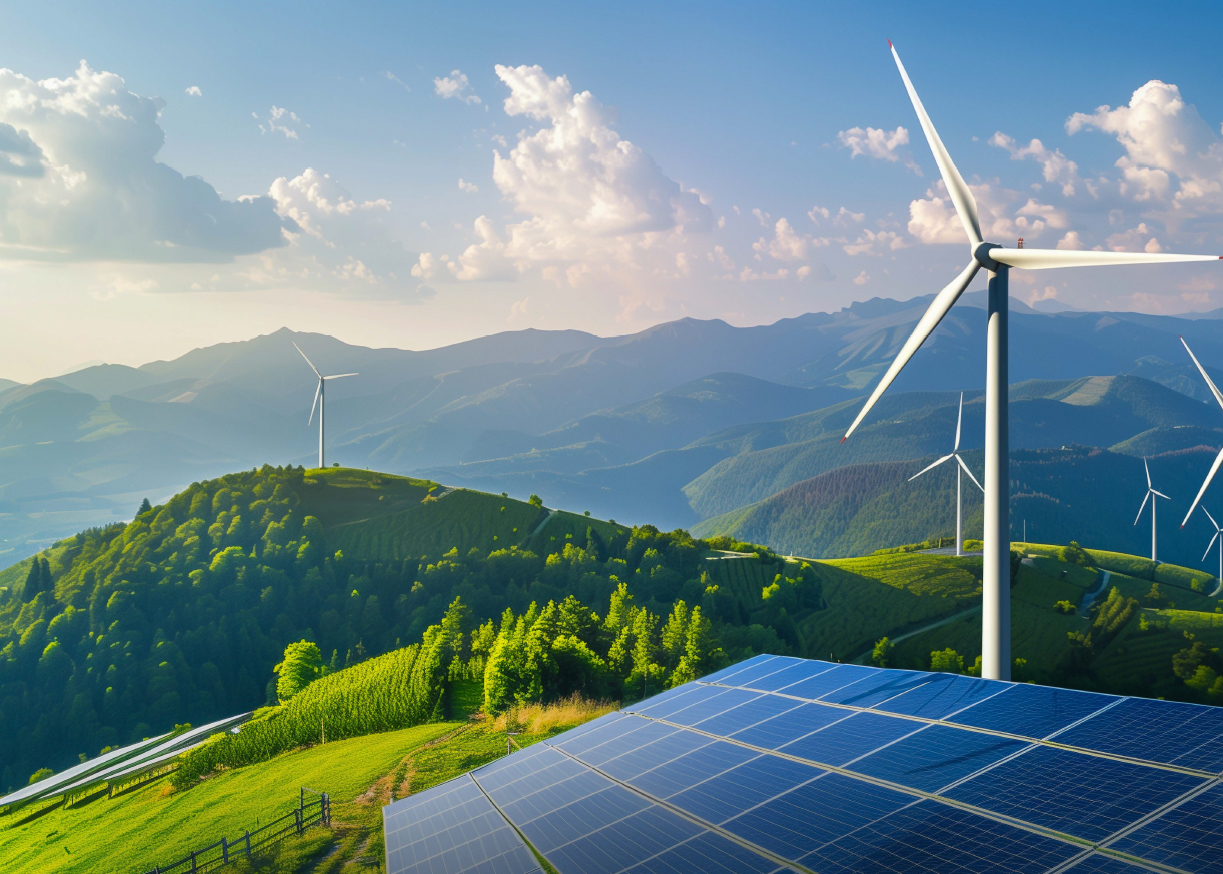
India doesn’t need more mega-projects to power its future. Rooftop organic solar panels, blade-less wind turbines, and localized eco-friendly storage systems offer energy solutions that are low-impact, bird-friendly, and community-scaled. Portable digesters that convert food waste into cooking gas can decentralize energy even further—many promising startups are already advancing in this space.
Decentralizing energy enhances resilience, reduces dependency, and ensures energy justice for rural and underserved populations.
2. Agriculture: Conserve Resources to Save Energy
As I discussed in Sustainability Next, Indian agriculture consumes massive amounts of energy due to water-intensive crops, overextraction of groundwater, and heavy fertilizer use—all of which contribute to high energy costs.
Even modest reductions in water use could save billions of kilowatt-hours. Transitioning more rapidly to efficient irrigation, crop diversification, low-energy fertilizers, solar powered cold storage, and agri voltaics would ease the burden on both water and energy systems.
Expanding tree cover helps lower temperatures and reduces the need for energy-intensive cooling. At the same time, shifting commercial crops like cotton to lab-based production using microbes can free vast tracts of land for reforestation. Today, biocomposites can replace metals in many applications, further reducing the energy demands of mining. Clearly, agricultural reform and energy strategy must advance together.
3. Transportation: Promote Shared, Clean Mobility
India must pivot from private vehicle ownership toward shared and clean mobility. Raise GST on fuel-based cars while incentivizing public and private fleets to adopt biodegradable, metal-free batteries.
Support circular mobility models that minimize congestion and emissions. The future of mobility lies in systems that are connected, intelligent, and sustainable—not in multiplying car sales.
4. Water-Based Power: Blue and Wave Energy Over Hydropower
Hydroelectric power comes at a heavy ecological cost—flooded valleys, disrupted ecosystems, and displaced communities. A better alternative is Blue Energy, which captures power from the ionic difference where freshwater meets seawater using advanced membrane technology.
India may also need to explore wave energy converters, as breakthrough results have been achieved by startups like CorPower, whose buoys can generate up to 850 kilowatts of power under optimal wave conditions. Arrays of buoys on waves can be a significant source of power.
With its vast coastline and river deltas, India is uniquely positioned to become a global leader in this clean, non-invasive energy source.
5. High-Tech Sector: Make Intelligence Energy-Smart
AI, blockchain, and cloud computing are driving explosive energy demands. In the U.S., small modular nuclear reactors (SMRs) are being considered to meet this need. SMRs are safer, smaller, and more regionally adaptable than traditional reactors—but still carry some risks. India must explore water based strategies as mentioned above including advances in microbial innovations that harness energy from wastewater, this approach will save vast tracts of land that can be used for tree cover.
India must go further: use AI to reduce AI’s footprint. Smarter algorithms, efficient data centers, predictive energy management, and policy reform based on energy use, and other innovations can make high-tech sector compatible with ecological stewardship.
The Power of Small Fixes
Not all solutions require complex tech. A simple measure—like painting one blade of a wind turbine black—can reduce bird deaths by 70%, according to the Norwegian Institute for Nature Research.
Cultural values rooted in simplicity and sufficiency—long embedded in Indian traditions—must be brought back into the energy discourse. Policy levers like GST reform, which penalize polluting products and reward ecological ones, can shift behavior at scale while encouraging the growth of clean-tech startups that will be more energy efficient.
Even language matters: as I argued in Sustainability Next, rebranding “sewage treatment plants” as “resource recovery plants” can inspire a mindset shift toward innovation and circularity.
Conclusion: From Extraction to Equilibrium
India must not replicate the West’s industrial energy trajectory. Instead, it must chart its own course—one guided by ecological wisdom, civilizational insight, and technological humility.
Let us transition from hype to harmony, from extraction to equilibrium. Let us stop treating the five foundational elements—Soil, Water, Air, Energy, and Space—as resources to exploit, and begin honoring them as relationships to sustain.

Ram Ramprasad is a passionate advocate for sustainability, having authored two books and numerous articles on sustainable strategies for reputable publications. He previously served as the Global Marketing Director for a leading multinational company in the USA. Ram holds degrees from Madras University in India and Yale University in the USA.
Ram’s previous articles published in SustainabilityNext
Gut and Soil Microbial SustainAbility Bridges Science and Ancient Indian Wisdom
From Waste to Wealth: Rebranding Sewage Treatment Plants (STPs) to Resource Recovery Plants (RRPs)
The Hidden Crisis with Our Beds
Startup ideas for Sustainable Cremation and Burial Solutions in India
How India’s Agriculture Can Save 200 Billion Cubic Meters of Water
Ten Powerful Reasons for Declaring Moon A Living Entity
Sustainable Wind Turbines: Balancing Bird Protection and Agriculture
A Holistic Water Strategy for India
How India Can Leverage its GST Model for Building a Sustainable Future
A Toolkit for India’s Green Transition
Green Building Strategy – Integrating Innovations from East and West
Eat Less Fish, Save the Planet
Startups are Working Hard for a Plastic-free World
Hydrogen More Harmful Than Fossil Fuels
Tech Startups Can Make India Water Rich
Measure How Basic Elements are Doing, Not Just GDP
A Radical Strategy for A Greener India – The Story of Kusha