
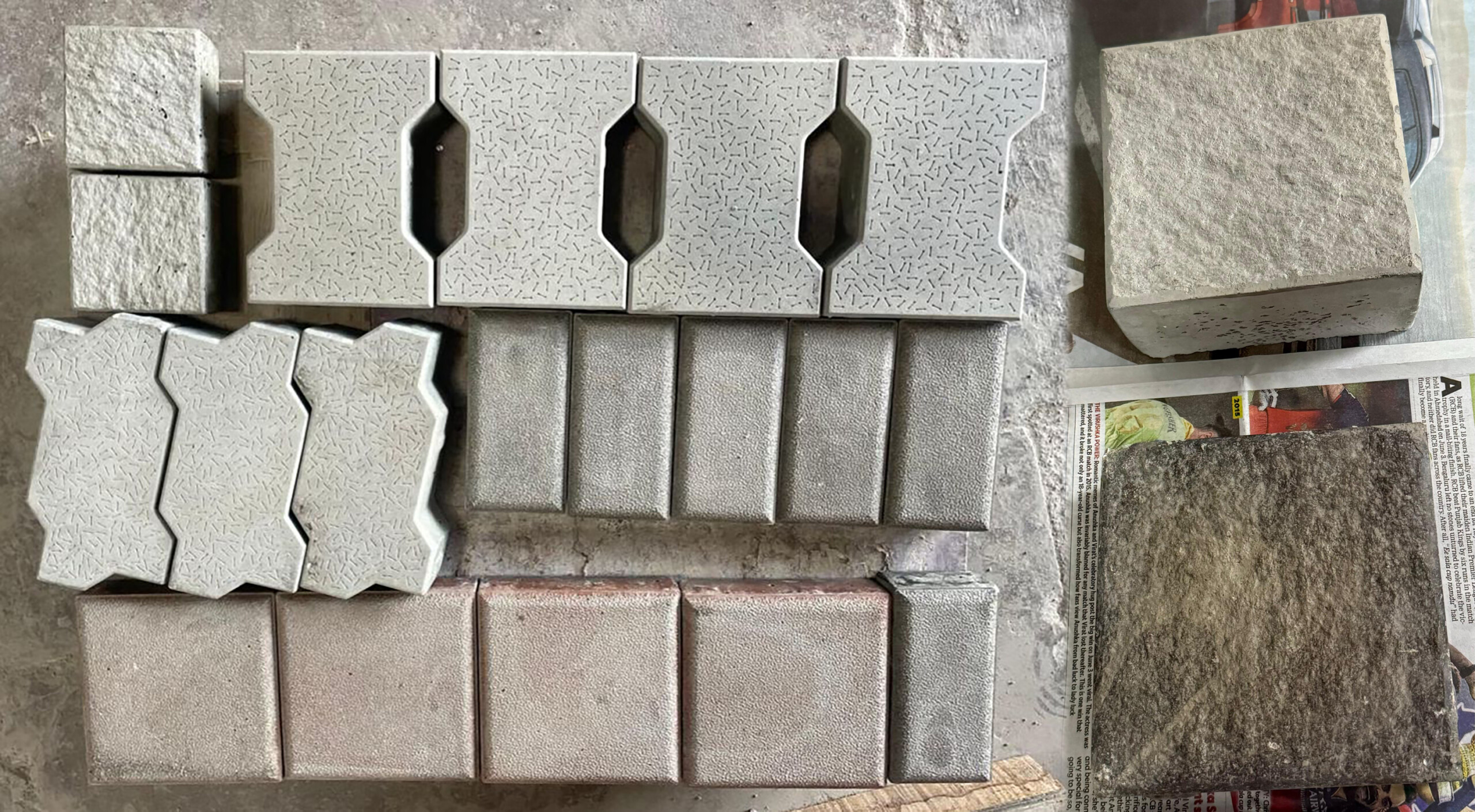
Their startup Novacret, incubated at the Foundation for Science, Innovation and Development, Indian Institute of Science, Bengaluru, promises to reduce carbon emissions by up to 80% and uses no water for curing. The green cement will be launched formally in September 2025.
Novacret’s material is more than green cement. It is a circular economy product whose raw material comes from waste.
Vijay says there’s already keen interest among the real estate sector. Large construction companies are already testing the product out. The Karnataka government is keen on using it in many ways.


Highlights
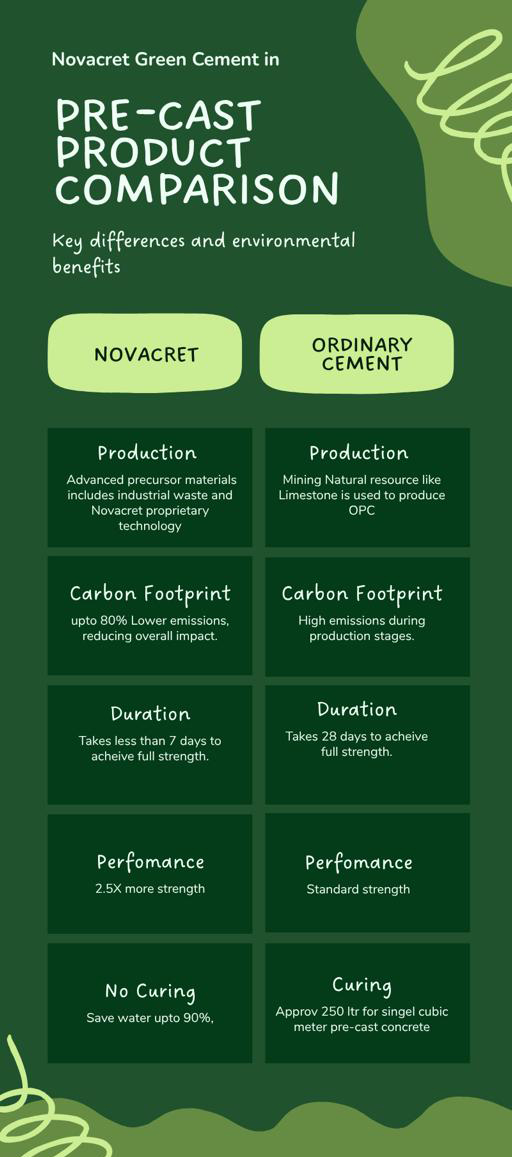
- Environmental Impact: Completely replaces cement in concrete, reducing carbon emissions by up to 80%
- Water Conservation: Eliminates water-intensive curing processes, saving up to 90% of water
- Circular Economy: Utilizes industrial waste as raw materials
- Performance: Achieves target strength in just 3 days (versus 28 days for traditional concrete)
- Cost-Effective: 10-15% cheaper than conventional concrete products now. With scale, it will become more cheap
- Product portfolio includes pavers, kerbstones, porous pavers, AAC blocks, CLC panels, facades, and a wide range of precast concrete products.
- Patented in India. Going for global patent soon
- Compostable bag for transporting concrete
Novacret is already scouting global markets by participating in international construction exhibitions. It took part in the World Future Energy Summit 2025, in Abu Dhabi. It was one of the 12 startups to feature in the recent India construction tech demo day. It is exploring partnerships in Dubai, Abu Dhabi and Sharjah.
The less than an year old startup has received grants from the Department of Science and Technology, Government of India and Zerodha CSR. The company is in talks to raise a first seed round with VCs to fuel its first-stage growth.
Raw Material from Waste
The key feature of Novacret’s products is that they use Industrial waste as their raw materials. Fly ash from thermal power plants, ground granulated blast furnace slag from the steel industry and agricultural waste. With so many thermal and steel plans around, supply of raw materials will not be a bother.
Novacret will be directly helping highly polluting steel industries cut down their environmental impact and target better ESG ratings.
Tapping agricultural waste will be the next frontier. Vijay expects to add farm waste as a raw material in about three years. This could significantly help India cut its carbon footprint and achieve its climate goals as burning farm waste is one of the major contributors to pollution in North India.
Market Potential
The founders are looking out for contract manufacturing facilities to grow in the coming years. According to the company estimates, the Indian market potential for the Novacret product is more than $ One billion. Its engineering blocks have a market potential of $1.3 billion. They estimate the global precast market at $166 billion. Even a 10% market share in the next 5 years will be a significant achievement.
When the world was worrying about the rapid growth of the construction sector (contributing to more than 25% of global warming), here’s an Indian product that has the potential for ‘Drawdown’ (a concept of Paul Hawken that the world can cut global warming within one generation).
While this is only a beginning, rapid product adoption at a global scale can help the construction industry cut its carbon footprint by less than half in a decade.