
Founded by Neelam Chhiber, Gita Ram and Nivedita Ram in 2000, this award winning foundation works at the intersection of equity, climate and gender through nature based solutions. Headquartered in Bengaluru, the organisation is steadily moving towards impacting one million women producers in the near future.
At the heart of Industree Foundation’s work is a powerful idea: that climate action and poverty alleviation do not have to be separate goals. Through collectives, creative manufacturing, and nature-based solutions, women who were once seen as vulnerable are now shaping a more sustainable future.
In an engaging SN GreenLeader Chat recently with Benedict Paramanand, Editor of SustainabilityNext, Neju George Abraham, CEO of the Industree Foundation, shared what it takes for collectives to succeed and how they are among the best climate-mitigation alternatives the world has.
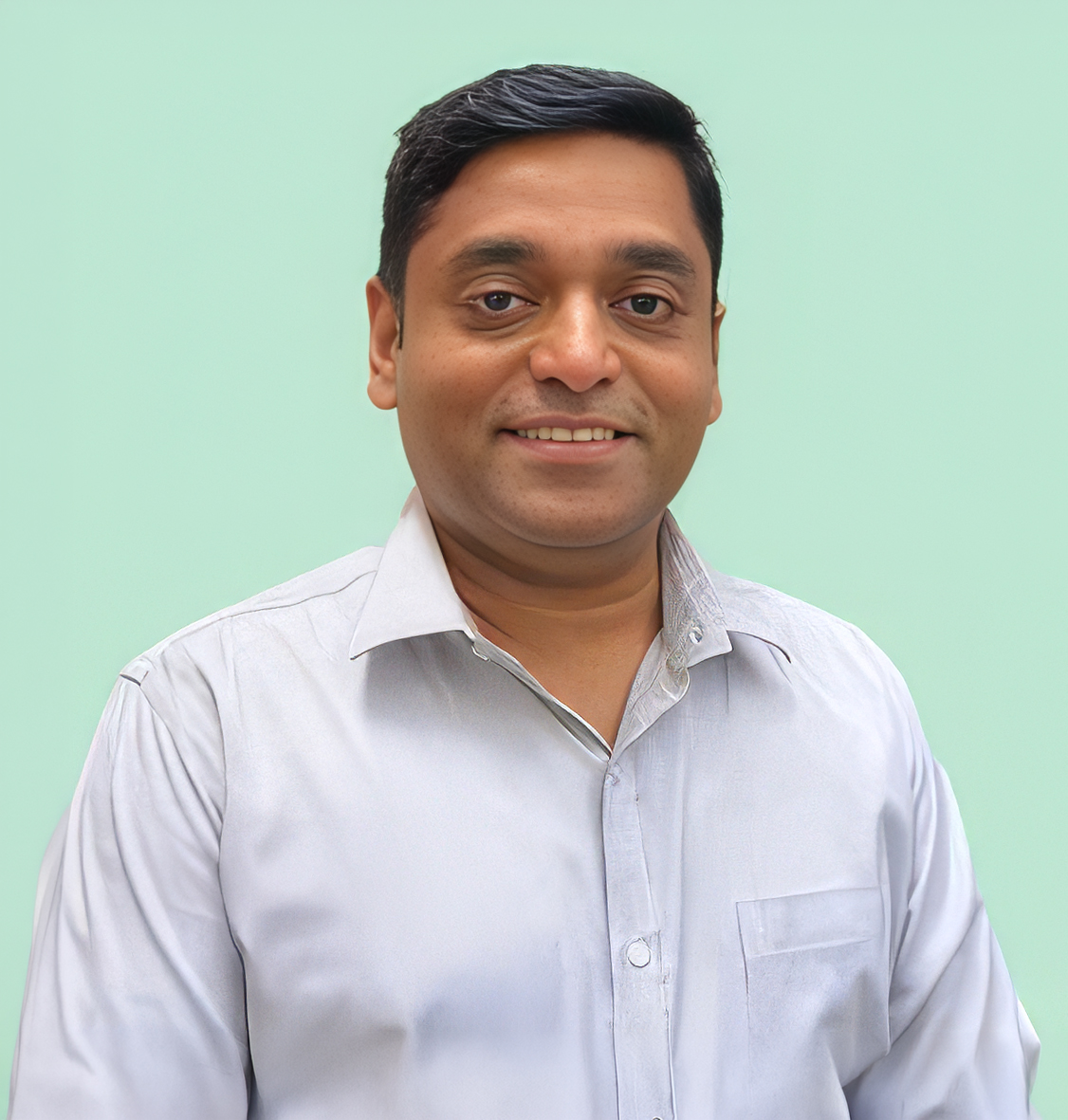
Before he joined the Industree Foundation, Neju worked in the hostile climate of North Karnataka for seven years. “As a young person, I went to North Karnataka and lived among agricultural labourers, especially Dalit women. Life was extremely hard, and witnessing their daily struggles firsthand left a deep impression on me, showing the remarkable resilience they carried through every challenge.” was really a hard life.”
He asked himself, “How to remove rural poverty in a sustainable and climate-friendly manner while working with communities that don’t have anything?” That’s how he realised the power of the collectives for transformation. When he got an opportunity to work with the Industree Foundation, he lapped it up.
Let’s begin with the Industree Foundation’s marquee initiative GreenKraft. How is it progressing?
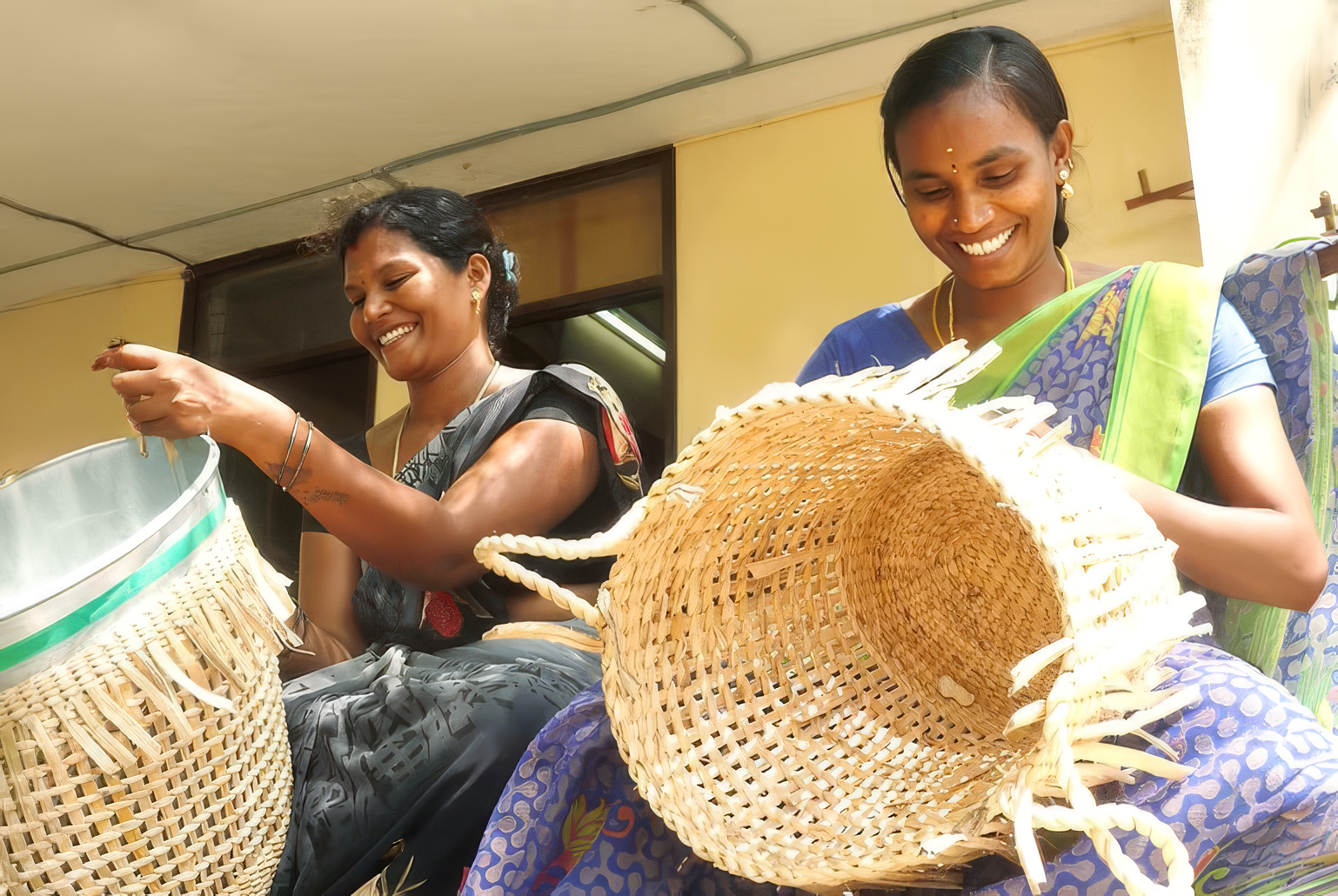
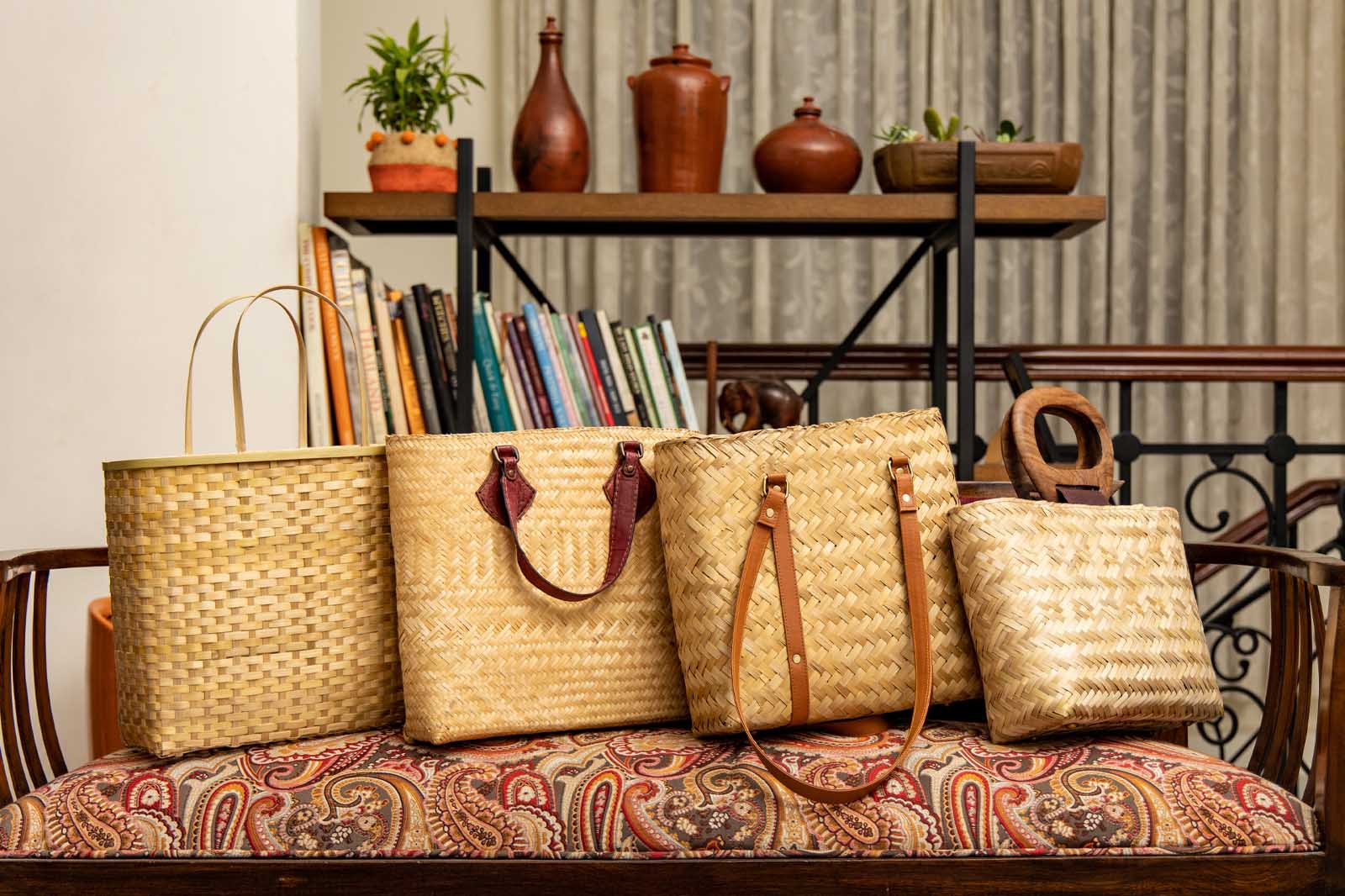
GreenKraft is a women-owned producer company. They are traditional artisans in the creative production space. We don’t say ‘craft’; we don’t say ‘handicraft’. We speak of creative production, creative manufacturing. GreenKraft, one of our earliest producer companies, now brings together creative producers in Tamil Nadu, Odisha, and Karnataka working with natural fibres such as Banana, sal, siali leaves, and Bamboo. Most of the women members are from the tribal communities or marginalised communities. The women producers manage, lead and own their enterprises collectively. Their beautiful products are both exported and also serve the Indian market. Currently, there are about 1800 full-timers and over 3600 part-timers working across the value chains in various roles. Industree supports them through professional management, supply chain expertise, and sales and marketing.
Would GreenKraft be considered a ‘collective’? Could you share more about how collectives serve as a powerful medium for transformation?
Yes, GreenKraft falls under the definition of a collective. It is more like a producer company owned by collectives. Many hesitate to set up collectives because they find it difficult to manage. But historically, we have had extensive experience developing collective models. Added to this is our belief in building scalable and traceable supply chains connected to global and national markets. The collectives forge ahead for women’s social and economic empowerment in a climate-positive manner.
We have worked in the space for 25 plus years now. In the early 2000s, we ran our own small factories in Koramangala village. Seeking a way to reduce the large amounts of raw material being wasted, our co-founder, Neelam, shifted the model so that entrepreneurs own the production. So we used to have male entrepreneurs who worked with a group of mostly women workers and supplied the products. Over time, we found that the entrepreneurs were getting rich, but the workers were not earning enough. So we had to build systems that were traceable and mutually accountable, and hence formed Self Help Groups, with two entrepreneurs leading each SHG. Industree provided working Capital and design support.
In 2012, GreenKraft was registered as one of the first off-farm producer companies in India, bringing together various SHGs under its umbrella.
Over time, we transitioned from small SHG-based production to establishing larger production units, where 200 women work together in compliant, large-scale factories. These facilities meet the stringent social and environmental standards required by some of the world’s largest buyers, such as IKEA, H&M, and others, enabling exports to over 50 countries worldwide.
What started primarily as a small production unit in an urban village, working with a single natural fibre, river grass, as its primary raw material, has today grown into a producer company spanning three states. It now operates large value chains that employ thousands of rural women across Tamil Nadu, Odisha, and Karnataka, working with banana fibre, sal and siali leaves, and bamboo, thereby transforming the lives and livelihoods of women across these country. So yes, we really believe in the power of collectives to transform.
What are the factors that go into making collectives successful?
We use an enterprise operating model called the Six Cs, which includes Construct, referring to the collectivisation and organisation of enterprises for production, including the setting up of premises and machinery. Then comes Capacity, encompassing technical, managerial, and leadership capabilities, coupled with a strong focus on gender and empowerment. This is followed by access to Capital – ensuring access to financial resources to set up and run the enteprises through both grants and working Capital. Create is about the development of products, design, innovation, and processes such as lean manufacturing and continuous improvement. Channel is a key C – linking producers to markets on a regular and sustained basis, following which is Connect, which leverages technology for efficiency and transparency.
Over the years, we have realised that all 6Cs must work in tandem for collective enterprises to succeed. So we officially outlined our insight in a playbook about 8 to 9 years ago. Having a clear model has also helped in working with government partners, particularly in areas such as skill development and rural enterprise development.
Does Industree work with a single collective or multiple collectives?
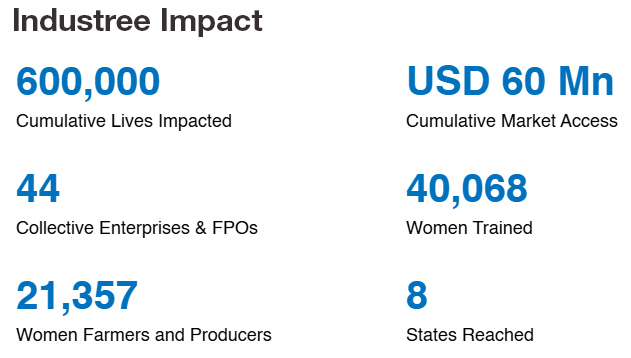
We have about 44 collectives spread across the country, mostly in enterprise development and plantation. We hope that our engagement with the National Rural Livelihoods Mission under its Bamboo subsector initiative will help us scale to build 500 plantation clusters, 150 primary processing facilities, and 750 secondary processing facilities over the next 5-7 years, all connected to robust markets.
Tell me about your ambitious bamboo initiative.
The bamboo initiative is one of Industree’s most ambitious efforts, both in scale and impact. In partnership with government agencies, we aim to impact around 10 lakh smallholder women farmers by planting Bamboo on degraded and fallow lands, utilizing upto 1/3rd of their land . Today, land ownership fragmentation is a serious concern. 86% of Indian farmers are small and marginal farmers, owning less than 1 hectare of land. Among them, over 65% own less than 1 acre. Much of this land is left fallow or becomes degraded, as it cannot meet even the basic food needs of their families. This, along with the local impacts of climate change, leads to forced migrations.
The Bamboo subsector initiative aims to build 500 clusters of 2,000 smallholder farmers in a collective across 10–12 states in India, in regions highly suitable for bamboo cultivation, based on agroecological and agroclimatic factors. Each of these clusters owned by women farmers will also set up Primary Processing Centres to process raw Bamboo and supply it to mainstream buyers.
Over the next 5 years, Industree plans to set up 30 Primary Processing Units (PPUs) in Telangana, Andhra Pradesh, Odisha, Tripura, Arunachal Pradesh, and Jharkhand, where we will work in close collaboration with the State Rural Livelihood Missions. Each of these PPUs, when fully operational, will be able to process about 5000 tonnes of Bamboo annually. These Primary Processing centres and the further secondary processing centres set up will enable women farmers to earn additional income over the next forty years, enabling local value addition and income into local economies, while reducing our country’s dependence on high imports of Bamboo raw materials and finished products.
Local industries that face a massive crunch for sustainable, traceable raw material supply stand to benefit from the initiative too. At full capacity, a single PPU is projected to generate an annual revenue of ₹5 to 8 crore while directly employing over 50 women, earning between ₹15,000 and ₹20,000 per month. Women farmers cultivating Bamboo on 1/3rd of an acre are expected to earn between ₹60,000 and ₹1.2 lakh annually.
What is significant is that our smallholder bamboo seed-to-market value chain was piloted and evolved in the states of Karnataka and Maharashtra through projects supported by CSR and private-sector partners, including HSBC, HDFC, Rainmatter Foundation, SAP, Wells Fargo, Infosys, Citibank, BNP Paribas, IndusInd, and others. The learnings and successes of these partnerships have now enabled us to confidently work at scale to impact 10 lakh Lakhpati didis across the country under the Bamboo subsector Initiative of the National Rural Livelihood Mission. So, truly, we feel grateful to the various partners who have backed our vision and intention from the earliest phase.
Is it difficult to scale collectives?
Scaling collectives focused on supply is not difficult; that is evident in the large number of collectives set up in our country through both governmental and non-governmental interventions. However, the question becomes pertinent when we look at the demand side and the sustainability of the collectives set up. The central question is, do we have the right product market fit, does the collective have efficient production and supply chain systems, a secure raw material supply which allows it not to be outpriced in the market, and finally, do we have the right professional support teams who can set up, capacity build, and guide the collectives?
I feel a key shift is needed in the thought process itself. From unquestioningly producing goods first and pushing them into the market, the key is to thoroughly study market opportunities and gaps, identify the demand first, and then produce products accordingly. For instance, if you have ragi growing in your field, it doesn’t necessarily mean you can put up a ragi processing unit and expect the enterprise to be successful. Across the board, collectives and enteprises fail because they consult supply-side experts rather than those with a good understanding of the demand side. Linking market demand to production cycles is a significant challenge facing collectives today. There are definitely other governance, management, and access to capital issues, that collectives also face. Hence, we focus on demand-led models and build enterprises using the 6Cs model, which has yielded significant success.
So, what other success stories from the Industree Foundation would you like to share?
As an organisation, we are primarily passionate about building ecologically sustainable, financially viable and socially equitable enterprises in the rural areas. These enterprises enable women from disadvantaged communities to earn regular and increased incomes, live dignified lives, access increased opportunities and skills, and manage, lead and own their enteprises, while remaining connected to local, national and global markets in a traceable and compliant manner. In that sense, a lot of our successes are the transformations we see in the lives of the women we work with. Over 65% of them are employed for the first time, and 90% are either primary school educated or illiterate, coming from some of the most marginalised communities. We have managed to teach them production and manufacturing skills, improve their soft skills, and double or triple the incomes of most of the producers who have been working with us for 3-4 years. These milestones are truly remarkable to us, and we are proud.
Additionally, one of our key initiatives has been the launch of Flourish.shop, a marketplace owned by producers themselves. This ensures that not only the products, but also the brand, belong to the producers who sell on Flourish. Within our regenerative landscapes work, Industree has received the first Forest Stewardship Council certificate for the sustainable cultivation and harvesting of privately owned bamboo plantations in India. We have enabled over 6,700 smallholder farmers to obtain FSC Forest Management certification, allowing Indian bamboo to be exported – an important success of our model. We are currently in the research phase on carbon credit standards for bamboo, which, once completed, we hope will significantly enhance farmers’ income-earning potential compared to existing standards.
What are the three factors in your natural fibres success story?
Our design and market-led approach, both in terms of products and in instituting lean management processes, our equitable system, where the women producers are capacity built to own, manage and lead their enterprises and our incredible and hardworking team of professional managers who work beside the producers, supporting them to be top class, are the three factors for our natural fibre success story.
Basket of Initiatives
GreenKraft is collectively owned by women-led producer groups spread across rural communities based in Tamil Nadu, Karnataka, and Odisha. Incubated by Industree Foundation, these groups specialize in creating high-quality, hand-woven products, created using natural materials such as Banana bark, Bamboo, and Sal leaves.
Forest Green is enabling an ecosystem to facilitate socio-economic opportunities and building sustainable livelihoods for rural, tribal and marginalized women in the forest fringe areas of Odisha. The forest-based enterprises give women a chance to maintain steady employment and respectable wages, strengthening their socio-economic cohesiveness.
Flourish is a unique, global, curated, maker-owned marketplace that offers unique eco-friendly artisanal products. It aims to impact producer livelihoods by bringing their stories and products to conscious consumers worldwide.
Regenearth is a practitioner-guided, cohort-based capacity-building endeavor for social enterprises, accelerators, NGOs, and educational institutions.
Creative Dignity has been energizing the handmade ecosystem by employing a holistic mix of locally relevant capacity building, market development and digital access, design mentorship and foster relevant partnerships.