

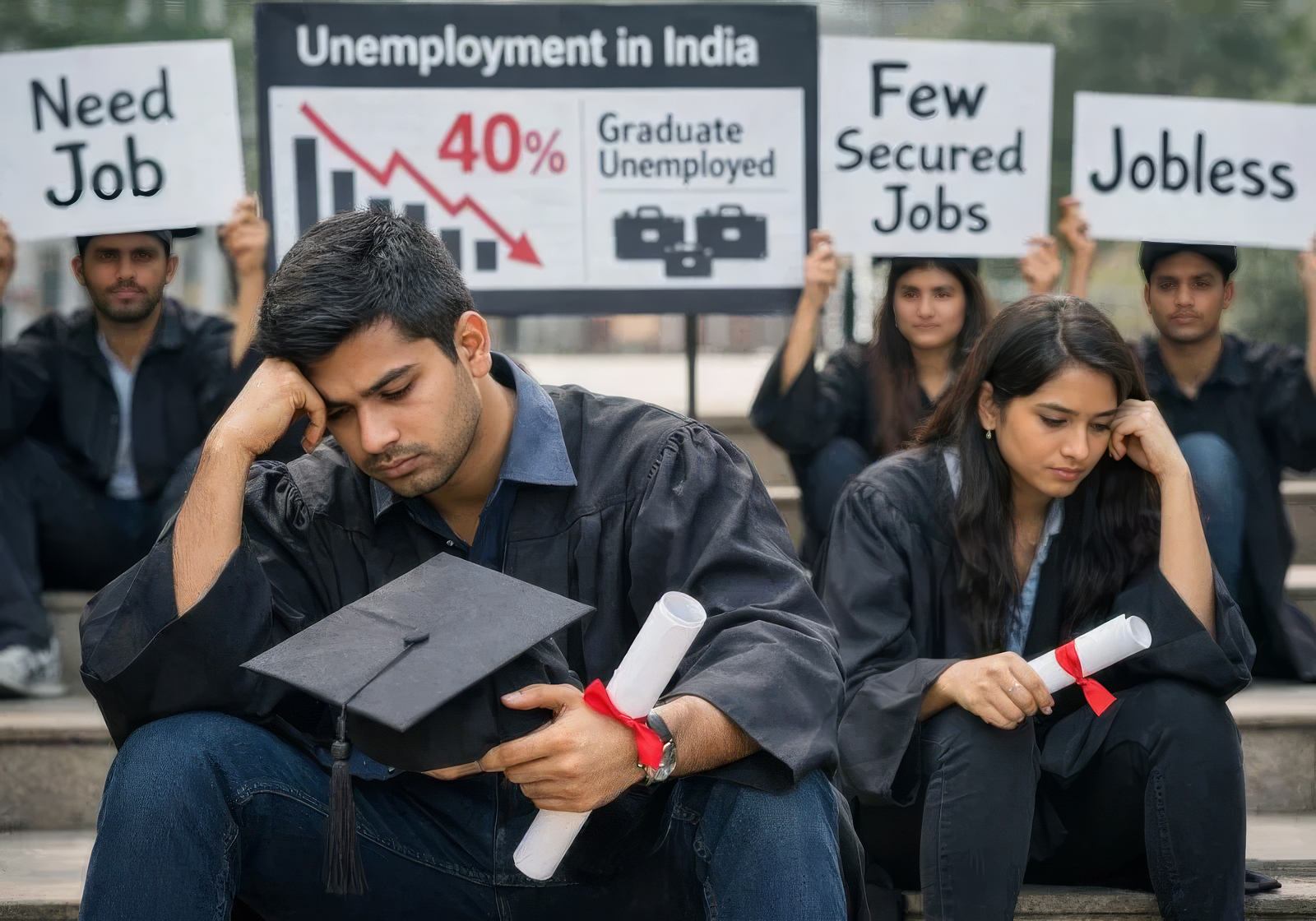
Graduate unemployment among the 15- to 29-year-olds remains high – nearly 40% among the 15- to 25-year-olds, and 20% among the 25- to 29-year-olds; and, only a small share secure stable salaried jobs within a year of graduation.
Between 2004-05 and 2023, while approximately 5 million graduates were added each year, only around 2.8 million found employment, and an even smaller share entered salaried employment, contributing to rising graduate unemployment and slowing earnings growth.
With a median age of 28 years, India is among the youngest economies in the world. However, with the share of youth beginning to decline, the window to reap the demographic dividend is narrowing.
India is nearing the peak of its demographic dividend, with the share of the working-age population expected to begin declining after 2030.
Another worry is that the increase in number of teachers has not kept pace with increase in student numbers: AICTE norms prescribe between 15 to 20 students per teacher. However, private colleges have, on average, 28 students per teacher while public colleges have 47. Hiring and filling up of vacancies in teaching positions remain crucial to ensure that learning outcomes are not compromised due to resource constraints.

Rosa Abraham, Assistant Professor of Economics at APU and the lead author of the report observed that “Indians today are growing old before getting rich, unlike in the West.” This means that income growth of professionals is not rising fast enough, especially in the last decade.
Employability continues to be a major challenge for organisations due to deteriorating quality of education. Prof. Abraham noted that a few years ago, many organisations spent on pre-employment training, but of late they are not able to afford it due to pressure on returns.
See full report here https://publications.azimpremjiuniversity.edu.in/6848/1/SWI%202026%20-%20Web.pdf