

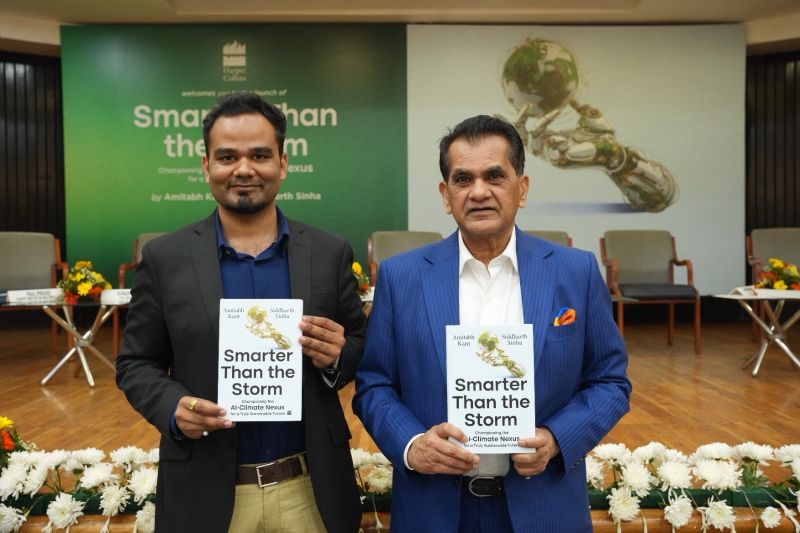
Climate change is a threat multiplier, and AI could be a force multiplier for tackling it. Authors Amitabh Kant and Siddharth Sinha, in their book Smarter Than the Storm – Championing the AI-Climate Nexus for a Truly Sustainable Future, wrote this book because “their nexus warrants a thorough and comprehensive exploration.”
They argue that AI can accelerate climate action by advancing mitigation, adaptation and governance significantly. The focus of this book is “unbundling the complexities and interdependencies and suggesting a multidimensional lens through which ecosystem-wide solutions can be developed in a collaborative manner.” They warn that this challenge is an opportunity, and that the window for addressing it is fast closing.
Published by Harper Collins India in early 2026, the authors present an accessible book with minimal jargon to demonstrate, with case studies about the immense possibilities AI offers, especially in making resource management highly efficient. With advanced AI tools, waste can be minimised across all sectors.
Automation took decades to enhance the productivity of organisations. AI could do that in just a couple of years or less. This is a call-to-action book that everyone, even remotely interested in what AI can do, could relate to.
One of the major issues in climate mitigation is accountability and governance frameworks. AI can enhance transparency by making data available in the public domain. Most systems today are opaque, not because of a lack of competence of the tools, but because of vested interests at play. With AI, their hold can at least be minimised.
The mountains of waste the world creates are actually resources waiting to be recovered. Waste is currently one of the biggest contributors to the climate crisis. AI tools have the potential to significantly minimise waste generation in farming, manufacturing and energy use, and help recover valuable resources from it.
In any climate debate, climate justice should be a central element. The traditional climate mitigation models struggle to incorporate the climate justice component. Even if they do, they do it reluctantly. With AI, democratising data and access is a given. It is possible now to monitor spending patterns on climate adaptation and who benefits from them.
The authors convincingly argue for incentivising open data and open AI Models and public funding of open AI missions because they often become useful for public good applications.
The authors want India to move away from a siloed approach to a systems approach while planning and executing climate action plans. They believe that climate AI solutions will be most effective only when data integration is not seen as a technical detail but as a foundational enabler of scale and effectiveness.
The Flipside
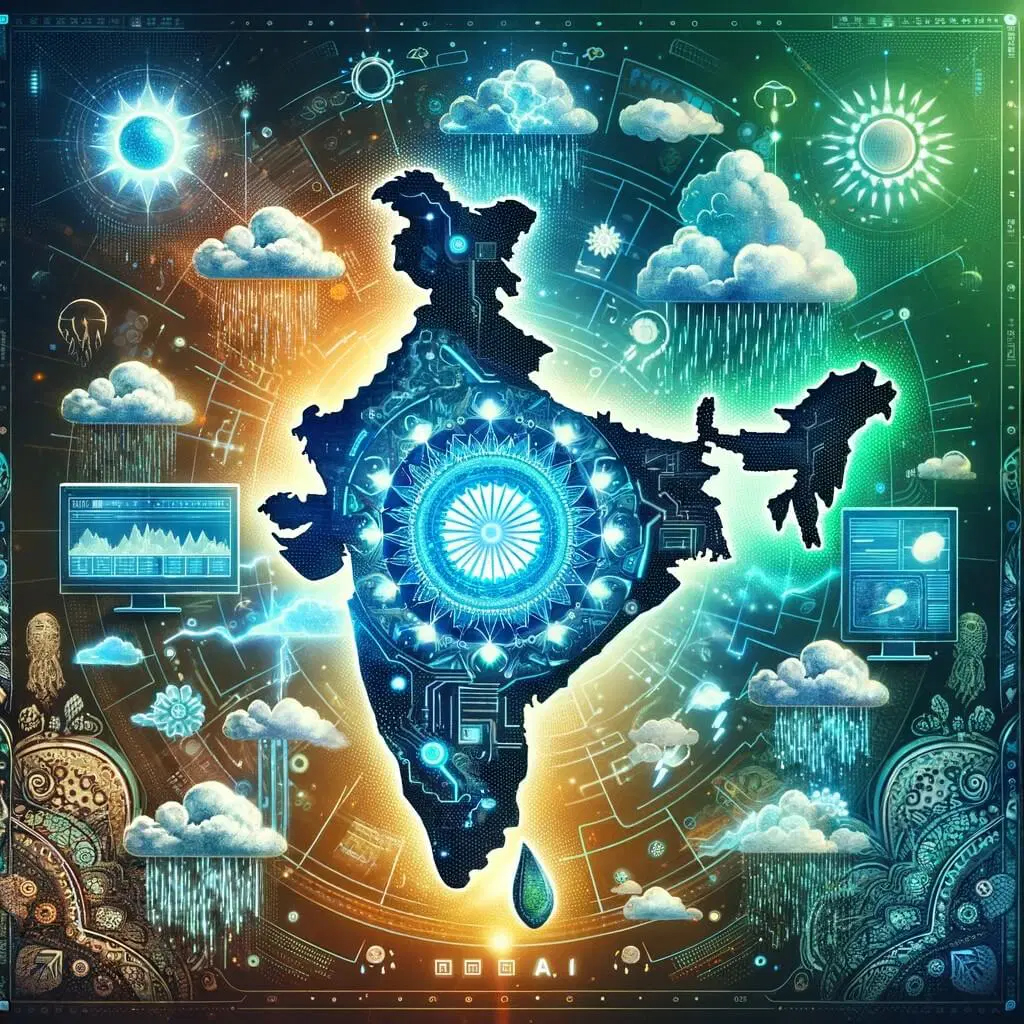
There’s no such thing as a free lunch, popular economist Milton Friedman said. AI is a massive energy and water guzzler. The data centres that power AI have become a massive infrastructure play worldwide. The authors have a chapter on this topic with elaborate call-to-action points on how to sustainably manage them. Green data centres are going to be the new trend. How green they can get will continue to be debated.
The authors recognise that, however sophisticated Climate AI is, unless there is a significant change in human behavior the world can achieve very little. Human decisions around consumption and daily habits will continue to have a profound impact on the environment.
Amitabh Kant played a key role at the National Institution for Transforming India (NITI Aayog) and oversaw the country’s transition to a digital economy. His co-author Siddharth Sinha was a colleague in NITI Aayog and has had hands-on experience working on AI at Google. He helped accelerate AI-enabled climate interventions. He currently works at Greenko.
This book is informative, insightful and future-centric. It is difficult to pick a hole in a book like this. It does a great service by demystifying AI and its potential. Perhaps a chapter on how AI’s climate tech tools can be gamed by vested interests could have completed the book.
The authors are busy with their second book. It focuses on unpacking and championing the complexities of building a truly sustainable future. Hope they get it out soon!