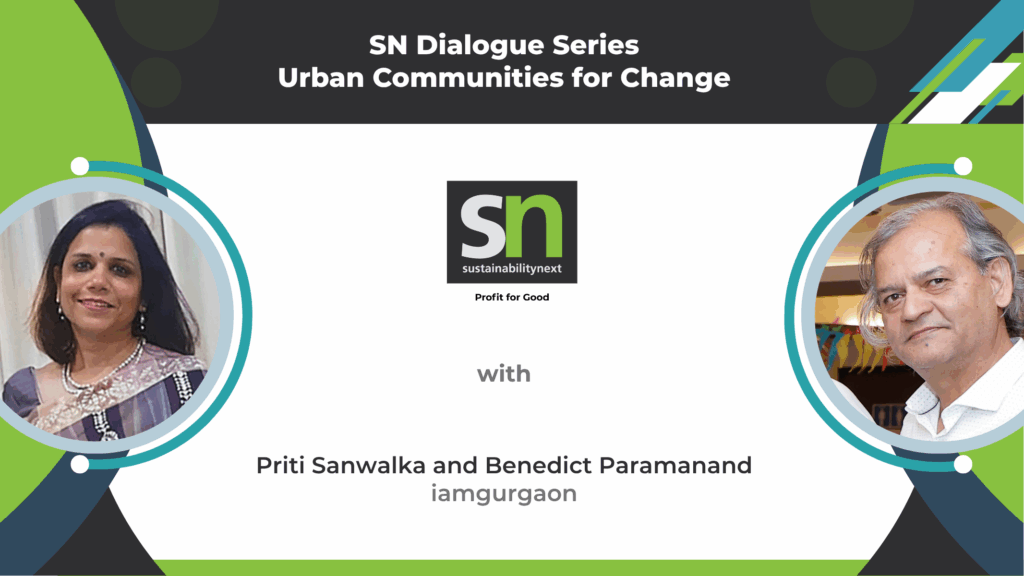

Excerpts of a recent chat between Priti Sanwalka, senior leader at iamgurgaon and Benedict Paramanand, Editor, SustainabilityNext. This is part of the Urban Communities for Change series between SustainabilityNext and Urban Venture Labs
Tell me a bit about yourself, how did you think of bringing about change through community engagement?
Thank you so much, Benedict and the magazine for reaching out to us. It means a great deal to us to be recognized and interviewed by you.
I’m a qualified Chartered Accountant and spent most of my career in the corporate world. My knowledge of plants was limited to fruit trees and the basics:ecology or the environment weren’t really on my radar. I decided to take a one-year sabbatical from my organization, and I never went back. Around that time, a friend introduced me to iamgurgaon, which was then a young initiative just a year and a half old. I started volunteering about 15 years ago, and today, I am involved full-time. I continue to learn something new every day, and that’s what keeps me going.
We are a group of eight women who decided to make a difference to the city. We all come from different backgrounds. Latika was a banker, Swanzal is an architect, Namrita runs a business in artistic packaging, Anjali is an artist and yoga practitioner, Nidhi is a counselor, Vasundhara was running a business, and Gayatri is an art curator.
The common thread that brought us together was a shared desire to make a difference to the city. We were all at a stage in life where we could afford to step away from our careers, and we chose to do so. Each one of us is a volunteer, driven by common purpose.
I believe it was destiny that brought us together, leading us to embark on this shared journey, to make a small but meaningful difference to the city we all call home.
I saw the list of corporates who are funding you. You’ve done a great job of marketing your initiative
We started as a small initiative and honestly didn’t expect it to grow this big. All our projects are on government land, and for each one, we sign a detailed Memorandum of Understanding with the government. Very early on, we realized that if you want to make a real impact in any city, you have to work with the government: alongside them, on government land.
We’ve been fortunate that the government trusts us and gives us the freedom to take on these projects and lets us run with them. We don’t take any money from the government and all our funding comes from corporates or individuals.
Being in Gurgaon has also been a big advantage. A lot of large corporates have their headquarters here, and since our projects are within the city, often close to their offices or homes, they’re able to see the transformation happen in real time.
Your first project was the Aravalli Biodiversity Park. Tell me a bit about it.
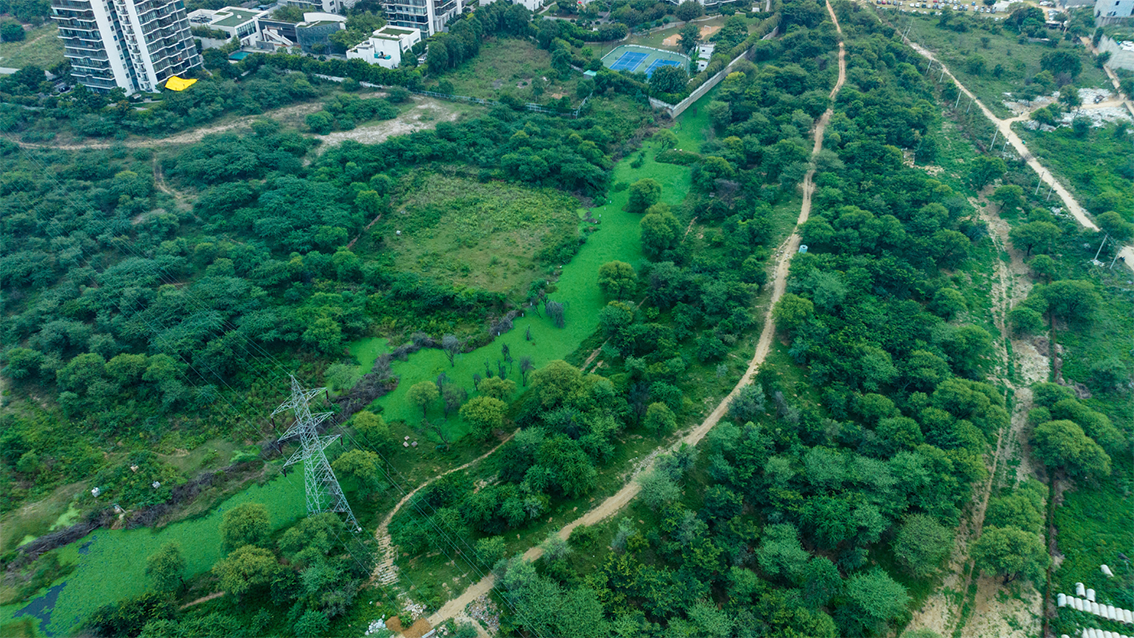
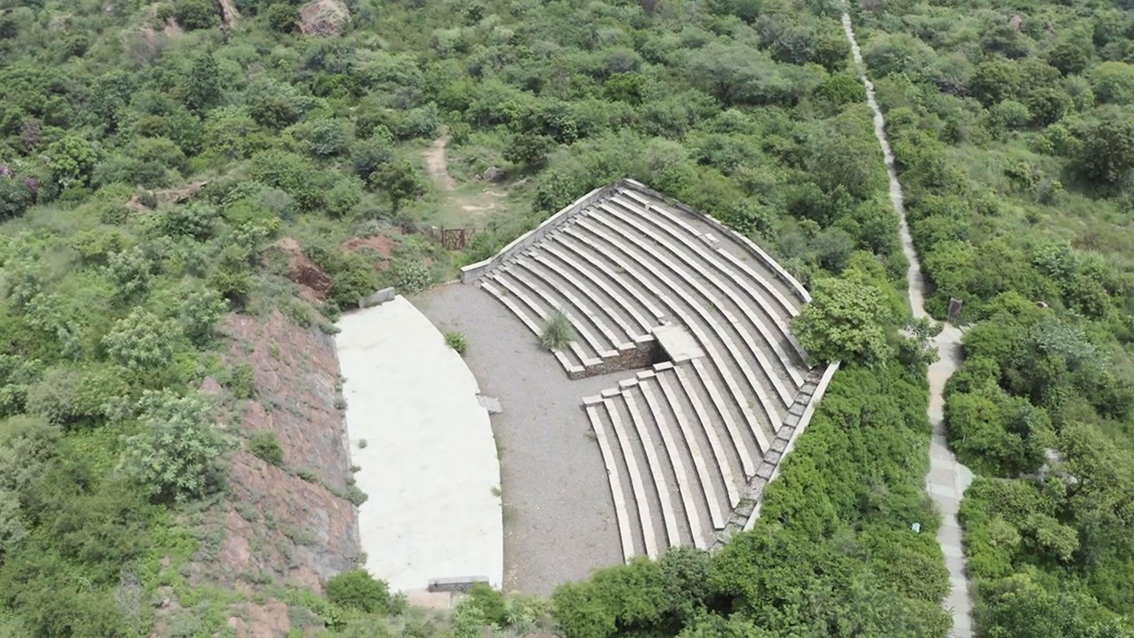
Spread across 380 acres, this site was once part of the richly biodiverse Northern Aravallis. Years of rock mining stripped the land of its forest cover and topsoil, leaving it barren and dust-laden. Mining activities ceased around 2009 when they were declared illegal, and the area was subsequently abandoned.
In 2011, iamgurgaon began its restoration efforts. Over time, the site has been gradually revived as a thriving city forest. It has since been recognised as the country’s first OECM site (Other Effective Area-based Conservation Measures), highlighting its ecological value and the impact of community-driven conservation.
How many volunteers do you have?
We have a core team of eight and a very active volunteer group that we reach out to throughout the year, especially during the monsoon season.
Gurgaon is a highly water-stressed region, so the planting window is limited to just two months. During this short period, we plant around 20,000 saplings each year, almost every single day. That’s when we need the most support from our volunteers.
So you’ve totally done 15 projects and most of them are in the regeneration or reclamation of poor land, isn’t it?
Vijay Dashmana is our chief consultant. He has been restoring degraded lands in several states. He’s been with I’m Gurgaon’s journey from day one.
We have our own nursery because very soon we realized that nobody grows native Aravali species.
So you’ve totally done 15 projects and most of them are in the regeneration or reclamation of poor land, isn’t it?
That’s correct. All our projects focus on the revival of degraded land and everything that comes with it.
We work closely with The Rewilders, a group led by Vijay Dhasmana, our ecologist, our guru and the expert in rewilding these habitats. He has been restoring degraded lands across several states for over two decades.
We have also set up our own plant nursery because very soon we realized that nobody grows native Aravalli species, and without the right species, we can’t create forests.
So are you able to make citizens see a tangible difference around the projects that you’re doing? Because Gurgaon feels so dry, feels so dusty…
We believe the best way to restore or rewild a space is to intentionally open it to the public from day one. Our goal is to involve the community from the start, because these projects are not meant to exist in isolation. We want everyone to feel that these spaces belong to all of us.
When done right, this approach fosters a strong sense of ownership. We actively involve citizen groups and both private and government schools in our plantation drives. Throughout the year, we also conduct nature walks to help people witness the transformation firsthand, deepen their understanding, and truly feel a part of the journey.
Outstanding work, Priti. I ask everybody in the community space about how you navigate working with the municipality and the government, which seems so difficult
Since Gurgaon is part of the NCR, everything that happens here tends to attract significant attention, both positive and negative. iamgurgaon has consistently worked alongside the government, and we’re fortunate that the government recognises the value of this partnership.
How do you keep the land mafia at a distance?
Frankly, we haven’t faced significant issues with the land mafia, primarily because the land is clearly demarcated through formal MOU’s with the government. While there are occasional attempts to break fences or encroach upon the land, we’ve been able to manage these situations effectively with the support of the government and our team on the ground.
How many projects are you currently handling?
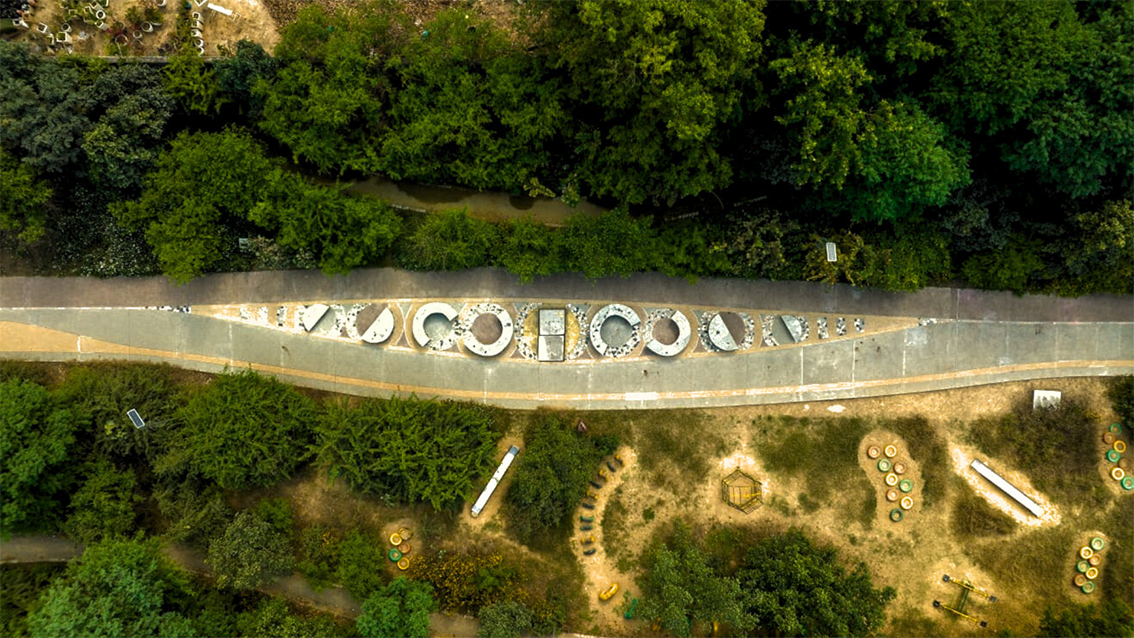
We are currently working across around 800 acres, through a mix of small and large projects. We’ve also created urban mobility corridors that allow people to travel from one end of the city to the other without using motorised transport. You can cycle through these spaces, but not ride a motorcycle or drive a car, that’s how we’ve designed them. We’ve planted trees all along these paths, creating beautiful linear forests that are a pleasure to walk through and are maintained by us.
With changing weather patterns, we now receive heavy rainfall in short bursts, which leads to flooding across the city. All our projects are designed to channel this water into the restored spaces, helping to prevent flooding. These areas also serve as important groundwater recharge zones.
All these spaces have been created through ongoing collaborations—like the one with The Rewilders, who help us transform degraded areas into thriving forests. We also work closely with our talented landscape architects, who thoughtfully repurpose waste materials found on-site or discarded across the city.
What’s your message to professionals or anyone in Indian cities to make a difference to the climate, to their neighborhoods
I think if we are well-intentioned and apply basic common sense, we can all make a difference to our cities. Give your time, share your ideas, contribute your technical knowledge, and you can be from any profession.
What’s your plan five years from now?
We need to redefine what we mean by development. So-called development can’t come at the cost of losing our forests.
So, we will continue to influence policies of the government and find better solutions for the city.
Our vision and passion is for a well-planned city where people and nature can coexist.