
Excerpts from the SN Dialogue Series between Anuj Agrawal, CEO and Founder of Zyoin Group and Benedict Paramanand, Editor of SustainabilityNext.
Anuj Agrawal is one of India’s most influential leaders driving platforms that are shaping the future of talent and workplace ecosystems. He has collaborated with more than 1,500 organisations, helping them reimagine hiring strategies, build high-performing teams, and transform workplaces to thrive in a rapidly evolving business landscape. The Zyoin Group is India’s leading AI-enabled talent advisory and recruitment firm.
What is your take on AI and the impact it has on organisations’ growth?
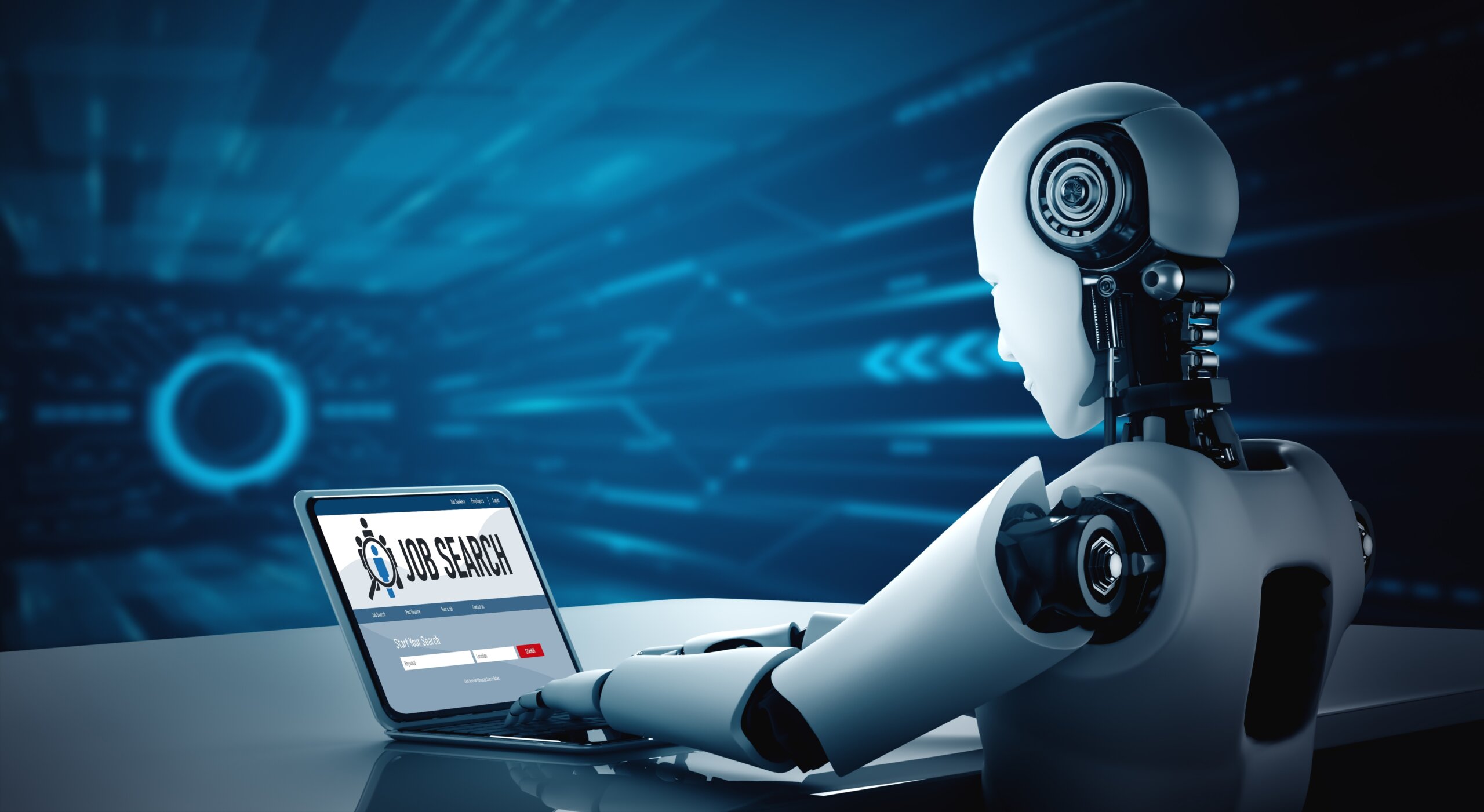
Personally, from an organization point of view, we believe the world is always going to be about AI plus humans. AI presents an equal or even a bigger opportunity because of the breadth which AI can cover. From an individual user to an enterprise organization, AI can create a significantly larger impact, and which means if you are trying to do anything and not using AI, probably you are not going to be as effective. I believe personally that if you can do more, you should do more. And I think AI enables you to do more, which means you should use AI to do more.
So does it mean that HR departments are going to shrink significantly? Already it has, they have shrunk quite.

It’s not about getting shrunk. It’s all about being more productive. So the way I would rather look at it is, it’s two people able to do a four person job. The more organizations will be able to optimize and as humans, as individuals, we’ll be able to move.
One side of it, if you look at it, means less jobs. But when you can do more, you should do more. So organizations also will follow that balance where they would want to, if there are four HR leaders. Can they figure out those HR leaders or HR individuals who can do more for the organization? There is a turmoil period for sure. We’ll talk a lot about that turmoil in the next couple of years. But once that does settle, it’s only going to create more productive humans. It’s going to create a lot more opportunities.
So how bad and how long could the turmoil be?
Just like what happened post Covid where many new opportunities opened up, the same could happen with post AI shock. In the next one and a half years, we’ll see a very, very positive side of it.
Define what is positive
Gartner, for example, reported that more jobs are being created than the amount of jobs being lost. So right now, we are in a phase when the turmoil happens, there’s a phase where probably lesser jobs are being created as much as being reduced.
The curve, at the rate at which the new jobs will start getting created, and is getting created. It will outpace the job loss. So, which will automatically mean that AI created more jobs than less jobs. The skill sets are definitely going to change and then going to change in a very, very big way, because and that’s not just because of AI.
I think that’s a trend which we have been following as humans. 30% to 40% of skill sets will go through transition by 2030, which would mean that there are more jobs being created, but the skill sets which are required are not the same.
I would say that core human skills will never change. Like the value of leadership. The value for decision making, empathy and communication skills. And the more you interact with AI now, you realize that how better you communicate with AI is how the output will be. AI is the reflection of your mind. The better questions you ask the AI the better result it shows.
You said new jobs are going to be created. How do you define this new job? What are these new jobs?
Suddenly we see a huge rise in prompt engineers. There is a new job description, which is forward deployment engineer, ML ops, machine learning operations. Then there is a huge demand for people who can do tagging.
When social media was not there, there was no job called a social media marketer, Today there is. Because marketing went through an inflection point, social media marketing arose.
Now, AI is getting into content writing, software development. Any work which you do today, there is a portion of AI in it, which means now your job is going to go through a big change.
I would say 85% of those skill sets which were in need today, will no longer be needed, but there will be newer skills which will be needed.
Do we have the capacity yet to reskill these people? Is the training catching up with this, or is there a huge lag there?
I think there are gaps around it, but I think all the learning companies are seeing it as an opportunity.
Adoption of AI will not be such a big problem. India seems to have adopted AI seamlessly. OpenAI claims that their second highest users are Indians. Antropic already mentioned about AI users being extremely high in India and so on. The acceptance rate in India is extremely high, which implies that more and more people are hands-on in using AI or getting hands on in using AI. So I don’t think that training or evolution will be much easier.
So do you see a churn in the HR departments?
Interestingly, from a business point of view we see 50% higher job demand compared to a year back.
Everybody is saying there are a lot of jobs being lost. To me, there are already more jobs being created. A number of open positions are increasing. When such is the market trend everyone grows.
At Zyoin we see a 50% uptick in the average salaries which we have listed by our customers, and these are very exact numbers I’m talking about, which means a lot more people are looking for a lot more higher skilled people.
More and more people are now working from tier two and tier three cities. than ever and we are talking of higher skilled or newer job arena. This is good for decongesting cities like Bangalore.
The emergence of global competency centres (GCCs) is a huge opportunity for talent companies like yours. Give me a sense of how the GCC playbook is evolving
At present, India hosts over 1,900 GCCs, which employ 1.9 million workers, generating more than $64 billion. The achievement reaches an impressive scale, but its major transformation creates essential systemic changes. Indian centres now take responsibility for outcomes, instead of handling activities alone.
The outcome has been a steady expansion of responsibility. According to recent ecosystem studies, nearly nine out of ten mature GCCs now own end-to-end global processes in at least one function, while a growing share participates directly in enterprise-level decision-making.
For complete video – https://youtu.be/oIec83iLK8M