
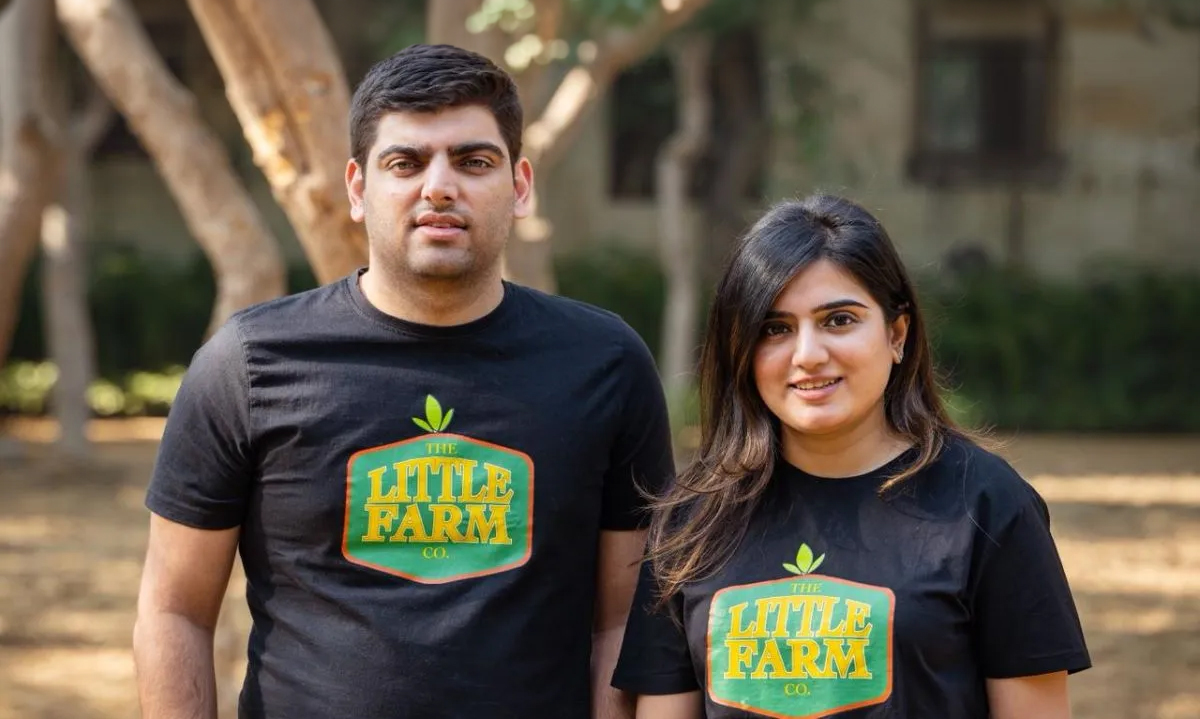
When Niharika Bhargava left a promising career after graduating from London’s Bayes Business School, many thought she was making a mistake. Friends questioned her choice. Family members wondered why anyone would trade boardrooms for muddy fields. Instead of pursuing a corporate path, she found herself in a small village in Madhya Pradesh.
There, she was surrounded not by presentations and performance reviews, but by amla trees, uncertain harvests, and women farmers whose work had long been ignored. There was no business plan waiting for her. There were no investors or factories. “There was only soil,” she remembers.
That soil would eventually give rise to The Little Farm Co., a digital food brand whose preservative-free pickles now reach thousands of urban homes. Unlike many startup stories that start with funding and product launches, this one began with listening.
Women Who Were Always there, but Never Seen
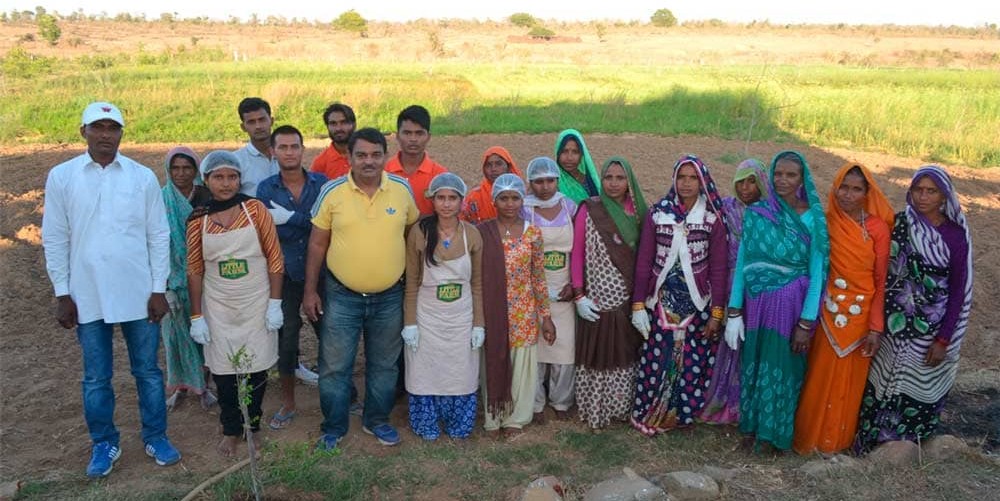
In many farming households across rural India, women work from dawn until dusk—sowing, harvesting, sorting, cleaning and processing produce. Yet much of this labour remains unpaid and unrecognised because the land legally belongs to someone else. Niharika encountered this reality firsthand.
Rather than viewing women merely as suppliers, she saw them as collaborators capable of creating value beyond cultivation. Instead of selling raw produce at fluctuating market prices, she began exploring ways to process locally grown fruits into products with a longer life and greater value.
The answer lay in something deeply familiar: family pickle recipes. Women who had perfected these recipes over generations now found themselves producing premium food products for a growing consumer market.
Extra income meant daughters could stay in college. Families began seeing value in women’s work beyond the household. Skills that had always existed within kitchens suddenly became economically significant.
A woman named Yashoda, who works with the enterprise, was able to support her daughter’s Ayurveda education through her additional earnings. Today, that daughter hopes to build her own venture using medicinal plants grown on the family’s farm. “It reminded me that we’re not just selling pickles,” Niharika says. “We’re creating possibilities.”
Entrepreneurship Begins with Patience
Modern startup culture celebrates speed- scale fast, raise capital, and expand quickly. Farming, however, speaks a very different language, one rooted in patience, persistence and the understanding that growth cannot be rushed.
“You cannot rush a mango season,” Niharika tells participants during a recent Wise Use Leadership Conversation. “Nature doesn’t work that way.” Neither, she argues, should sustainable entrepreneurship.
Long before The Little Farm Co. sold its first jar, the team spent years understanding soil quality, sourcing practices, crop cycles and farmer relationships. Only after understanding the land did they begin building a brand. Rather than chasing rapid expansion across every retail channel, the enterprise has deliberately remained focused on digital commerce, believing that depth often matters more than breadth. For Niharika, fundamentals cannot be outsourced. “You cannot market your way out of poor raw material.”
Making Tradition Relevant Again
India’s culinary heritage contains thousands of regional recipes, preservation techniques, and indigenous food traditions. Yet many are quietly disappearing as processed convenience foods dominate shelves.
Niharika believes the challenge isn’t that younger consumers reject tradition. They reject outdated presentations. Today’s millennials and Gen Z consumers, she says, are actively searching for products that are healthier, more transparent and rooted in authenticity. The task, therefore, is not to reinvent tradition, but to communicate it differently.
Sustainability Beyond the Label
The company uses glass jars instead of plastic packaging. Manufacturing units increasingly rely on renewable energy. Water recycling has become part of farm operations. Chemical preservatives are avoided altogether. Yet Niharika resists portraying sustainability as perfection.
For her, sustainability is a series of practical decisions that improve livelihoods while reducing ecological impact. Equally important is economic sustainability. Without profitable farmers, thriving rural enterprises cannot exist. Without dignified employment, community development remains incomplete.
Success Measured Differently
Ask Niharika about business milestones, and she can speak about revenue, online marketplaces, and growth plans. Ask her about impact, however, and the conversation shifts. She speaks about women who now earn independently. About communities witnessing their first organised food-processing enterprise, preserving culinary traditions before they disappear and building trust one harvest at a time.
Her entrepreneurial journey has been marked by uncertainty, self-doubt, and countless experiments. One lesson, shared by her mentor, continues to shape her decisions. “No decision is wrong,” she says with a smile, “as long as it’s reversible.” Perhaps that is the quiet wisdom sustainable entrepreneurship needs today.
In an era obsessed with disruption, Niharika reminds us that sometimes the most transformative businesses don’t begin with technology.
Sometimes they begin with listening to the land, trusting local knowledge and recognising the invisible hands that have always sustained our food systems.
The future of sustainable enterprise, it turns out, may well be growing in the fields we have too often overlooked.
Source: Transcript of From Scratch to Soil: Building a Business by Getting Your Hands Dirty
This article draws from the WiseViews Leadership Conversation titled From Scratch to Soil: Building a Business by Getting Your Hands Dirty, held on 19 June 2026. The session featured Niharika Bhargava, Founder of The Little Farm Co., and was moderated by Dr. R. Prasad, Senior Director – Academic Wing, ICFAI Group, and Prof. Sudhakar Rao, Director – Branding, ICFAI Group.