

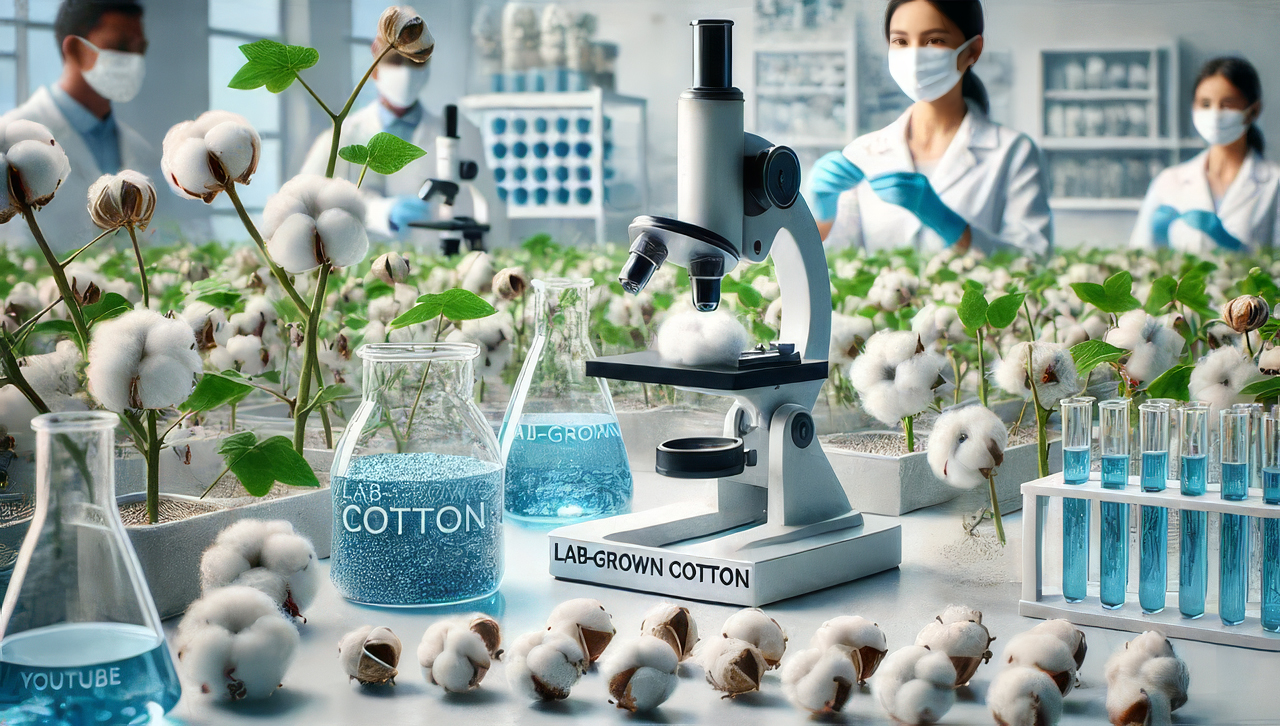
India is the world’s second-largest producer of cotton and one of the largest textile manufacturing nations in the world. Cotton has been an important pillar of India’s rural economy, supporting millions of farmers and contributing significantly to exports and industrial growth. However, mounting environmental pressures and declining farm economics suggest that the present model of cotton cultivation deserves serious re-evaluation.
Cotton farming in India requires substantial quantities of water and relies heavily on fertilizers and pesticides. In many regions, excessive groundwater extraction has contributed to falling aquifer levels, while prolonged monoculture has affected soil health and biological diversity. The economic stress on farmers has also intensified.
A recent study by Chaudhary Charan Singh Haryana Agricultural University covering the 2025 Kharif season reported a 30 percent decline in cotton yields, resulting in average net losses exceeding ₹15,000 per acre, with cultivation costs approaching ₹40,000 against returns of only about ₹25,000. The growing resistance of pink bollworm to Bt cotton in several regions has further increased pesticide dependence while reducing productivity. These are not isolated challenges but signs that the existing cotton production system requires new thinking.
At the same time, advances in cellular agriculture are opening an entirely new possibility: producing cotton fibers from plant cells in controlled bioreactor environments, without conventional farming.
A New Path: Cotton Grown Through Cellular Agriculture
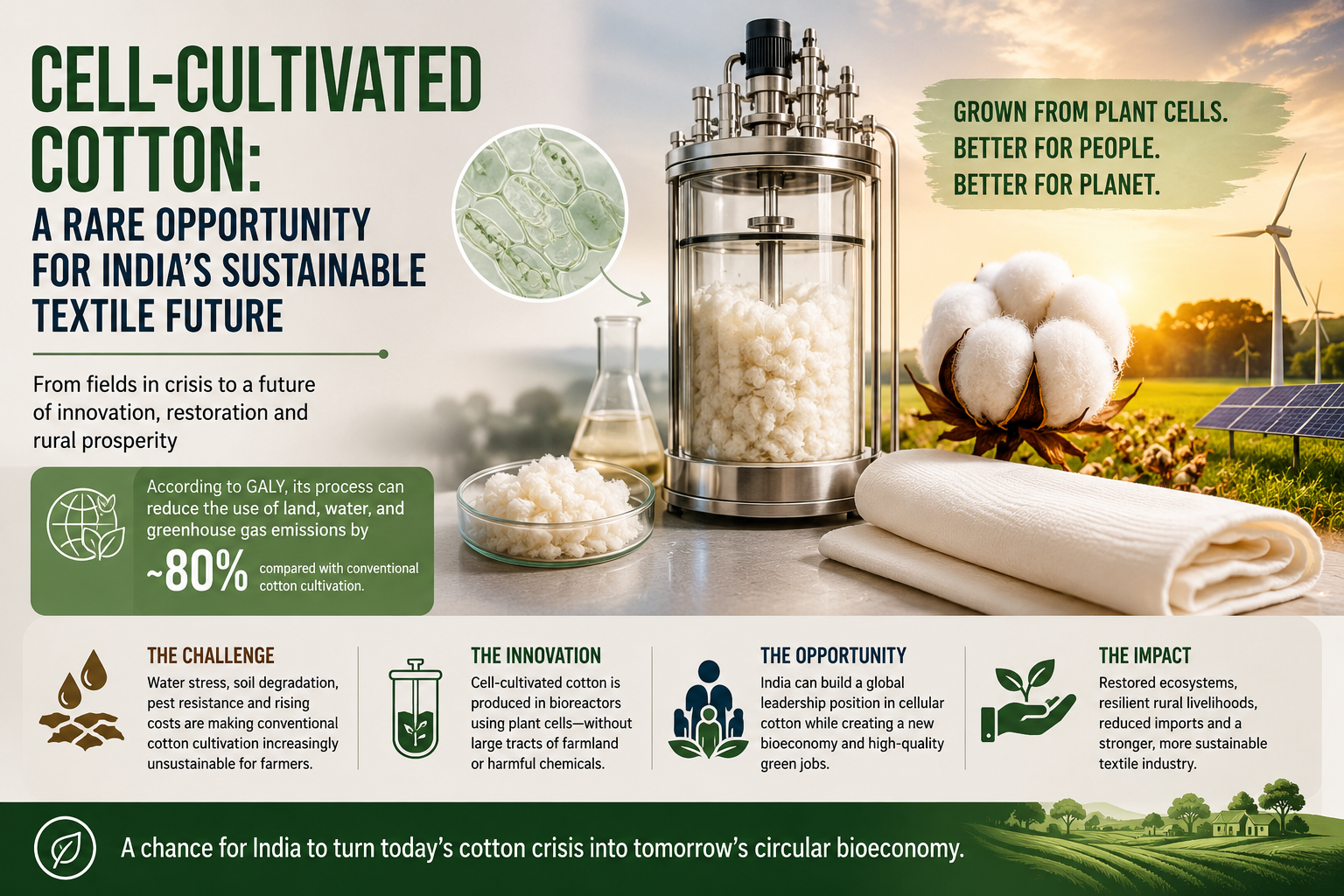
GALY, a biotechnology company based in Boston and São Paulo, has pioneered a process to produce cotton fibers from cotton plant cells grown in bioreactors. The process resembles fermentation more than traditional agriculture. The resulting material is not a synthetic substitute but a biologically equivalent cotton fiber produced without cultivating large cotton fields.
The company has attracted more than $65 million in investments from organizations such as Breakthrough Energy Ventures, H&M Group, and Inditex, the parent company of Zara. Its product, Literally Cotton™, was recognized by TIME magazine in 2024 among its 200 Best Inventions.
According to GALY, the technology has the potential to reduce the use of land, water, and greenhouse gas emissions by approximately 80 percent compared with conventional cotton cultivation, while eliminating the need for pesticides. Although these environmental benefits will require further independent validation as commercial production expands, the potential is significant enough to merit serious attention from researchers, entrepreneurs, and policymakers.
The technology has already moved beyond the laboratory stage. GALY has signed a ten-year, $50 million agreement with Suzuran Medical of Japan to supply cotton for medical products such as gauze and absorbent materials. While large-scale textile applications may still be several years away, the emergence of early commercial markets demonstrates that cell-cultivated materials are moving from scientific possibility toward industrial reality.
Why India Should Act Now
India possesses several advantages that could allow it to become a leader in this emerging field:
- A globally significant textile industry with expertise ranging from traditional handloom production to advanced technical textiles.
- Strong capabilities in biotechnology, fermentation science, pharmaceutical manufacturing, and precision engineering.
- A network of research institutions including CSIR laboratories, the Indian Institute of Science (IISc), agricultural universities, and biotechnology incubators supported by the Department of Biotechnology and BIRAC.
- A growing policy focus on advanced technologies through the Government of India’s ₹1 lakh crore Research, Development and Innovation Scheme.
No country has yet established clear leadership in cell-cultivated cotton. India therefore has a rare opportunity to participate in building this new industry rather than becoming a future importer of technologies developed elsewhere.
Beyond Cotton: Restoring Natural Capital and Rural Prosperity
The long-term importance of cell-cultivated cotton extends beyond textiles. If even a portion of land currently devoted to cotton is gradually transitioned over time, India could restore ecological balance while creating new agricultural opportunities.
Such land should not become another avenue for unchecked urban expansion or real estate development. Instead, policymakers should encourage regenerative agriculture, agroforestry, and cultivation of diverse horticultural crops.
India has a rich heritage of native fruits such as pomegranates, custard apples, jamuns, and amlas. Reviving these crops can improve biodiversity, create higher-value rural enterprises, and reduce imports of fruits that can be cultivated within the country.
Equally important, cotton farmers must be partners in this transition. The shift toward cell-cultivated cotton will occur over decades, not years. Through crop diversification, training, financial support, and cooperative ownership models, farmers can benefit from the new rural bioeconomy rather than being left behind.
Building a New Cellular Cotton Enterprise Ecosystem
The opportunity is not limited to a single company manufacturing cotton fibers. A complete industrial ecosystem can emerge around this technology, creating opportunities for Indian startups and small and medium enterprises.
Potential areas include:
- Bioreactor design and manufacturing.
- Cell-culture media and biological inputs.
- Fermentation and process engineering.
- Quality testing and certification systems.
- Fiber processing and finishing technologies.
This ecosystem can generate skilled employment while positioning India at the forefront of a new generation of sustainable biomaterials.
A National Mission for the Future
India should explicitly include cell-cultivated fibers within its Research, Development and Innovation Scheme and support pilot manufacturing facilities, public-private research partnerships, and entrepreneurial ventures in this emerging sector. Early-stage policy measures, including favorable GST treatment for certified sustainable fibers, could help accelerate market development.
Universities, research institutions, and industry associations should treat cell-cultivated materials as a defined national research and industrial priority rather than a niche scientific curiosity.
Cell-cultivated cotton should not be viewed merely as a new textile technology. It represents a broader transition toward a circular bioeconomy, where biotechnology, sustainable manufacturing, and ecological restoration work together to create long-term prosperity.
India’s rise as a global leader in pharmaceuticals, information technology, and digital public infrastructure was made possible through early investments, scientific capability, entrepreneurial ambition, and supportive public policy. Cell-cultivated cotton may represent another such opportunity—one that allows India to combine technological innovation with the restoration of its soils, water resources, and rural economy.

Ram Ramprasad is a regular contributor to SustainabilityNext, writing on sustainable strategies for India’s circular bioeconomy, climate resilience, and ecological regeneration.
Ram’s previous articles published in SustainabilityNext
India’s Landfill Methane Crisis: The Power of Nature-Based Solutions
Rivers Revive When Someone Owns the Outcome
Ecological Ayurveda: Reimagining the Circular Economy
Activating the World’s Dormant Climate Solutions
India’s LPG Crisis: A Three-Pillar Path to Resilient Cooking
How Mycelium Can Power a Green Startup Revolution
Microbes Can Drive India’s Sustainable Future
Rethinking India’s Sustainable AI Policy
Minimize Beef and Dairy Consumption
From Ātma Nirbhar to Ātma Bhūmi Nirbhar: India’s Civilizational Path to True Self-Reliance
Why India Needs a Millet Revolution
Common Sense Strategies to Reduce Methane Emissions from Cattle
Integrated Offshore Water and Wind Solution for India’s Coastal Cities
Gut and Soil Microbial SustainAbility Bridges Science and Ancient Indian Wisdom
From Waste to Wealth: Rebranding Sewage Treatment Plants (STPs) to Resource Recovery Plants (RRPs)
The Hidden Crisis with Our Beds
Startup ideas for Sustainable Cremation and Burial Solutions in India
How India’s Agriculture Can Save 200 Billion Cubic Meters of Water
Ten Powerful Reasons for Declaring Moon A Living Entity
Sustainable Wind Turbines: Balancing Bird Protection and Agriculture
A Holistic Water Strategy for India
How India Can Leverage its GST Model for Building a Sustainable Future
A Toolkit for India’s Green Transition
Green Building Strategy – Integrating Innovations from East and West
Eat Less Fish, Save the Planet
Startups are Working Hard for a Plastic-free World
Hydrogen More Harmful Than Fossil Fuels
Tech Startups Can Make India Water Rich
Measure How Basic Elements are Doing, Not Just GDP
A Radical Strategy for A Greener India – The Story of Kusha







[…] How Cell-Cultivated Cotton Could Transform India’s Textile Sector […]