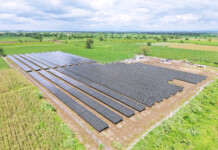

Every solar panel installed today has a lifespan of about 25 to 30 years. A large share of India’s solar capacity was built in the mid-2010s. That means the first wave of panels will begin reaching end of life within the next decade.
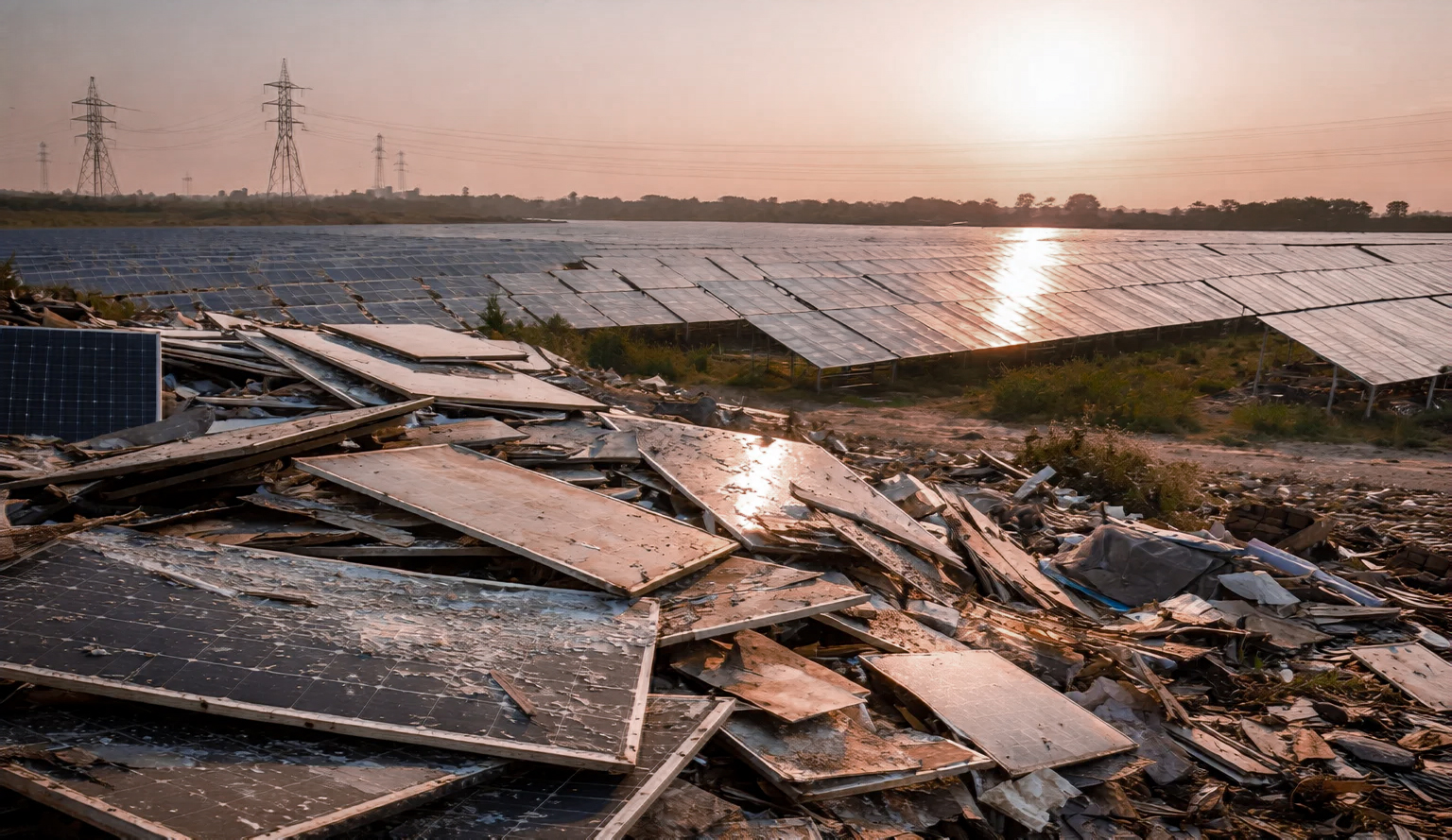
India’s solar waste stood at roughly 100,000 tons in 2023. By 2030, it is expected to reach 600,000 tons. By 2047, estimates suggest it could cross 11 million tons. That is the equivalent of more than 1,500 Eiffel Towers made up of glass, silicon, silver, copper, and aluminium, with no structured system to process it.
At present, most of this waste is handled informally or left in open areas. There is limited infrastructure for organised recycling or material recovery. This leads to unsafe handling practices and the risk of toxic materials entering soil and water systems.
A Crisis Hiding in Plain Sight
The challenge with solar waste is easy to overlook. Solar panels are seen as clean energy solutions, yet they carry materials that can become hazardous at end of life.
Panels contain substances such as lead, cadmium, and selenium. When dismantled without proper safeguards, these materials can pose environmental and health risks. Much of this work today is done by informal workers without protective equipment or technical training. For many, this is daily exposure at low wages.
The issue is not just environmental. It is also economic and social.
There is also a logistics challenge. Solar installations are often located in remote regions, which makes transportation expensive. Conventional recycling methods do not extract enough value to offset these costs. As a result, the system does not yet work at scale.
Turning Waste Into a Resource
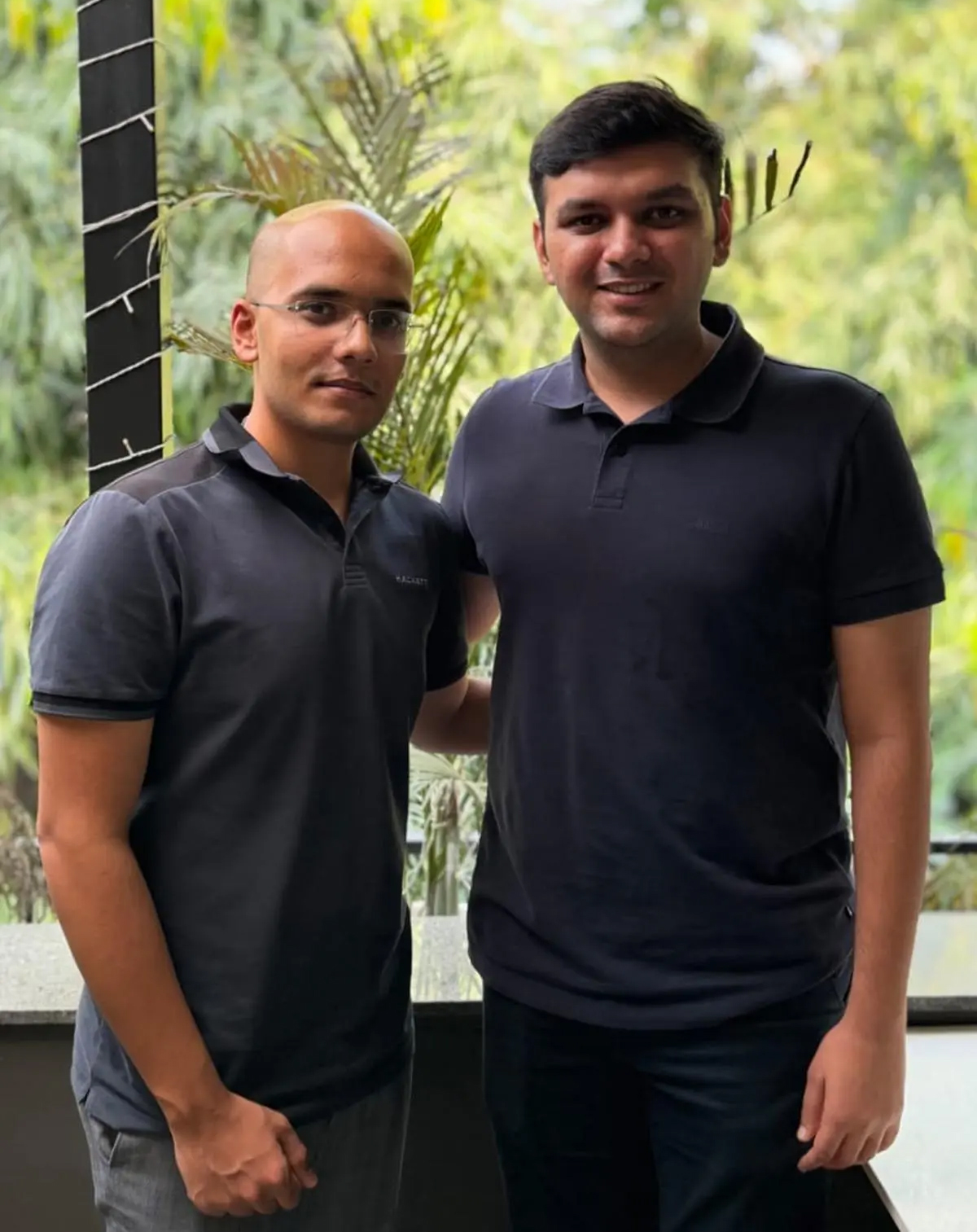
Beyond Renewables is trying to change that equation.
The company has developed a recycling process that enables recovery of more than 95 percent of high-value materials from end-of-life panels. This includes glass, silicon, silver, copper, and aluminium. Using a combination of thermal, chemical, and mechanical processes, the company converts discarded panels into materials that can be reused in manufacturing.
At a national level, this has significant implications. Silicon is a key input in semiconductors. Silver is critical for electronics. Recovered glass can be reused across industries. Several of these materials are classified as critical minerals for India.
For a country that depends heavily on imports for these resources, recovering them from domestic waste could improve both sustainability and supply security.
Building the Supply Chain
Technology alone does not solve the problem. Access to consistent waste streams is equally important. Beyond Renewables has focused on building partnerships across the value chain. It works with developers, EPC companies, manufacturers, and dismantlers to secure a steady pipeline of solar waste. The company currently has more than 2,000 metric tonnes of material in its pipeline.
That level of sourcing is a meaningful signal for a young company. The Beyond Renewables raised its first external funding in October 2025. The pre-seed round of Rs 5 crore was led by Momentum Capital, with participation from Venture Catalysts, IIMA Ventures, Oorjan Cleantech, and Gautam Das.
The company has also secured early buyer interest for recovered materials such as glass and silicon. This indicates that demand is already forming alongside supply.
Through support from NSRCEL, Beyond Renewables has developed its strategy for scale, with a focus on eco-effective high-value recycling.
The Policy Push
Regulation is beginning to evolve. Solar panels have now been included under updated e-waste management rules. The Ministry of New and Renewable Energy has also identified solar recycling as a priority area.
However, policy alone is not enough. Infrastructure needs to follow. Estimates suggest India will require hundreds of recycling hubs and significant investment over the next two decades to manage solar waste at scale.
That ecosystem is still in its early stages. A small group of startups is beginning to build it from the ground up.
Rethinking the Energy Transition
India’s renewable energy journey has largely focused on capacity addition. The next phase will require equal attention to lifecycle management.
Beyond Renewables is part of a broader shift towards circular thinking in clean energy. The idea is simple. A sustainable transition should account for both how energy is generated and what happens when assets reach end of life.
Manhar Dixit says India has an opportunity to build sustainability into the entire lifecycle of solar infrastructure.
That perspective is becoming increasingly important. Scaling clean energy without addressing waste could create a new environmental burden. Building circular systems alongside renewable capacity can prevent that outcome.
The panels being installed across India today represent long-term investments. Ensuring that they return to the economy as usable materials at the end of their life is what will make the transition truly sustainable.