
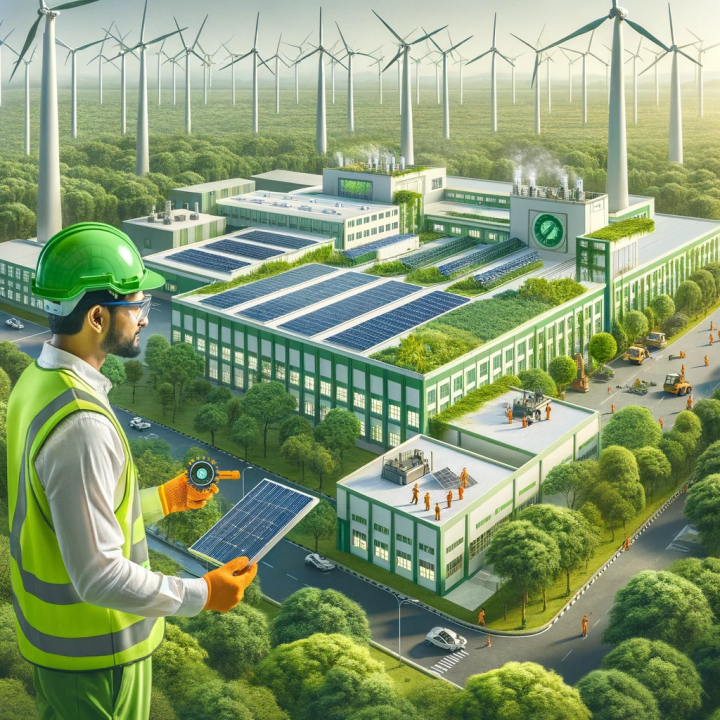
India has hundreds of fairly well-run industrial estates with basic facilities. A similar initiative is needed to promote firms in the green manufacturing sector for speeding India’s green transition and ESG drive. This initiative is particularly helpful for small and medium sized firms.
Addressing the fourth edition of Karnataka ESG Summit recently, Guruprasad Mudlapur, Chairman of the CII Karnataka State Council and President, Bosch Group India, said, China is ahead in green products because it provides good infrastructure for its small manufacturing companies. He urged India to move from pockets of excellence to spreading it everywhere.
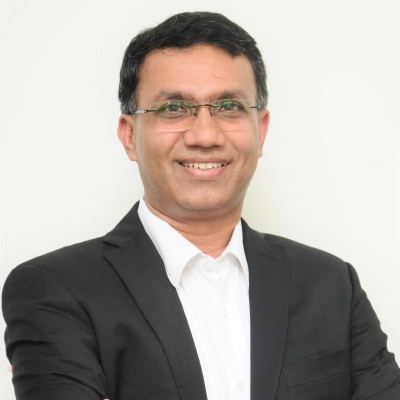
Thyagu Valliappa, Founder and CEO, Sona Star Innovation Pvt Ltd called on companies to rank their value-chain partners on not just on their net zero ambitions but on where they are in their journey. For example, he suggested that preference should be given to firms that have already Net 50 or Net 25 during the empanelment rather than wait for them to achieve Net Zero at some later date. This could increase competition among the vendors and force a quicker transition.
There was consensus that it was high time ESG moved from compliance to fast action. The biggest impediment to this is India’s weak G factor. Weak governance is pulling back all the good work being done on the Environment and on the Social part of ESG. The governance deficit is largely because of weak law implementation infrastructure.
The conference released a white paper titled ‘ESG in Value Chains: From Expectations to Action’. The paper argues that environmental, social and governance performance of an organisation’s lens should extend beyond an organisation’s own operations to the broader ecosystem through which a product or service is created, delivered and consumed.
MSMEs contribute close to 30% of India’s Gross Domestic Product, around 35% of manufacturing output and about 45% of the country’s exports. Their ESG readiness is therefore not a peripheral issue. It is central to whether Indian value chains, and Indian large enterprises’ sustainability claims, can hold up to scrutiny.
Key considerations for MSMEs in this transition include establishing baseline environmental data on energy, water, waste and emissions; strengthening workplace health and safety systems; improving labour and human-rights practices; establishing governance and ethics frameworks; and developing the ability to generate credible ESG data that can be shared across the value chain.
Converging Drivers
The business case for value-chain ESG rests on several converging drivers:
- Scope 3 emissions and decarbonisation. Under the GHG Protocol, Scope 3 (value-chain) emissions, covering both upstream activities such as purchased goods and services, and downstream activities such as product use and end-of-life, typically account for 70–90% of an organisation’s total greenhouse-gas footprint. An organisation cannot credibly pursue net-zero or science-based targets without engaging its value-chain partners.
- Supply-chain resilience and risk management. ESG-related disruptions from resource scarcity and extreme weather to labour and compliance failures, increasingly translate into commercial risk.
Assessing and strengthening ESG performance across suppliers reduces exposure to operational, reputational and financial shocks. This requires long-term value creation. Organisations that build genuine partnerships with value-chain partners, rather than treating ESG as a one-way compliance checklist, tend to see more durable improvements in quality, cost, and supply continuity over time
Make Value-chain Disclosure Mandatory
The slow progress of ESG in India is its unambitious target. The voluntary compliance option has not worked. The Securities and Exchange Board of India (SEBI) requires the top 1,000 listed entities to file a Business Responsibility and Sustainability Report (BRSR). SEBI has also introduced value-chain ESG disclosures under the BRSR Core framework for the top 250 listed entities.
The current framework covers the top upstream and downstream partners individually comprising 2% or more of the listed entity’s purchases and sales, respectively, by value, while allowing the listed entity to limit disclosure to value-chain partners covering 75% of its purchases and sales by value, respectively. Value-chain disclosures have been made voluntary.
The whitepaper shares two case studies that show positive lessons from value-chain ESG – a large company and an MSME. A Sourcing Company’s Perspective: Škoda Auto Volkswagen India (SAVWIPL) and An MSME’s Perspective: Pon Pure Speciality Chemicals (PPSCPL).
View whitepaper.
https://ciiindia-my.sharepoint.com/:f:/g/personal/amal_a_cii_in/IgBEaH1beaBVSZ4ZX7IdF_YiARMItjAHwY2VPFEPLGv7rc4?e=4nhJ5s