
I met Sriram at a summer community picnic — a real estate entrepreneur visiting from India, restless with an idea he couldn’t quite let go of. He wanted to start a compressed biogas business on the outskirts of Hyderabad, my birth town. He knew the technology well enough. What he didn’t have was confidence in his feedstock. Agricultural waste he could count on. Food waste from households was a different story — trash collectors mixed it with everything else the moment it left the doorstep. Segregation was a rule that existed only on paper.
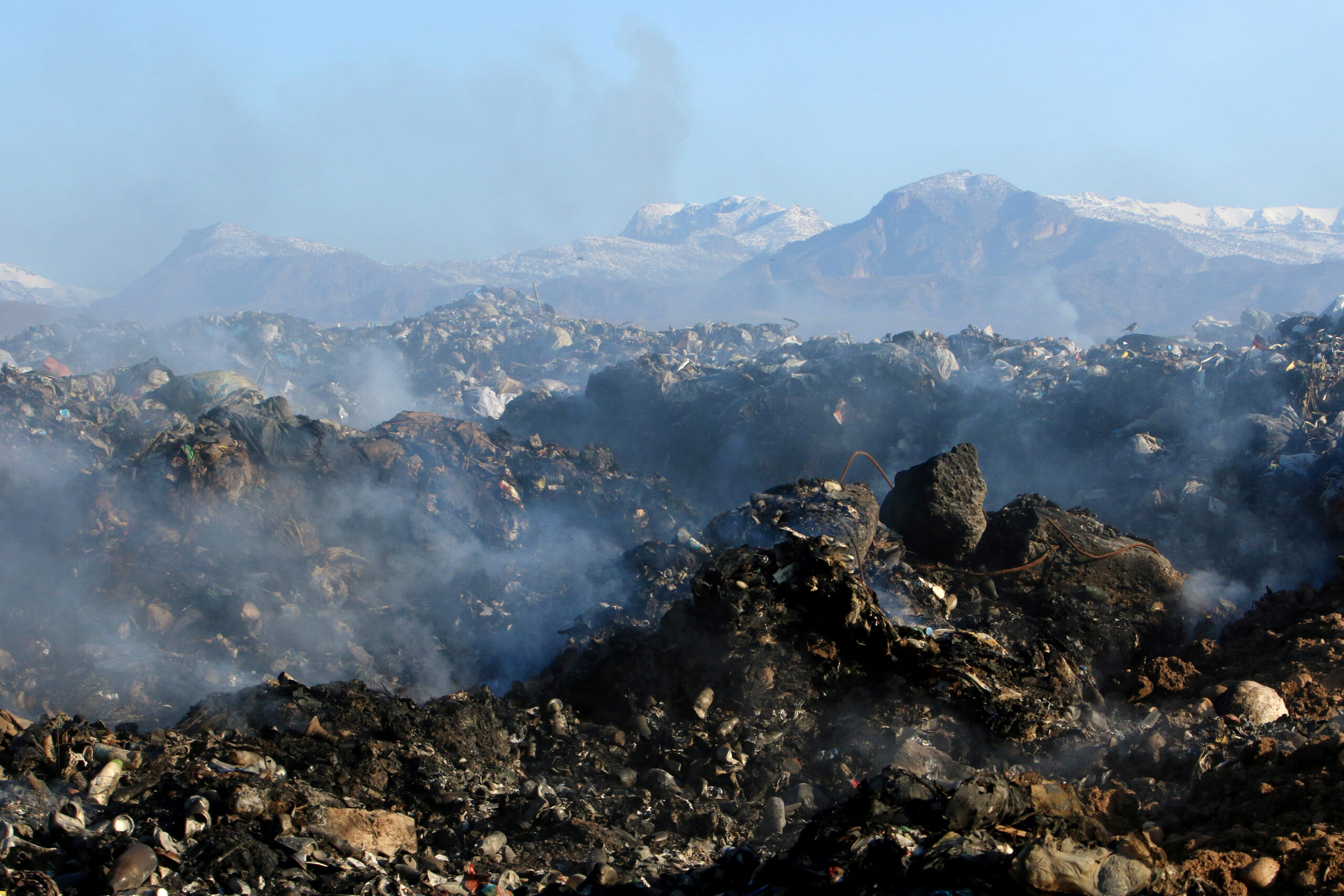
I asked if he knew what was happening at Jawaharnagar, one of Hyderabad’s own landfills. Satellite data reviewed by researchers linked to UCLA’s Emmett Institute had found it releasing methane at an estimated 5.9 tonnes an hour — among the highest rates recorded at any dumpsite in the world. Methane traps roughly 80 times more heat than carbon dioxide over twenty years, according to the IPCC. Sriram went quiet, then said, “No wonder we have temperatures rising to 46 degrees and farmers dying on the field.”
Neither of us had a clean answer beyond the obvious one: nobody in India connects a pile of rotting vegetable peels to a farmer collapsing in a field a few hundred kilometres away. He asked if any country had solved this. I told him about South Korea, which keeps almost all its food waste out of landfills and turns it into energy and fertiliser instead. Sweden has built something similar. Then he brought up his grandparents — how their village once ran on biogas made from cattle dung and kitchen scraps, and how all of it had quietly disappeared. I told him what I knew: migration thinned out the households that kept these systems running, upkeep got harder to find, and cheap subsidised cooking gas made the old habit easy to drop. He shook his head. “That was an unwise decision,” he said, more to himself than to me.
I’ve thought about that conversation since. India has never lacked the idea. What it’s short on is the plumbing underneath it — the unglamorous machinery that actually makes an idea run.
A Resource India Keeps Burying
India generates enormous quantities of organic waste every day — food scraps, agricultural residue, kitchen waste — and most of it ends up in landfills, decomposing for years without oxygen and releasing methane the whole time. This rarely makes news unless a landfill catches fire, as Delhi’s Ghazipur site did for more than 36 hours in April 2024, choking nearby neighbourhoods in smoke. A fire draws cameras. Years of steady methane release seldom draw attention, although satellite tracking is starting to change that.
Mumbai’s Kanjurmarg landfill shows similarly high readings. India has officially flagged over 3,000 legacy dumpsites for cleanup, and that number almost certainly understates things, since countless smaller dumps and roadside piles never get counted at all.
What makes this frustrating is that India has already lived with the fix — the very system Sriram’s grandparents ran, before migration and cheap LPG let it lapse.
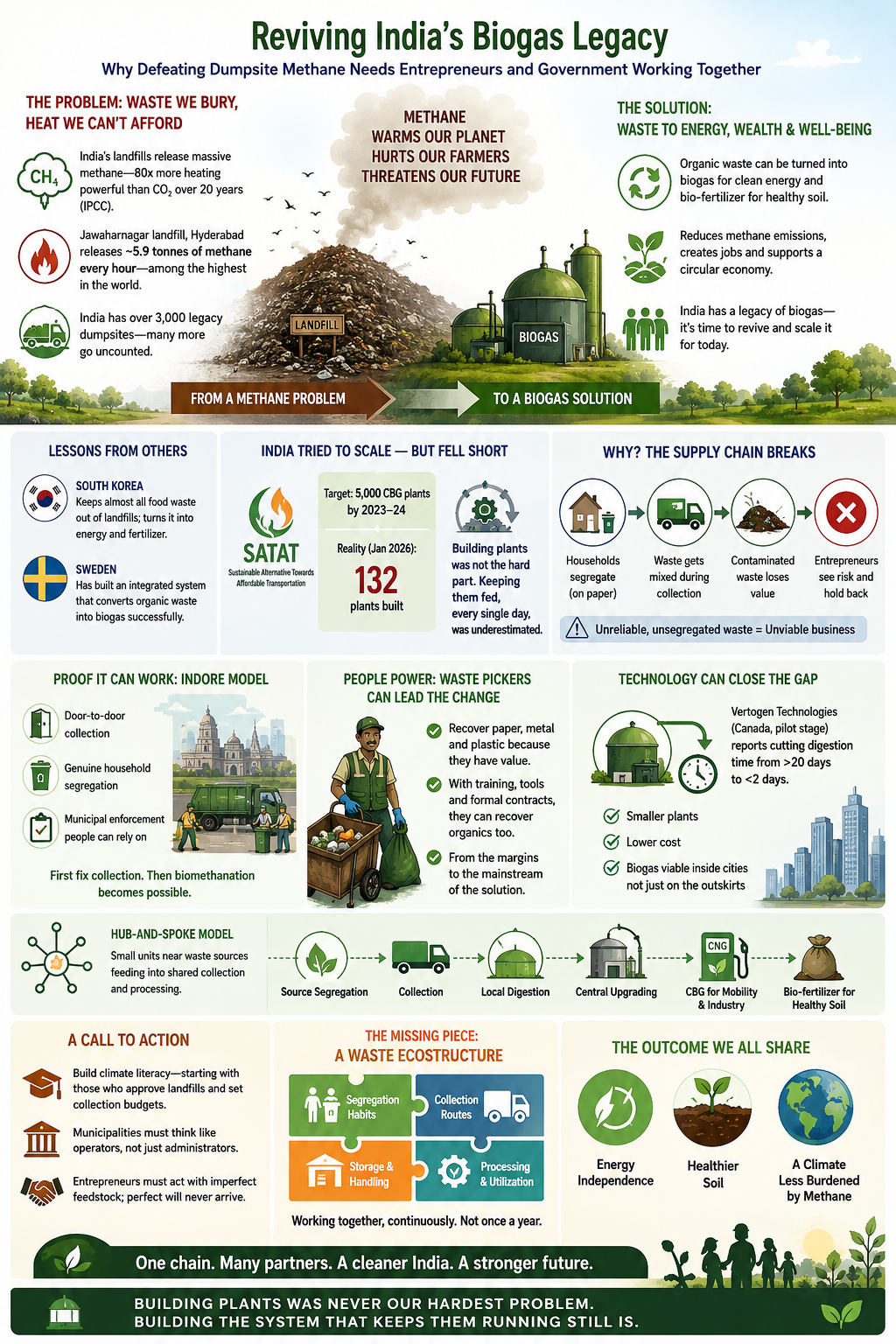
The government tried to rebuild this at industrial scale. In 2018 it launched SATAT — the Sustainable Alternative Towards Affordable Transportation programme — aiming for 5,000 compressed biogas plants by 2023–24. As of January 2026, only 132 had been built, according to Petroleum and Natural Gas Minister Hardeep Singh Puri. Building plants was never really the hard part. Keeping them fed, day after day, is what the programme underestimated.
Where the Supply Chain Breaks
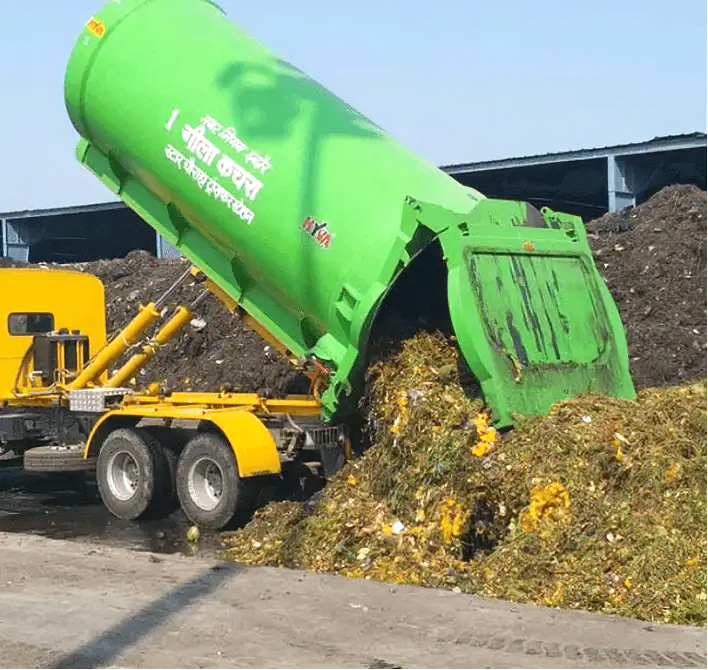
Biogas plants need a constant stream of clean organic waste, and this is exactly where India’s system falls apart. That cleanliness loses meaning the moment waste leaves a household — it’s routinely mixed back together during collection, contaminating material that could otherwise be worth something. Once mixed, separating it again is expensive and often not worth attempting.
Entrepreneurs see this uncertainty and hold back. The ones who go ahead anyway build around it rather than through it. Sriram had done exactly that — betting on farm residue because city food waste felt too unreliable to plan a business around.
What Indore Got Right, and What Technology Can Still Fix
Indore is proof this doesn’t have to stay broken. The city didn’t get clean by installing an impressive biogas plant first. It got clean by fixing collection — door-to-door pickup, genuine household segregation, and municipal enforcement that people could actually rely on. Large-scale biomethanation only became possible once that groundwork existed.
Sriram listened to most of this without saying much. Then, almost sheepishly, he admitted he’d always assumed organic waste sent to a landfill was fine, since it was biodegradable. He hadn’t known methane came out of that process, or that it trapped heat the way it does.
If a real estate entrepreneur who’d already researched compressed biogas didn’t know this, the average municipal councillor probably doesn’t either. That’s the actual starting point. India’s climate literacy gap doesn’t sit in school textbooks so much as in the offices that approve landfill permits and set collection budgets.
There’s also a missing piece that neither government nor entrepreneurs can fix alone. Call it a waste eco-structure — segregation habits, collection routes, storage, and processing, all working together continuously, not a set of contracts renewed once a year and ignored the rest of the time.
Municipalities need to think more like operators, the way Indore did when it decided collection was a problem to solve rather than simply manage. Entrepreneurs, for their part, cannot wait forever for perfect feedstock. The imperfect feedstock they need is already sitting in front of them.
Connect that waste eco-structure to compact digestion technology — Vertogen Technologies’ or whatever improves on it — and to state governments willing to free up land in cities and villages alike, and the pieces start functioning as one chain instead of four separate wishes.
What comes out the other end depends on that chain holding together: energy independence, healthier soil, a climate carrying less methane.
Plants were never the hard part of this story. Keeping them fed is — and that’s a job for people, not just pipelines.
Ram Ramprasad is a regular contributor to Sustainability Next, writing on sustainable strategies for India’s circular economy, climate resilience, and ecological regeneration.
Ram’s previous articles published in SustainabilityNext
Reimagining Swachh Bharat: From Waste Crisis to Resource Recovery
How Cell-Cultivated Cotton Could Transform India’s Textile Sector
India’s Landfill Methane Crisis: The Power of Nature-Based Solutions
Rivers Revive When Someone Owns the Outcome
Ecological Ayurveda: Reimagining the Circular Economy
Activating the World’s Dormant Climate Solutions
India’s LPG Crisis: A Three-Pillar Path to Resilient Cooking
How Mycelium Can Power a Green Startup Revolution
Microbes Can Drive India’s Sustainable Future
Rethinking India’s Sustainable AI Policy
Minimize Beef and Dairy Consumption
From Ātma Nirbhar to Ātma Bhūmi Nirbhar: India’s Civilizational Path to True Self-Reliance
Why India Needs a Millet Revolution
Common Sense Strategies to Reduce Methane Emissions from Cattle
Integrated Offshore Water and Wind Solution for India’s Coastal Cities
Gut and Soil Microbial SustainAbility Bridges Science and Ancient Indian Wisdom
From Waste to Wealth: Rebranding Sewage Treatment Plants (STPs) to Resource Recovery Plants (RRPs)
The Hidden Crisis with Our Beds
Startup ideas for Sustainable Cremation and Burial Solutions in India
How India’s Agriculture Can Save 200 Billion Cubic Meters of Water
Ten Powerful Reasons for Declaring Moon A Living Entity
Sustainable Wind Turbines: Balancing Bird Protection and Agriculture
A Holistic Water Strategy for India
How India Can Leverage its GST Model for Building a Sustainable Future
A Toolkit for India’s Green Transition
Green Building Strategy – Integrating Innovations from East and West
Eat Less Fish, Save the Planet
Startups are Working Hard for a Plastic-free World
Hydrogen More Harmful Than Fossil Fuels
Tech Startups Can Make India Water Rich
Measure How Basic Elements are Doing, Not Just GDP
A Radical Strategy for A Greener India – The Story of Kusha