
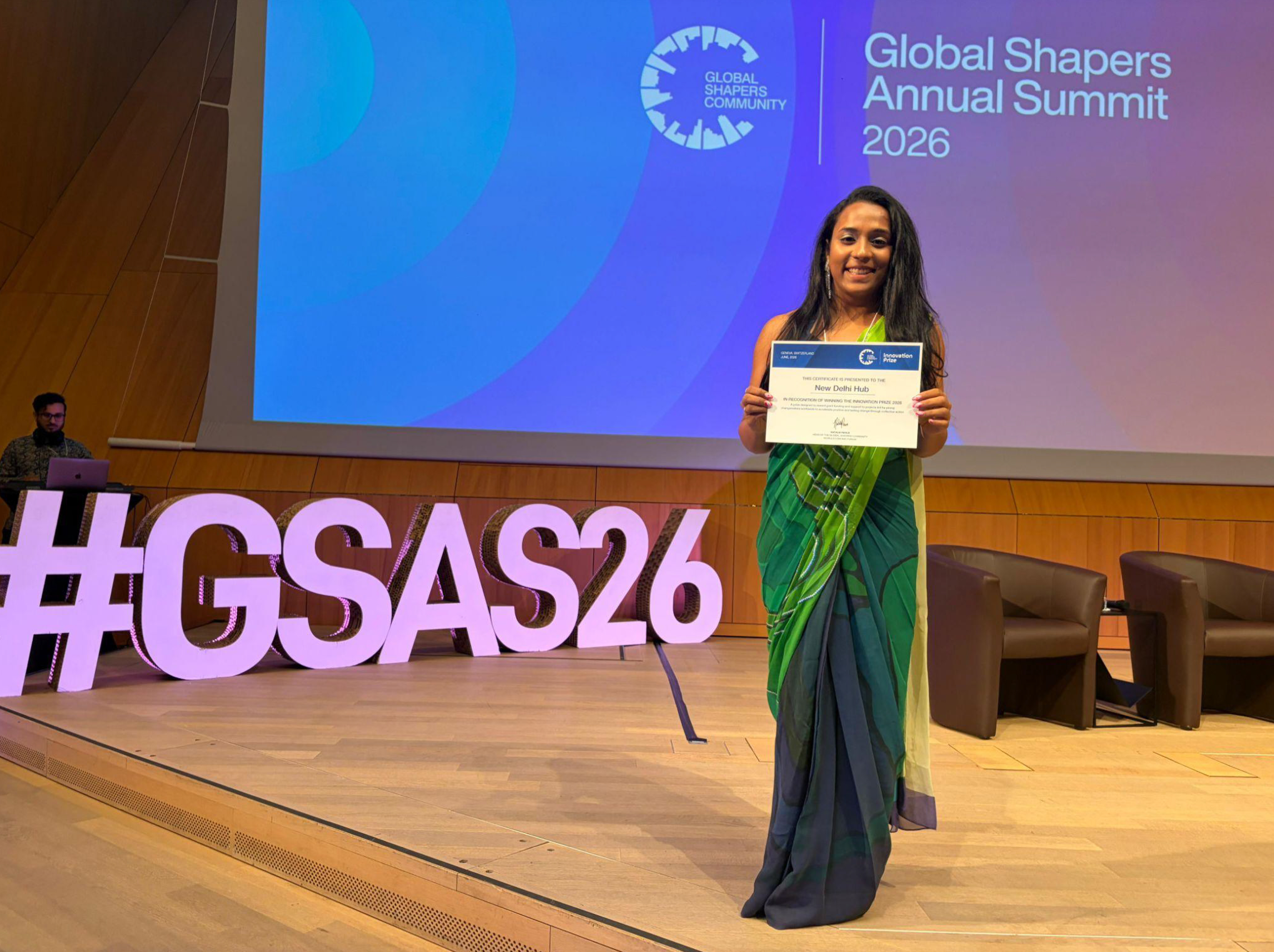
In July 2026, the New Delhi Hub represented India at the World Economic Forum’s Global Shapers Annual Summit in Geneva, where its Accessible Clean Air Initiative was awarded the Innovation Prize 2026 and a grant of 10,000 Swiss Francs, presented in alliance with Accenture and the Global Alliance for YOUth.
The Innovation Prize recognises one of the most impactful and scalable community-led innovations from among hundreds of Global Shapers Hubs worldwide.
The recognition comes with grant funding that will enable the team to significantly expand the initiative across Delhi.
Key Features
Name: Accessible Clean Air Initiative
Cost: Around ₹1,450 per unit (nearly 5 times cheaper than commercial models)
Key Leader: Aditi Agarwal (Curator and Project Lead)
Recognition: Won the 2026 Global Shapers Innovation Prize in Geneva, securing a CHF 10,000 (approx. ₹11.87 lakh) accelerator grant
The Problem: Clean Air Shouldn’t Be a Luxury
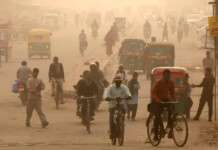
Every year, air pollution claims nearly 7 million lives worldwide, including more than 1.6 million deaths in India. Delhi consistently ranks among the world’s most polluted cities, with residents losing an estimated 6–7 years of life expectancy due to prolonged exposure to polluted air. Nearly 40% of Delhi’s residents show impaired lung function, making air pollution one of the city’s most urgent public health crises.
We take over 20,000 breaths every single day. Imagine if every one of those breaths carried harmful particulate matter.
While air purifiers have become an essential tool for protecting indoor air quality, they remain inaccessible for millions. Commercial air purifiers typically cost between ₹6,000 and ₹15,000, placing them well beyond the reach of many schools, shelter homes, old-age homes and low-income households that need them the most.
This inequality inspired one question: Can clean air be made affordable for everyone?
The idea began in August 2025, not in a laboratory, but in a bathroom. Armed with a household table fan, a rectangular HEPA filter and a few stretchable hair ties, the team assembled its first prototype simply to answer one question—would such a basic setup actually filter polluted air?
To test it, incense sticks were lit inside the bathroom to generate smoke. Within minutes, the filter had visibly trapped black particulate matter. It was a simple experiment, but it proved one thing: the concept worked.
That first experiment sparked months of research.
The team studied how commercial air purifiers functioned, listing every single component used in existing products. Using a first-principles approach, each component was challenged with a simple question:
“Is this truly necessary for air purification, or is it simply increasing cost?”
By stripping away everything non-essential, the team redesigned the purifier from scratch. One of the biggest breakthroughs came when the team replaced the original rectangular filter with a cylindrical one. The cylindrical design allowed for a much smaller enclosure, making the purifier significantly more compact, lighter and more affordable.
The first casing was manufactured using 3D printing. Although effective, it proved too expensive for large-scale deployment.
The team then redesigned the housing using laser-cut acrylic sheets held together with threaded rods and fasteners. Even the acrylic sheets themselves were optimised repeatedly, experimenting with different cutting layouts to maximise the number of components produced from a single sheet and minimise manufacturing waste.
After dozens of design iterations, the team arrived at a purifier that is compact, lightweight, durable and costs a fraction of commercially available alternatives. As production began, another realisation emerged.
Building every purifier by hand would never allow the project to reach the communities that needed it most. Instead of creating a factory, the team chose to create livelihoods.
No Factory
The project has now partnered with a Women’s Self-Help Group (SHG), where trained women assemble the purifiers locally, generating income while simultaneously helping deliver clean air to vulnerable communities.
Highlights:
- Built for approximately ₹1,450, making it nearly 90% cheaper than most commercially available alternatives.
- Lightweight and portable.
- Energy-efficient, consuming less than 24W of power.
- Modular, allowing individual components to be replaced rather than replacing the entire device.
- Designed for simple assembly, enabling local production through community-based manufacturing models.
The initiative combines environmental innovation with social impact by creating employment opportunities for women while improving access to cleaner indoor air.
Independent Testing & Validation
To validate its performance, the purifier underwent independent testing at an NABL-certified laboratory.
Independent testing conducted by an NABL-certified laboratory found the purifier to achieve an overall removal efficiency of approximately 80% for PM2.5 and PM10, validating its effec\veness in improving indoor air quality.
The project is currently in its pilot phase.
- Deployed 25 air purifiers across community institutions.
- Benefited more than 250 people, including children, elderly residents and immunocompromised individuals.
- Installed units at organisations including Deepalaya School, Sheows Old Age Care Centre, Rojavanam Old Age Home and Ghaziabad District Hospital, alongside deployments in orphanages, anganwadis, shelters and community spaces.
- Conducted community awareness sessions on air pollution and indoor air quality.
- Built partnerships with VMTC, Genus Power, TVS Sundaram Textiles, manufacturing partners and implementation organisations supporting the project.
Looking Ahead
Following the Innovation Prize, the initiative is entering its next phase of growth.
The immediate goal is to deploy 410 additional air purifiers across Delhi, reaching more than 2,000 people in schools, anganwadis, shelter homes, hospitals and community centres. The project will continue expanding its women-led assembly model through Self-Help Groups, creating sustainable livelihood opportunities while increasing access to affordable clean air.
The team also aims to build a decentralised model that can be replicated by other Global Shapers Hubs across India, enabling communities to manufacture, assemble and deploy affordable air purifiers locally.
In the long term, the initiative seeks to establish a financially sustainable cross-subsidy model where every five paid units help fund one purifier for underserved communities, ensuring that access to clean air is never determined by income.