

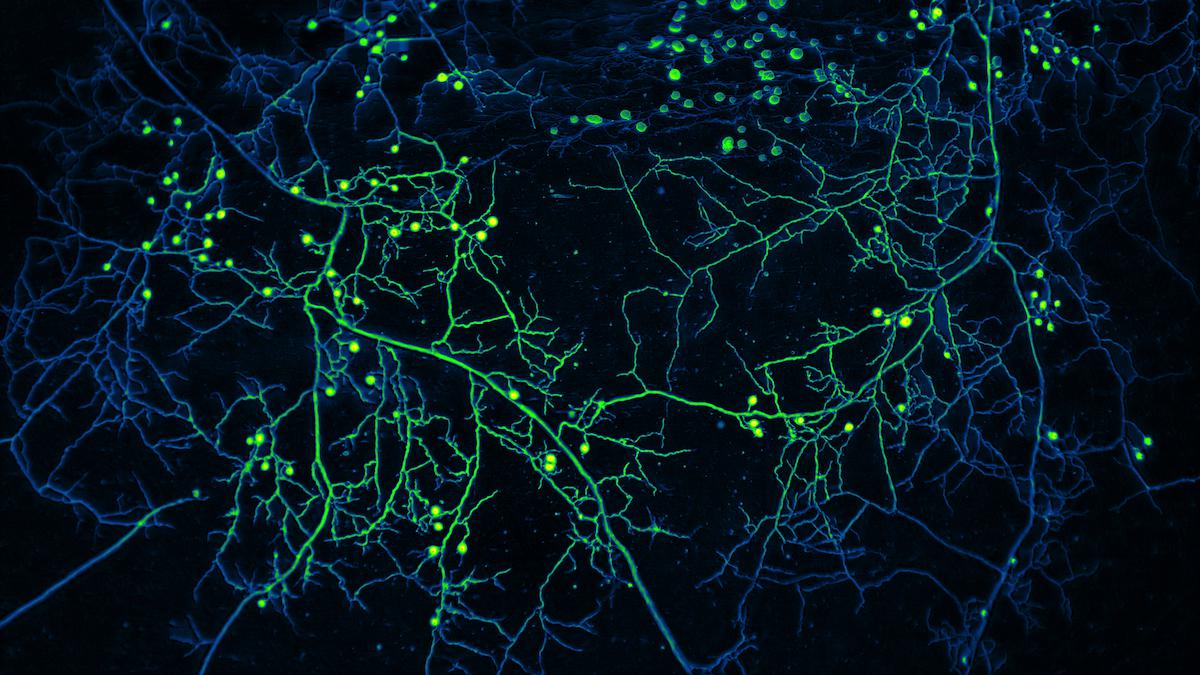
Mycelium—the root-like network that fungi use to grow underground—has an unusual ability: it can turn agricultural waste into useful, compostable materials. When crop residues like rice straw or sugarcane bagasse are inoculated with fungal cultures, mycelium grows through the fibers, binding them into lightweight but strong forms. With basic processing, such as heat treatment, these materials become durable, fire-resistant, and suitable for everyday use.
For India, this matters deeply. The country sits at the intersection of three realities: enormous volumes of agricultural waste, a fast-growing clean-tech and startup ecosystem, and an urgent need to reduce plastic pollution and air pollution from crop burning. Mycelium offers a way to connect all three—by converting waste into products, livelihoods, and local industries that are circular by design.
Why Mycelium Matters
What first struck me about mycelium is how quietly powerful it is. This humble fungal network grows without factories, without toxic chemistry, and without fossil fuels. Fed on agricultural residues, it naturally binds loose biomass into solid forms that can replace polystyrene packaging, plastic foams, insulation boards, and even synthetic leather.
Unlike most industrial materials, mycelium products are designed to end their life safely. When discarded, they biodegrade and return to the soil instead of persisting for centuries. In a country struggling with landfills, open dumping, and plastic leakage into rivers, this single feature makes mycelium fundamentally different from most “green” alternatives.
Globally, companies are already developing fungal materials for packaging, textiles, and construction. For India—rich in biomass and entrepreneurial energy—mycelium presents a chance to leapfrog extractive materials and build industries that align with older ideas of balance between production and nature.
India’s Natural Advantage
India generates an estimated 500–550 million tonnes of agricultural residues every year—from rice straw and wheat stubble to sugarcane bagasse, husks, and banana stems. Much of this biomass still has no economic outlet and is burned in fields, contributing to severe seasonal air pollution in North India.
Even redirecting a modest share of this waste toward mycelium cultivation would have immediate benefits. Farmers could earn additional income from residues they currently burn or discard. Local production units could emerge close to feedstock sources, reducing transport costs and emissions.
At the same time, India produces 4–9 million tonnes of plastic waste annually, with packaging forming the largest share. A significant portion ends up in landfills or the open environment. Replacing even a small percentage of plastic packaging with mycelium-based alternatives would eliminate millions of tonnes of persistent waste—while creating decentralized green jobs.
India has done this kind of transformation before. Just as it built global leadership in vaccines by combining science, scale, and policy support, it could become a major supplier of mycelium-based biomaterials for packaging, fashion, and construction—exporting sustainability rather than pollution.
Indian Startups Already Showing the Way
This transition is not theoretical. Indian innovators are already proving that mycelium-based businesses are viable:
- Dharaksha Ecosolutions converts paddy straw into biodegradable packaging.
- Mycocycle (Bangalore) grows fungi on banana stems and temple flowers to create insulation materials.
- Mycita Biotech develops fungal bio-leather for sustainable fashion.
- Roha Biotech upcycles sugarcane bagasse into mycelium composites.
Together, these ventures show how crop waste can become the foundation of a new biomaterials economy.
In Villupuram, Tamil Nadu, Ecology Action Lab goes a step further—using fungi not only to make materials, but also to teach citizen science, restore soils through mycoremediation, and build local ecological literacy. Their community-based model deserves replication across India.
What’s missing is coordination. A national digital platform—similar to what Recykal created for recyclables—could link farmers supplying biomass with mycelium manufacturers, ensuring traceable, fair, and reliable supply chains.
Where Mycelium Can Make the Biggest Difference
Packaging
Almost every package I receive from India arrives padded with Styrofoam. Each delivery is a reminder of how much waste we normalize for convenience. Mycelium-based packaging can replace these materials with compostable, fire-resistant alternatives grown on crop residues. Companies like Ecovative Design in the U.S. already supply Dell and IKEA. There is no reason India cannot build its own nationwide packaging ecosystem from rice straw and sugarcane waste.
Construction Materials
Mycelium bricks and panels are lightweight, insulating, and strong—well suited for affordable, climate-resilient housing. Because production can be decentralized near biomass sources, these materials can generate rural employment. An added benefit is improved indoor air quality: mycelium composites regulate humidity and resist mold, which matters in India’s varied climates.
Vegan Leather and Fashion
Fungal bio-leather offers a cruelty-free alternative to animal hide and petroleum-based synthetics. With India’s deep textile expertise, mycelium leather could support both sustainable exports and domestic brands. Bolt Threads’ Mylo™—used by Adidas and Stella McCartney—shows that global markets are already open.
Alternative Proteins
Mycelium-based foods provide high-quality protein using far less land, water, and energy than animal agriculture. While Nature’s Fynd in the U.S. offers one model, India could adapt similar approaches to improve food security without increasing environmental pressure.
Bioelectronics and Computing
Recent research from Ohio State University demonstrated that mycelium from shiitake mushrooms can function as a memory device—similar to a computer chip—without rare-earth materials. This work is still experimental, but it hints at a future where biodegradable electronics reduce e-waste and mineral extraction.
Mycoremediation
Fungi can digest toxins, hydrocarbons, and heavy metals. After California’s 2017 wildfires, oyster mushrooms were used to absorb ash and petroleum residues. Similar approaches could help restore soils damaged by stubble burning in Punjab and Haryana—while turning residues into usable materials.
Mycopesticides and Biofertilizers
Fungal bio-controls naturally protect crops and restore soil microbiomes, reducing dependence on chemical inputs. This approach aligns well with India’s push toward regenerative agriculture.
Mycoalgae Systems
Combined fungi–algae systems can capture CO₂ and generate biofuels or bioplastics. Located near industrial zones, they could pair carbon capture with bio-based manufacturing.
Cultivation Models That Fit India
High-value products like bio-leather and alternative proteins work best in controlled indoor facilities. Packaging and construction materials can be produced in simpler outdoor or rooftop setups, particularly in humid states like Kerala, Odisha, and West Bengal.
Even a 3×3 meter rooftop unit can yield several kilograms of mycelium each week—enough to support micro-enterprises, cooperatives, or maker spaces. Scaled nationally, India’s agricultural residues could fuel a dense, decentralized network of green industries.
What Policy Can Do—And Where It Must Be Careful
For mycelium entrepreneurship to scale, policy support matters—but so does flexibility.
- GST Relief: Zero or minimal GST on bio-based materials derived from agriculture waste.
- Mycelium Innovation Zones: Cluster-based hubs in biomass-rich states, without the rigidity that has slowed some SEZs.
- Public Procurement: Government adoption of mycelium packaging, insulation, and panels to validate markets.
- Education and Certification: Integrating fungal biotechnology into IITs, agricultural universities, and design schools. Community-based models like Ecology Action Lab should be formally supported.
- Micro-Enterprise Grants: Small, local production units converting banana stems, temple flowers, or municipal green waste into marketable products.
The goal should not be over-centralization, but thousands of small, resilient nodes.
A Data Backbone: The Mycelium Mapping Mission (M3)
India already has world-class satellite and geospatial capabilities. A Mycelium Mapping Mission (M3) could build on this by combining ISRO’s stubble-burning data with NASA’s VIIRS imagery to pinpoint biomass-rich corridors—ideal locations for mycelium startups within 50–100 km of feedstock.
Much like platforms that map plastic waste, such as Ellipsis Earth, M3 could create a National Agro-Waste Atlas showing seasonal residue flows by crop and region. This atlas would empower farmers to monetize waste locally, guide investors toward the most promising sites, and support smarter, data-driven policy decisions.
Measuring What Matters
A national mycelium initiative should track outcomes that go beyond production:
- Tonnes of agriculture waste diverted from burning
- CO₂ emissions avoided
- Rural livelihoods created
- Soil and water restored through fungal remediation
An impact-linked Mycelium Fund, housed under BIRAC or SIDBI, could reward ventures that deliver measurable environmental and social benefits.
Quick-Access Resources for Entrepreneurs & Readers
Funding & Mentorship
- BIRAC – Grants, incubation, biotech startup support.
- BIG Program – Prototype funding for biotech ideas.
- SPARSH & PACE – Support for green innovation projects.
Government Support
- DBT – Environmental biotech programs and bio-manufacturing initiatives.
Learning & Inspiration
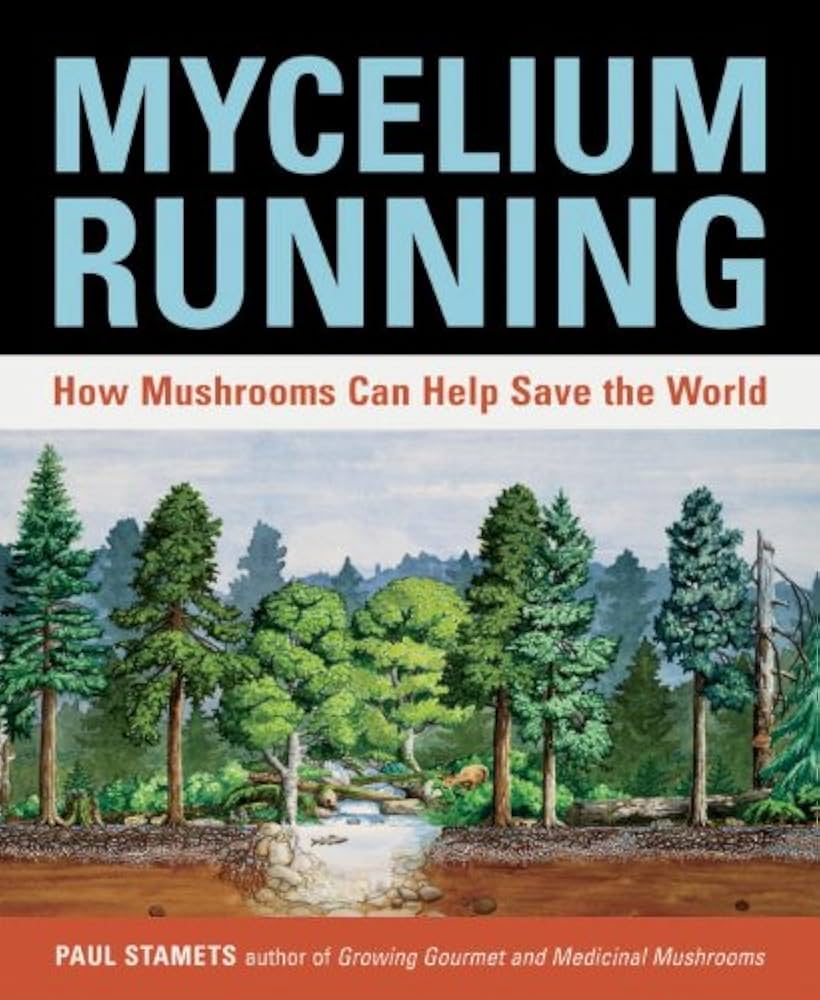
- Books: Mycelium Running by Paul Stamets
- Videos: TED Talk “6 Ways Mushrooms Can Save the World”, FreshCap YouTube tutorials
Networks & Communities
- India: Mycelium India (LinkedIn), Indian Mycological Society
- Global Models: BlueCity Rotterdam, ASTAR Singapore Mycelium Consortium
Conclusion
Mycelium is not a silver bullet—but it is a practical, scalable tool for turning India’s waste problem into an opportunity. With thoughtful policy, patient capital, and data-driven planning, India can grow local industries that reduce pollution, create livelihoods, and produce materials designed to return safely to the earth.
With a little help, fungi could help India build the next green industrial revolution—one that is grown, not manufactured.

Ram Ramprasad is a sustainability advocate and author who writes on biomaterials, circular economy strategies, and regenerative design, with a focus on aligning ecological wisdom with modern innovation.
Ram’s previous articles published in SustainabilityNext
Microbes Can Drive India’s Sustainable Future
Rethinking India’s Sustainable AI Policy
Minimize Beef and Dairy Consumption
From Ātma Nirbhar to Ātma Bhūmi Nirbhar: India’s Civilizational Path to True Self-Reliance
Why India Needs a Millet Revolution
Common Sense Strategies to Reduce Methane Emissions from Cattle
Integrated Offshore Water and Wind Solution for India’s Coastal Cities
Gut and Soil Microbial SustainAbility Bridges Science and Ancient Indian Wisdom
From Waste to Wealth: Rebranding Sewage Treatment Plants (STPs) to Resource Recovery Plants (RRPs)
The Hidden Crisis with Our Beds
Startup ideas for Sustainable Cremation and Burial Solutions in India
How India’s Agriculture Can Save 200 Billion Cubic Meters of Water
Ten Powerful Reasons for Declaring Moon A Living Entity
Sustainable Wind Turbines: Balancing Bird Protection and Agriculture
A Holistic Water Strategy for India
How India Can Leverage its GST Model for Building a Sustainable Future
A Toolkit for India’s Green Transition
Green Building Strategy – Integrating Innovations from East and West
Eat Less Fish, Save the Planet
Startups are Working Hard for a Plastic-free World
Hydrogen More Harmful Than Fossil Fuels
Tech Startups Can Make India Water Rich
Measure How Basic Elements are Doing, Not Just GDP
A Radical Strategy for A Greener India – The Story of Kusha







[…] How Mycelium Can Power a Green Startup Revolution […]
[…] How Mycelium Can Power a Green Startup Revolution […]
[…] How Mycelium Can Power a Green Startup Revolution […]